
Thermion 2 LRF XP50 Pro: Expert Guide & Review
A lot of buyers land on the thermion 2 lrf xp50 pro at the same point in the decision cycle. They’ve already used thermal. They know what a basic unit can do. What they want to know now is whether this model gives them an edge when the weather turns bad, the background gets muddy, and the shot or observation window is short.
That’s the right question.
On paper, plenty of thermal optics look impressive. In the field, the gap shows up at first light, in damp air, around tree lines, over plowed ground that’s holding the night’s cold, or when an animal stops half-covered in brush. That’s where better thermal sensitivity, a better lens, and a better display stop being brochure language and start affecting what you can detect, track, and identify.
The Thermion 2 LRF XP50 Pro sits in that serious-user category. It’s built like a conventional riflescope, but it’s aimed at users who need thermal performance that holds together when conditions aren’t helping. Hunters care about that for predator and hog work. Law enforcement and security teams care about it for surveillance, perimeter observation, and target discrimination in poor visibility.
An Introduction to the Thermion 2 LRF XP50 Pro
Fog sits in the low ground. Brush and fence posts blur together. You still need to tell the difference between a live target, a stump holding heat, and clutter that will waste your time. That is the sort of morning the Thermion 2 LRF XP50 Pro is built for.

The reason serious buyers look at this unit is not just magnification or a longer feature list. It is how the scope holds image separation when humidity is up, contrast is down, and the background is doing you no favors. The low NETD and fast F1.0 lens matter here. In plain field terms, they help the optic pull small temperature differences out of ugly conditions, which is what gives you a more usable image at dawn, in damp timber, or over ground that is bleeding off the night’s temperature slowly. If you need a quick refresher on how thermal imaging works in practical use, start there.
The Thermion 2 LRF XP50 Pro also makes sense for shooters who want thermal capability without giving up the familiar form of a traditional riflescope. That matters more than some spec sheets admit. Standard 30mm-style mounting, conventional eye position, and a housing that does not feel like a bulky add-on all make setup easier on a working rifle.
Who this scope suits
This model fits a buyer who already knows where cheaper thermals come up short.
It is a strong choice for users who need:
- Reliable performance in poor atmospheric conditions: Better thermal sensitivity pays off when fog, humidity, or light precipitation flatten weaker optics.
- Useful detail at practical engagement distances: You need enough image integrity to identify, track, and aim, not just detect a heat source.
- A traditional riflescope layout: You want thermal without relearning your rifle setup or fighting awkward mounting geometry.
- Integrated rangefinding for real shot decisions: Distance matters fast at night, especially once terrain, holdovers, and target movement start stacking up.
There is a trade-off. This is premium gear, and premium gear only makes sense if your use case exposes the limits of mid-tier optics. For a ranch rifle that comes out a few times a year, it can be more scope than needed. For regular hog hunting, predator control, perimeter work, or surveillance in poor visibility, the added performance is easier to justify.
What matters in the field is simple. The XP50 Pro gives serious users a better chance of keeping target detail when conditions are working against them, and that is the difference between spotting heat and making a confident decision.
Decoding the Core Technology of the XP50 Pro
A cold animal standing in damp grass before sunrise is where this scope either earns its price or gets exposed. On clean, dry nights, plenty of thermals look good. In fog, humidity, and flat ground temperatures, weaker units start smearing detail together. The XP50 Pro is built to hold onto more usable contrast when conditions are working against you.
The sensor and why NETD matters
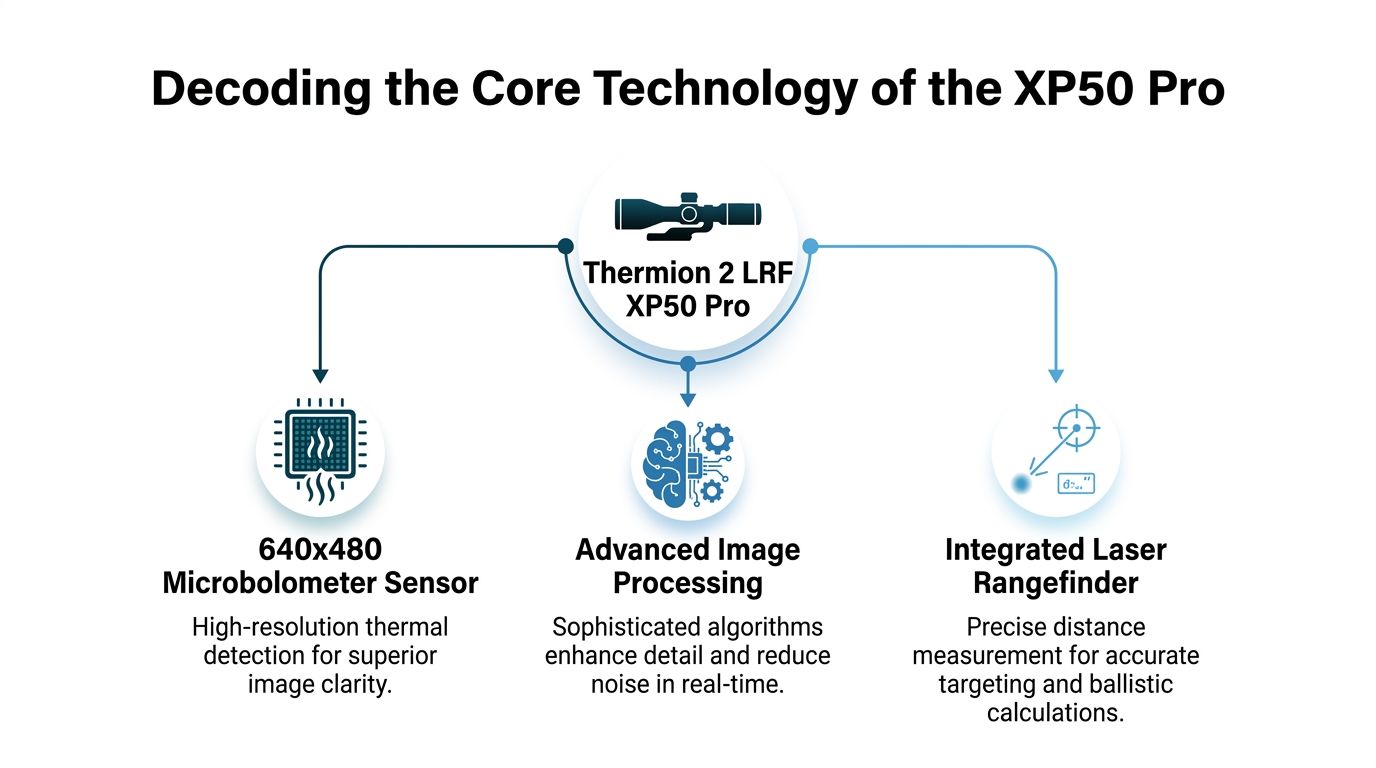
At the heart of the unit is a 640×480 thermal sensor with fine pixel spacing and very strong thermal sensitivity, as noted earlier in the manufacturer documentation. The spec that deserves the most attention is the sub-18 mK NETD figure, because that tells you how small a temperature difference the system can still separate.
That matters more in the field than buyers often realize.
A scope with better thermal sensitivity does a better job holding edges, body lines, and background separation when everything in view is close in temperature. That is a key advantage of this model. It is not about making every night look perfect. It is about preserving enough contrast to keep reading the scene after humidity, mist, or temperature equalization start flattening it.
In practical use, that shows up in places like these:
- Low ground with lingering fog
- Wet fields after a weather change
- Heavy humidity that softens weaker thermal images
- Early morning conditions where terrain and target temperatures start to converge
- Partial visual obstruction from brush or tall grass
That is the gap between a spec sheet and a real shot decision. A lower-NETD scope gives you a better chance of seeing the front shoulder, head angle, or leg position instead of a bright shape with weak definition.
If you want a quick technical baseline before judging any thermal optic, this guide on how thermal vision works in real use gives the right foundation.
The F50 1.0 germanium lens
The lens matters just as much as the sensor. Pulsar pairs this unit with a fast 50mm F1.0 germanium objective, and that choice is a big part of why the image stays useful in marginal conditions.
A fast thermal lens passes more energy to the sensor. That improves what the scope has to work with before software processing even enters the picture. In plain terms, the optic gets a stronger signal to begin with. The result is better separation and less image struggle when air quality is poor or the temperature spread is narrow.
That pairing is what serious users are paying for. The sensor reads fine temperature differences. The F1.0 lens helps deliver enough information for the sensor to do that job well. Dawn haze, damp timber, and humid summer nights are where this combination starts making sense.
Here is the field version of what each part contributes:
| Component | What it means in practice |
|---|---|
| 640×480 thermal sensor | Better shape recognition and more usable scene detail |
| <18 mK NETD | Stronger target separation when thermal contrast is weak |
| F50/1.0 lens | More thermal input to the sensor and a cleaner image in difficult conditions |
Better hardware does not create detail out of nothing. It preserves more of the detail that is still there. That is a real distinction, and it is why this model performs better than average once the weather turns against you.
Integrated rangefinding and why it changes behavior
The built-in laser rangefinder is more than a convenience feature. It changes how the optic gets used.
Thermal can distort distance judgment, especially at night over open ground, in rolling terrain, or across fields with very little visual reference. A target can look closer than it is. Background heat can confuse spacing. That leads to bad hold decisions and rushed shots.
An onboard rangefinder fixes that problem fast. You range from the shooting position, confirm distance, and make the call without breaking your setup or reaching for another device.
That helps in three practical ways:
- Shot decisions get cleaner. Distance is confirmed instead of guessed.
- Observation gets more disciplined. Measured distance is easier to log and communicate.
- Priority changes faster. On large properties or long lanes, you can sort what needs attention now.
For the user who works at night, these systems are not separate features. Sensor sensitivity, lens speed, and rangefinding all stack together. One helps you see the target. One helps keep the target readable when conditions get ugly. One tells you exactly how far away the problem is.
Performance Under Pressure Image Quality and Detection Range
A foggy tree line at first light is where thermal scopes stop being a spec-sheet exercise. The primary question is whether the image stays clean enough to sort an animal from background clutter, track movement through broken cover, and make a sound decision before the window closes.
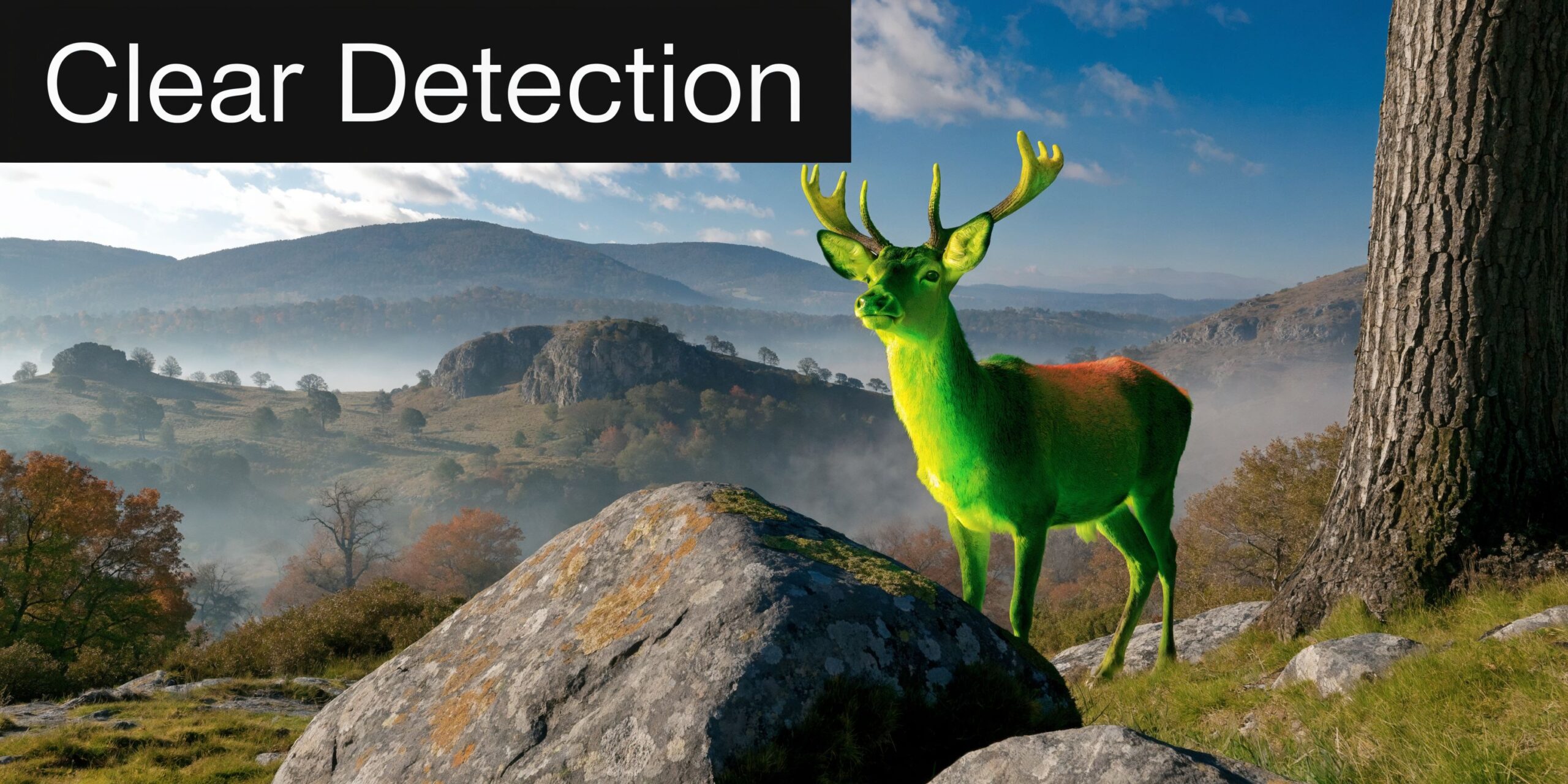
That is where the Thermion 2 LRF XP50 Pro separates itself from average thermal glass. The low-noise sensor and fast objective matter most when humidity rises, temperatures flatten out, or light rain starts cutting contrast. Under those conditions, weaker units often give you a glowing shape with soft edges. This optic does a better job holding outline, contrast, and enough texture to keep the image useful.
What detection range does and doesn’t mean
The published long-range detection figure matters for early awareness. It gives the shooter or observer more time to pick up movement, read direction of travel, and decide whether the target deserves more attention.
Field use is less about the top-end number and more about what happens inside realistic engagement distances. Detection only tells you that something warm is present. Identification and shooting confidence come later, and they depend on weather, background temperature, target posture, and how much digital zoom you are using at the time.
That trade-off needs to stay clear. A thermal can show heat far beyond the distance where it gives you enough detail for a clean call. Serious users already know that, but it is still the difference between useful surveillance and sloppy decision-making.
Why the image stays usable in bad conditions
A lot of reviews mention sensor sensitivity and lens speed, then move on. In the field, those two factors decide whether the scope keeps working once conditions turn against you.
The sub-18 mK NETD rating means the scope can pick up smaller temperature differences than many competing units. The F1.0 germanium lens helps deliver more thermal energy to the sensor instead of starving it. Put those together on a damp morning, in light fog, or over wet grass after midnight, and the result is straightforward. Better target separation. Better edge definition. Less of that washed-out thermal look that makes every heat source blend into the same bright mass.
That does not mean weather stops mattering. Heavy rain, dense fog, and bad mirage still degrade any thermal. The advantage here is that the image tends to fall off later and more gradually, which gives the shooter more usable time before conditions win.
Display quality, motion, and practical magnification
A strong sensor still needs a display that can present what the sensor is seeing. The AMOLED screen in this optic helps preserve contrast and tonal separation, which becomes more important once you start scanning fence lines, brush pockets, and moving targets against mixed backgrounds.
Smooth image flow matters too. When an animal is quartering across a field or a subject appears between gaps in cover, choppy motion makes confirmation slower than it should be. This scope presents movement in a way that feels controlled instead of jumpy, and that helps more than buyers expect during use.
The same goes for magnification. Low base magnification is easier to live with while scanning, tracking, and keeping spatial awareness. Push digital zoom too far and any thermal image starts giving up detail. The XP50 Pro holds together better than entry-level optics because the base image is stronger, but the rule still stands. Stay low until you need precision.
Picture-in-Picture is the right tool here. Keep the main view wide, use the magnified window for the aiming point, and avoid living at max zoom unless the shot setup really calls for it.
A practical setup looks like this:
- Scan on low magnification.
- Confirm shape and movement before adding zoom.
- Use PiP for the shot instead of narrowing your whole field of view.
- Back off magnification if the image starts losing detail in humidity or clutter.
Hard-use confidence on rifles that get carried
Image quality only matters if the optic keeps working after recoil, bad weather, and routine abuse in the truck or field. The XP50 Pro is built for that kind of use. It is rated for heavy recoil and wet conditions, which is what serious buyers should expect in this price class.
That matters in practical terms. A thermal scope that shifts zero, fogs up, or starts acting erratic after a rough week is a liability, not an asset. This unit is better suited to rifles that get fired often, carried in rough weather, and used for more than occasional night shooting.
Field Applications for Hunting and Professional Use
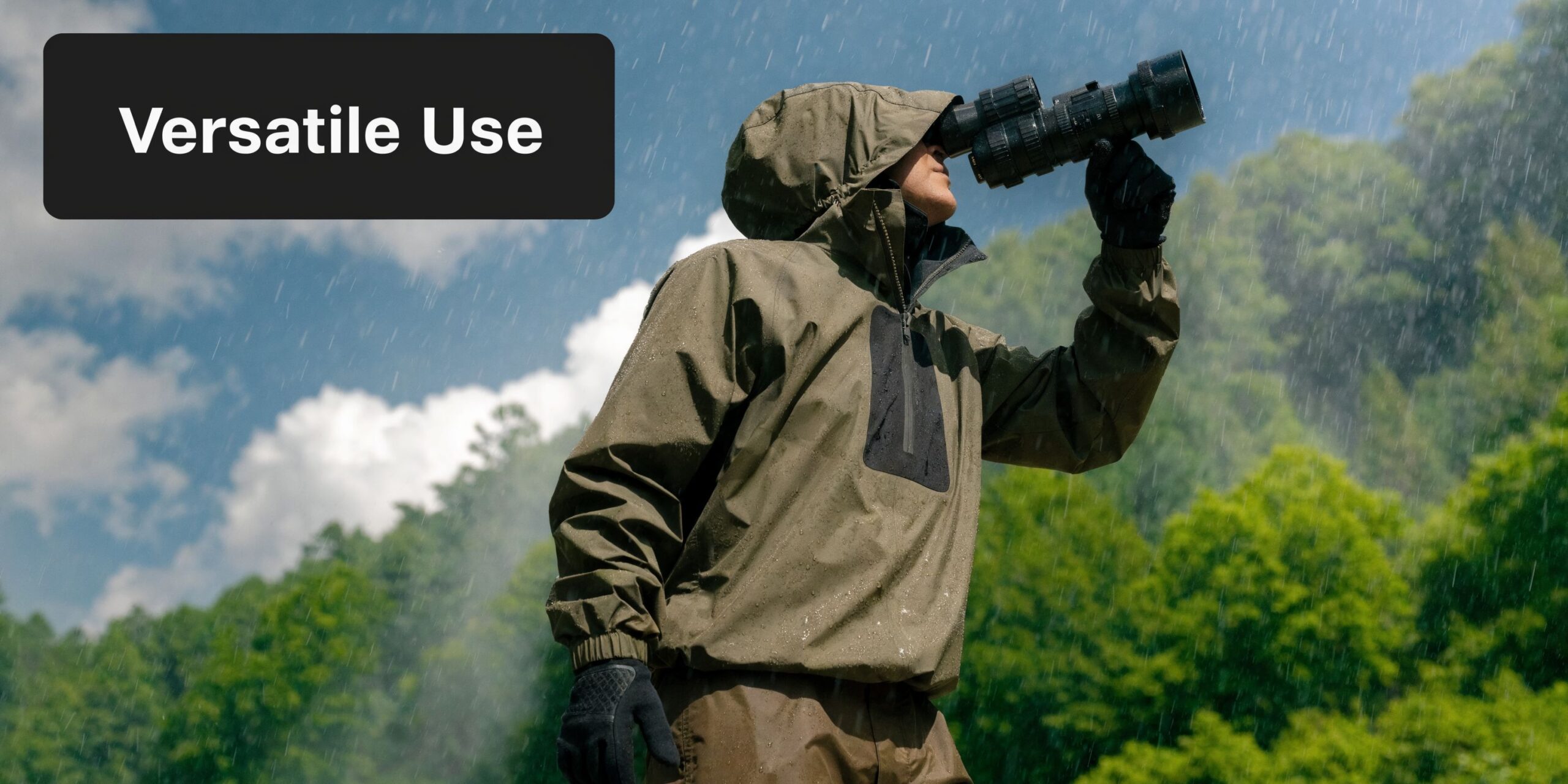
A thermal scope earns its place after dark, in bad air, and under time pressure. The Thermion 2 LRF XP50 Pro fits shooters and professional users who need to spot heat early, judge distance fast, and keep useful image detail when weather starts working against them.
A common field problem looks like this. Dawn is breaking, humidity is hanging low over a pasture, and hogs are moving along a tree line that usually smears into the background on cheaper thermals. The XP50 Pro’s sub-18 mK sensitivity and F1.0 lens do not turn bad conditions into perfect conditions, but they do help preserve separation between animals, cover, and ground clutter longer than lower-grade units usually can. That is the difference between spotting heat and being able to work with the image.
Hunting use where thermal earns its keep
This scope makes the most sense on larger tracts, crop edges, open pasture, senderos, and mixed ground where shot opportunities can develop close, then stretch out fast. It is also well suited to rifles that stay set up for predator control instead of occasional novelty use.
The integrated rangefinder matters more in the field than it does on a product page. At night, distance gets deceptive quickly. A coyote angling across a cut field or a sounder breaking from brush can look well inside or well beyond your hold. Getting a real range reading cuts down hesitation and bad assumptions.
The image quality advantage shows up most in marginal conditions. In foggy dawns, after rain, and on humid nights, thermal performance usually falls off before shooters expect it to. The XP50 Pro still has limits, but its stronger sensitivity gives you a better chance of holding body outline and target separation when lesser optics start flattening everything into one hot blur.
That matters for shot discipline. It also matters for deciding not to shoot.
Hunters who get the most from this optic usually run it with a simple process. Scan on low magnification, range before committing, and use the cleaner base image to confirm what the target is doing before tightening the shot. If you want a rifle setup that supports that kind of use, this guide to a Picatinny rail scope setup is a practical reference.
Law enforcement and security roles
For law enforcement, the XP50 Pro fits observation, rural containment, and approach monitoring better than marketing-driven talk about extreme-distance performance. Thermal helps officers pick up movement around structures, fence lines, creek beds, and access routes without using visible light that gives away position.
The same strengths carry over to security contractors and rural property teams. If the job is watching a gate, a lane, or a far treeline with limited ambient light, thermal gives earlier warning than standard glass. Heat usually shows before shape is clear to the naked eye.
Professional users should stay honest about what thermal does well. It answers the first question quickly. Is something there? Positive identification can still require white light, NV, daylight optics, or closing distance, depending on policy and conditions.
The practical strengths are clear:
- Quiet observation: No visible illumination is needed.
- Better early warning: Movement along approaches and barriers stands out sooner.
- Useful stand-off monitoring: Teams can watch likely access points from cover.
- Stronger performance in poor air: High sensitivity helps retain more usable image detail in humidity, mist, and light fog.
The limitation buyers should take seriously
Published detection range is not the same thing as field identification. Serious buyers should separate those two ideas before spending this kind of money.
The XP50 Pro is a capable long-range detector, but maximum brochure numbers do not guarantee that you will clearly identify an animal, read behavior, or make a sound shot at those same distances. Weather, background temperature, terrain clutter, target angle, and magnification choices all affect what you can confirm.
Here is the practical version:
| Use case | What works well | What still requires caution |
|—|—|
| Predator or hog hunting | Detecting movement, ranging targets, tracking animals across open ground | Positive ID at distance in brush, humidity, or broken cover |
| Law enforcement observation | Locating heat sources, monitoring approaches, rural surveillance | Assuming detection range equals identification range |
| Perimeter security | Watching fence lines, gates, and long approaches in darkness | Expecting identical performance across every weather condition |
What this means for real buyers
Buyers who need more working distance, better image retention in poor air, and an integrated rangefinder in a riflescope-style package will see the value here. Buyers who expect every long-range marketing claim to translate directly into field-identifiable results should set more realistic expectations.
That is a significant trade-off. The Thermion 2 LRF XP50 Pro gives a serious user more usable thermal information when conditions get ugly, but it still rewards disciplined setup, realistic range judgment, and good decision-making behind the rifle.
Mounting Your Scope and Achieving a Perfect Zero
The Thermion 2 LRF XP50 Pro is easiest to live with when it’s mounted like a serious day optic, not treated like a gadget that just needs to be clamped on. Get the mounting right first. Then zero it carefully and save your profile cleanly.
Start with the mount, not the menu
This optic is designed around a traditional riflescope form factor, so ring selection matters. Use quality 30mm rings or a solid quick-detach mount that fits your rifle, rail height, and intended cheek weld.
If you’re sorting through rail and ring compatibility, this guide to a Picatinny rail scope setup is a practical reference.
Before you tighten anything, check three things:
- Eye position: Mount the scope where your natural cheek weld gives you a full image.
- Control access: Make sure you can reach focus and menu controls without breaking your shooting position.
- Rifle balance: Don’t push the optic so far forward or rearward that the rifle becomes awkward offhand.
A clean zeroing process beats a rushed one
Thermal zeroing punishes impatience. If the mount is stressed, the rifle isn’t supported well, or the target setup is poor, you can waste a lot of ammunition chasing corrections that aren’t the optic’s fault.
A practical method looks like this:
- Level the rifle and scope carefully. Don’t eyeball it.
- Use a stable rest. Bags or a firm support matter more than speed.
- Choose a target that gives clear thermal contrast. If the target doesn’t stand out well, zeroing gets sloppy fast.
- Fire a deliberate first shot. Don’t start with a string.
- Adjust from actual impact, not from guesswork.
Zeroing advice: Thermal optics reward a calm pace. Every rushed correction creates another problem you then have to solve.
Use the one-shot style workflow correctly
The big advantage with modern thermal zeroing is efficiency. The practical idea behind a one-shot zero process is simple. Fire one well-supported shot, freeze that impact point in the optic’s correction process, and move the reticle to it rather than burning ammunition with repeated blind adjustment loops.
That only works if the first shot is trustworthy.
The shooters who struggle most usually make one of these mistakes:
- They use an unstable position.
- They pick a target with weak thermal contrast.
- They start adjusting before confirming where the round landed.
- They change position between shot and correction.
Save profiles like you mean it
If you run the Thermion 2 LRF XP50 Pro on more than one rifle, or you use different loads, profile discipline matters. Name and store profiles in a way you’ll recognize instantly in the dark.
Keep your profile logic simple:
- Match the rifle first
- Then match the load
- Confirm before every serious outing
Don’t trust memory on a premium thermal. Trust saved settings and a quick verification shot when the mission matters.
Recommended Accessories and Advanced Configuration
Cold fog at first light is where setup choices start to matter. The Thermion 2 LRF XP50 Pro already gives you the thermal sensitivity and light transmission to pull usable detail out of bad air. The mistake is assuming accessories and menu settings are secondary. In the field, they decide whether that image stays clean, whether the rifle balances well, and whether the scope works with your routine instead of fighting it.
Start with power.
Factory runtime is adequate for a normal evening hunt or a short professional shift, but serious users should still carry backup power. Thermal performance means nothing if the optic goes dark halfway through a sit, and cold weather never helps battery confidence. An external pack makes sense for fixed observation, vehicle work, and long nights where the rifle spends more time staged than slung.
Mounting hardware matters too, even though it gets less attention than screens and sensors. A quality quick-detach mount is useful if the optic may rotate between rifles or come off for transport, but only if that mount has a real record of returning to zero. Cheap QD hardware creates work. Good hardware preserves your zero and saves time.
Support gear often buys more practical accuracy than another electronic add-on. A stable tripod, rear bag, or field rest helps you read heat signatures better, judge edges more clearly, and shoot with less wobble once magnification goes up. That matters with this optic because the image is good enough to show you more detail than your field position may let you use.
If your workflow depends on confirming distance before the shot, it also helps to understand where a weapon-mounted laser rangefinder fits into a broader observation and aiming setup.
Configure the image for the conditions
The best image settings depend less on preference than on air, ground moisture, and background clutter. On dry, crisp nights, you can usually run a sharper-looking image without losing target separation. In humidity, fog, or after rain, aggressive contrast often makes the scene look busy and hides the exact edges you need. The XP50 Pro’s low-noise image gives you something useful to work with in those conditions, but you still need to tune it with restraint.
A simple field setup works best:
| Setting area | Practical use |
|---|---|
| Color palette | Pick one for scanning and one for shot preparation |
| Brightness and contrast | Adjust for air moisture, vegetation, and background heat |
| PiP mode | Turn on for the shot. Leave off during wide-area searching |
| Magnification discipline | Stay lower while scanning. Increase only after target confirmation |
Users who get the best results usually settle on one or two palettes and stop chasing novelty. White Hot or Black Hot remain the practical default for a reason. They are fast to read, easy on the eyes, and predictable under pressure. Specialty palettes have a place, but they should solve a specific visibility problem, not distract you with extra color.
PiP deserves the same discipline. It helps with shot placement once the target is identified and distance is understood. Running it all the time crowds the screen and pulls attention away from the wider scene. For scanning, keep the main image clean.
Advanced habits that improve performance
Build one baseline setup for your ground and learn it well. That gives you a reference point when the image changes. Then you can tell whether you are seeing humidity, thermal crossover, residual ground heat, or a menu setting you pushed too far.
Recording and app connectivity are useful, but they need a purpose. Use them for firmware updates, reviewing shot behavior, documenting field conditions, or sharing footage with a partner or spotter. Do not let menu time replace observation time.
The XP50 Pro rewards consistency. Set it up to match your terrain, your rifle, and the way you hunt or work. Then leave the gimmicks alone and let the optic do its job.
Warranty Service and Buying from Superior Tactical
A thermal scope usually proves its value after the first sale, on a cold, wet night when something is off and you need an answer fast. That is the point where dealer support matters as much as image quality.
The Thermion 2 LRF XP50 Pro gives serious users a lot to work with. Its sensitivity and F1.0 lens help in the conditions that make lesser thermals look flat, especially in foggy dawn light, wet fields, and high humidity. That performance edge is real. It also means buyers should judge the package as a working tool, not just a catalog item.
Buy with field use and support in mind
Manufacturer specs set the baseline, but ownership questions decide whether the optic stays useful over time. Pulsar lists the operating range and core features on its Thermion 2 LRF XP50 Pro product page. What public materials usually do not show in detail is how any thermal behaves after long exposure to deep cold, repeated recoil, vehicle transport, or hard humidity swings.
That is where experienced dealer support earns its keep.
Ask the practical questions before you buy:
- If image response changes in severe cold, who helps you sort out settings versus hardware?
- If the ranging system or zero seems off, can the seller help diagnose the cause before you lose time shipping it around?
- If runtime drops, can someone walk through battery condition, charging habits, and field setup with you?
- If the optic needs service, do you have a clear repair path?
Those answers matter more than another hour spent comparing menu screenshots.
Service matters on a premium optic
This scope sits in the price range where mistakes are expensive. A bad mount choice, a rushed zero, or a misread menu setting can get blamed on the optic when the actual issue is setup. A dealer who works with thermal gear every day can usually sort that out quickly.
That has real value for hunters, land managers, and professional users who depend on the rifle being ready at night. Fast support helps. Accurate support saves more frustration.
Good post-sale support usually covers the problems that show up in use:
- Rifle and mount pairing
- Zeroing questions
- Battery and charging issues
- Firmware or menu confusion
- Separating environmental limitations from hardware faults
Buying from Superior Tactical
If you want a straight answer on whether the thermion 2 lrf xp50 pro fits your rifle, terrain, and use case, talk with Superior Tactical LLC. Their team works with night vision, thermal optics, mounts, and related gear every day, offers responsive support, same-day shipping, and performs in-house repairs with free diagnostics.
That kind of support matters with a scope like this. The XP50 Pro makes sense for users who will benefit from better thermal sensitivity, more useful detail in rough weather, integrated ranging, and a traditional riflescope form factor. It makes less sense for a buyer whose shooting is limited to short distances in easy conditions.
Buy it for the conditions that expose the difference. Buy it from a dealer who can still help when those conditions show up.
