

Can Thermal Imaging Cameras See Through Walls? The Truth.
Most advice on this topic is wrong because it answers too fast.
If you ask, can thermal imaging cameras see through walls, the clean answer is no. But that simple answer hides the part that matters in the field. A thermal optic may not show you a person standing behind brick or drywall like a movie scene, yet it can still show you the wall’s thermal story. Sometimes that story is useless. Sometimes it gives you enough to spot a pipe, a hot electrical run, a recent heat source, or a rough indication that something warm has been parked against a thin surface long enough to matter.
That distinction matters to officers, hunters, and security professionals because bad assumptions get people to trust the wrong tool for the wrong job. Thermal is outstanding when you use it for what it does well. It becomes a liability when you expect structural x-ray vision.
The Hollywood Myth vs Operational Reality
Movies trained a lot of people to think thermal optics can outline a person through any wall, door, or roof panel. That’s fiction, not field reality.
Thermal imaging cameras cannot see through walls, and this misconception has been pushed by Hollywood since the 1980s. Common materials such as drywall, brick, concrete, and wood block the long-wave infrared radiation thermal cameras detect, absorbing or reflecting over 99% of it in the 8 to 14 μm range, as explained by InfraScan’s discussion of what thermal imaging can and cannot see through.
What operators get wrong
The mistake usually starts with the phrase “see through.”
A thermal optic doesn’t work like a magic sensor that looks past solid structure. It reads radiated heat reaching the sensor from visible surfaces. If a wall is between the camera and the heat source, the wall becomes the thing you’re reading.
That means your image is only as honest as the surface in front of you.
What the wall can still tell you
At this point, the useful nuance starts. Even though the camera can’t penetrate the wall, the wall may still show evidence of heat transfer. A thin interior partition, a hot pipe, a wiring fault, a warm vent chase, or somebody standing in one place for too long can change the wall surface enough to create a clue.
Those clues are not silhouettes. They’re not confirmation of exact identity, posture, or weapon status.
They’re indicators.
Operational takeaway: Thermal doesn’t show you what’s behind the wall. It shows you what the wall is doing.
That’s a major difference. Professionals work from that difference every time they scan a structure.
If you’re new to thermal, the right mindset is simple. Stop asking whether it sees through walls. Start asking whether the surface is leaking information, and whether that information is strong enough to trust.
How Thermal Imaging Works
A thermal camera sees heat radiation the way your eyes see visible light. Your eyes need reflected light. A thermal sensor needs infrared energy coming off a surface.
Every object with a temperature above absolute zero emits infrared energy. Thermal imagers detect that energy, convert it into an electrical signal, and display it as a visible image called a thermogram.
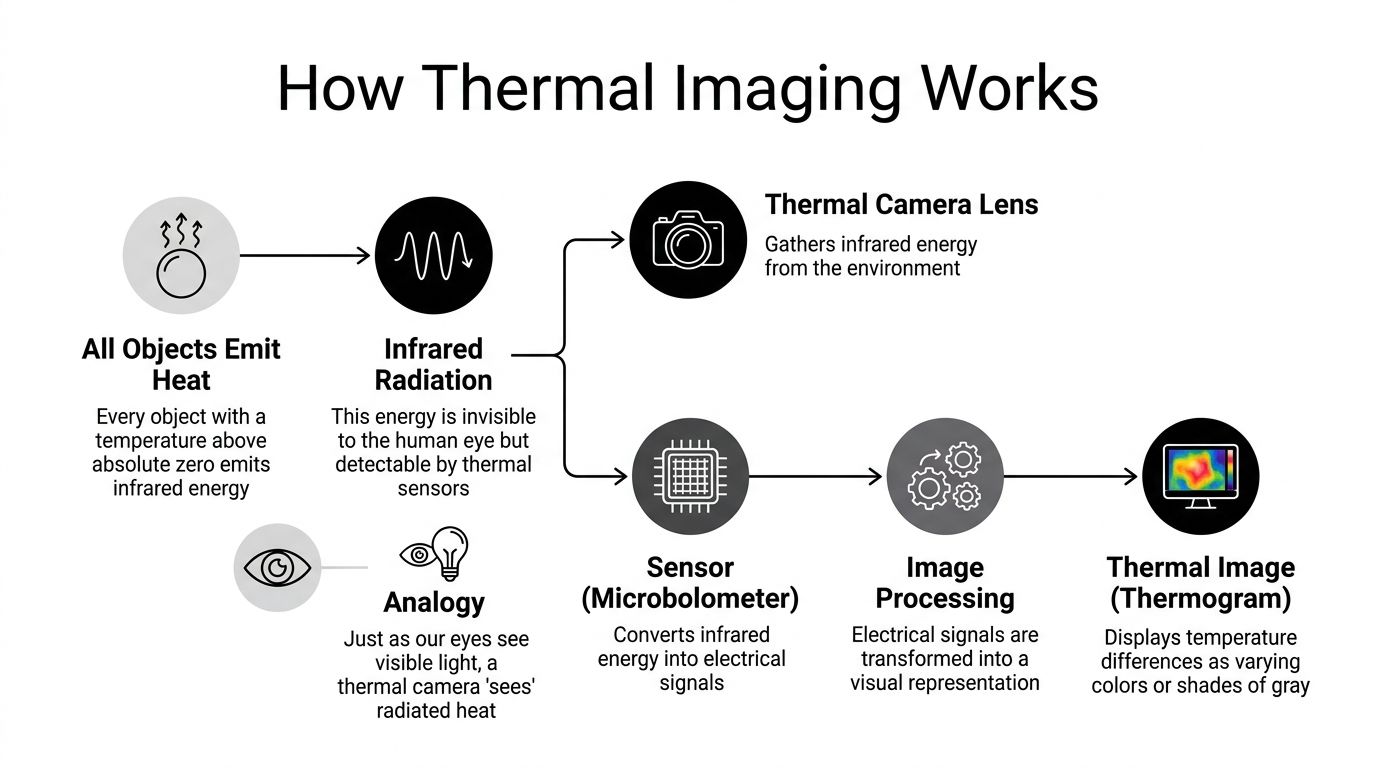
What the sensor is really reading
The camera is not “seeing heat inside an object.” It is reading surface-emitted infrared energy and turning relative temperature differences into contrast.
That’s why two things matter so much in practice:
- Surface temperature
- Emissivity, or how efficiently that surface emits infrared radiation
A matte painted wall usually gives a cleaner reading than a glossy or reflective surface. A dirty engine block, wet panel, painted cinderblock, and glass window all behave differently. If you don’t understand surface behavior, you’ll misread the image.
A helpful primer on the basics sits in Superior Tactical’s guide to what thermal vision is.
Why a person behind drywall doesn’t appear like a body outline
A thermal camera doesn’t detect “human-ness.” It detects emitted infrared energy that reaches the lens.
That’s why a person behind a standard 0.5-inch drywall layer won’t produce a visible silhouette. What can happen is slower and less dramatic. The body, emitting around 9 to 10 μm IR at 36°C, can warm the wall surface over time. After 10 to 30 minutes, that can warm the surface by 2 to 5°C, which a high-resolution thermal sensor may show as a diffuse hot spot rather than a body-shaped image, as described in Oukitel’s explanation of thermal camera limits through walls.
The practical chain from heat source to image
Think of it in steps:
An object generates heat
A person, pipe, motor, wire run, or recently operated appliance has its own temperature.That heat transfers
Some of it moves into nearby material by conduction.The material surface changes
The side of the wall facing you may warm or cool slightly.The camera reads that surface change
The thermogram shows a pattern, not the hidden object itself.
That’s why thermal work rewards patience. If the heat source just arrived, the surface may show nothing. If the source has been there long enough, the surface may start to map the hidden condition.
Why image interpretation matters more than color palettes
New users get distracted by palettes, screen brightness, and whether white-hot looks cooler than black-hot. Those settings help readability, but they don’t create information that isn’t there.
A good operator pays more attention to:
| What matters | Why it matters |
|---|---|
| Temperature contrast | Low contrast means weak detection and vague shapes |
| Surface material | Different materials emit and reflect IR differently |
| Dwell time | Heat needs time to transfer into a visible surface anomaly |
| Angle and distance | Bad viewing angle can flatten subtle anomalies |
| Environment | Sun loading, wind, rain, and HVAC can distort readings |
Don’t treat a thermogram like a photograph. Treat it like a temperature map of the surfaces you can see.
That one habit clears up most confusion about walls, windows, and barriers.
Why Walls Are an Impenetrable Barrier for Thermal
A wall blocks thermal vision for the same reason a brick wall blocks your eyesight. It’s opaque to the energy your sensor needs.
For visible light, your eyes fail because the wall doesn’t let the light through. For thermal, the same principle applies in a different band. Long-wave infrared doesn’t pass through ordinary building materials in a useful way.
The material is the barrier
Drywall, wood, brick, and concrete don’t act like a thin veil. They act like a stop sign.
Since thermal imaging entered military use in the 1970s, it has consistently failed wall-penetration tests. A 1991 DARPA study quantified infrared attenuation at more than 95% for 10 cm brick and 99.9% for 20 cm concrete at 10 μm wavelengths, as summarized in Raythink’s review of thermal imaging and wall penetration.
Those numbers tell you the problem isn’t lack of magnification or poor resolution. The problem is that the signal you want is being blocked before it ever reaches the lens.
Why insulation makes things worse for detection
A lot of wall systems are designed to resist heat transfer. That’s their job.
Studs, insulation, sheathing, vapor barriers, brick veneer, block, and interior board all slow or redirect thermal movement. So even if a warm body or hot object sits on the other side, the outer surface may show only a weak, delayed, spread-out change. In many situations it shows nothing useful at all.
That’s why exterior walls are usually poor candidates for meaningful human detection by thermal alone.
Why “better thermal” doesn’t solve physics
A more expensive thermal unit helps with sensitivity, image quality, refresh rate, and target recognition in open air. It does not turn brick into a transparent material.
Here’s the practical breakdown:
- Higher resolution helps you read finer surface patterns
- Better sensitivity helps you notice smaller temperature differences
- Better processing helps clean up the image
- None of those features create through-wall vision
That’s the part many buyers miss.
If the barrier blocks the relevant infrared energy, the optic can only read the barrier’s surface. A premium unit gives you a better look at the wall, not a look through it.
The camera isn’t failing. It’s doing what physics allows.
That’s why good teams stop blaming the device and start choosing the right tool for the question they need answered.
When Thermal Imaging Reveals Clues About What’s Inside
At this point, thermal becomes useful again.
You still can’t see through a wall. But under the right conditions, you can read evidence of heat transfer on that wall and make a measured inference about what may be behind it.
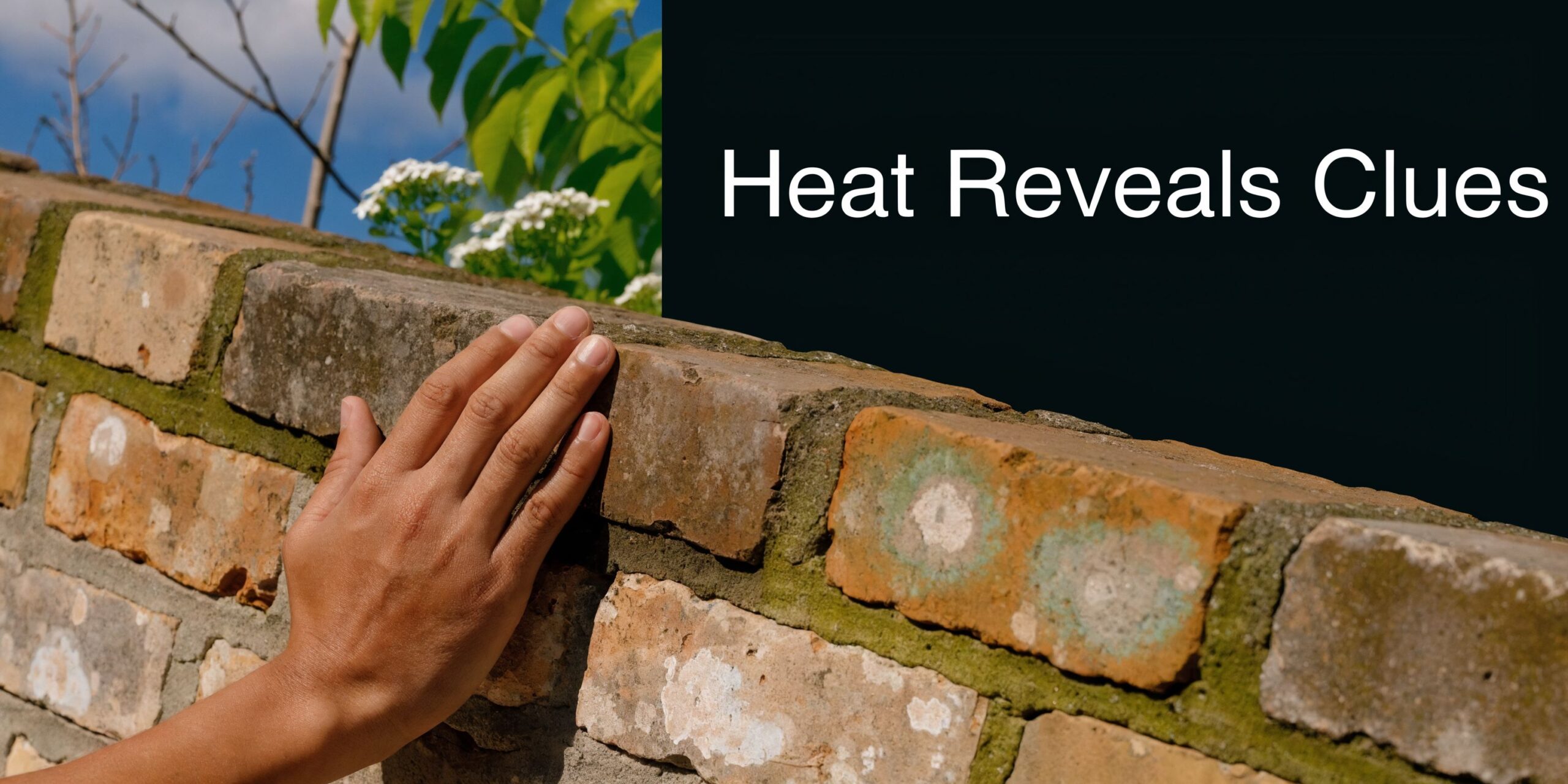
The wall surface can leak information
A hidden pipe, overloaded electrical run, or recently occupied interior space may leave a thermal signature on the exposed side of a wall. That signature usually appears as a pattern, not a literal picture of the source.
Skilled thermographers can detect hot pipes or electrical faults 2 to 4 inches within drywall via surface gradients of 5 to 10°C, though that effect drops off fast beyond 6 inches in insulated walls. In tactical settings, body heat may create a detectable hot spot on thin interior drywall after 10 to 30 minutes of occupancy, allowing approximate location mapping, according to FLIR’s overview of whether thermal imaging can see through walls.
That’s the line between myth and reality. You’re not detecting a face, torso, or hands. You’re spotting a temperature anomaly that suggests a source behind the surface.
What a useful clue looks like
In the field, useful anomalies tend to fall into a few categories:
Linear signatures
These often point to pipes, radiant lines, conduit runs, or framing effects.Diffuse warm patches
These can suggest a body near a thin interior wall, a warm appliance, or residual heat spread over an area.Hard hot spots
These are more consistent with electrical faults, motors, transformers, or localized equipment heat.Edge leakage
Warm air escaping under a door or around a frame often tells you more than the wall itself.
Thermal Visibility Through Common Materials
| Material | Thermal Visibility | Reason |
|---|---|---|
| Thin interior drywall | Limited clue detection | Surface may warm enough to show a diffuse anomaly after sustained heat transfer |
| Insulated interior wall | Poor | Insulation disrupts and spreads heat before it reaches the visible surface |
| Brick exterior | Very poor | Mass and opacity block useful infrared transmission and slow heat conduction |
| Concrete wall | Near zero for hidden-body inference | Dense material blocks the signal and suppresses usable surface detail |
| Interior hollow-core door | Condition dependent | Thin material and edge leakage may reveal temperature difference more readily |
| Tarp or tent fabric | Better than solid walls | Thin material allows much more thermal transmission than structural materials |
| Glass | Misleading | You usually read reflections and surface effects, not what’s behind it |
Conditions that improve your chances
Success depends less on the optic model than on the setup around the target.
A clue becomes more visible when:
The hidden source is warmer than the surrounding structure
More contrast gives the surface a better chance to register change.The source stays put
Time allows conduction to build a readable pattern.The wall is thin and lightly insulated
Interior partitions often reveal more than heavy exterior construction.The environment is stable
Wind, rain, direct sun, and HVAC flow can wash out subtle cues.You scan the entire area, not one point
Relative comparison often matters more than an absolute number.
What experienced operators look for
A good scan of a structure is not a stare at the center of the wall. It’s a methodical read of the whole thermal context.
Operators often compare:
- Areas around outlets, switches, and breaker runs
- Wall sections near plumbing chases
- Door frames and thresholds
- Window edges
- Places where someone could have been leaning, sitting, or bracing
- Adjacent panels to establish a thermal baseline
A wall rarely gives up one clean answer. It gives you a pattern of small tells.
That’s why thermal supports judgment. It rarely replaces it.
Where people overcall the image
The biggest error is turning a vague warm patch into a firm claim. A hot rectangle might be a duct, a pipe, recent sunlight, an appliance, or a person who stood there. If you treat every anomaly like confirmed human presence, you’ll build bad tactics around false confidence.
Use thermal clues as part of a wider assessment:
- visual indicators
- sound
- building layout
- recent occupancy signs
- air movement
- known utilities
- team reporting
In short, thermal can’t show you the hidden room. It can sometimes show you that the wall isn’t thermally normal, and that’s often enough to justify a closer look.
Practical Use Cases for Law Enforcement and Outdoorsmen
Thermal earns its keep in open environments, low light, and visually cluttered terrain. That’s where it stops being a debated technology and starts being a working tool.
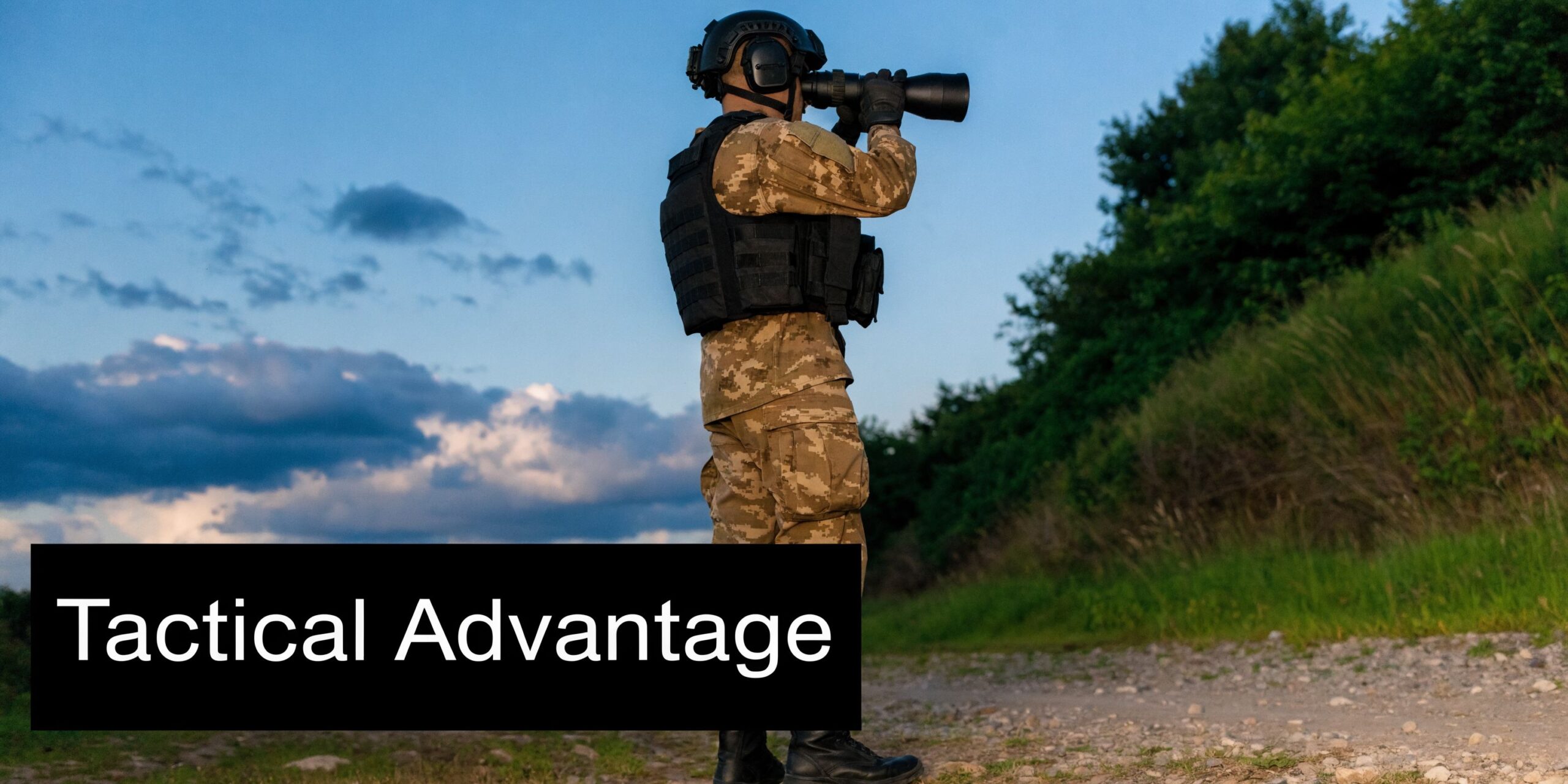
Law enforcement use in practice
For patrol, fugitive work, and perimeter security, thermal is strongest when the target is not structurally shielded.
An officer scanning a tree line, ditch line, roofline, alley, or field can pick up heat that visible light misses. A vehicle that was recently driven may stand out. A person prone in tall grass may separate from the background. A suspect trying to hide in brush often gives off enough contrast to be found even when ambient light is poor.
Around buildings, thermal is still valuable, just not for fantasy reasons. You can often read:
- Heat escaping around doors and windows
- Recently active exterior areas
- Roof or vent signatures
- Equipment heat on the outside of a structure
- Movement from one opening to another after a person exposes themselves
A practical overview of those field applications appears in Superior Tactical’s page on thermal imaging application.
Hunting and recovery
Hunters get the biggest advantage from thermal when they use it for detection, recovery, and movement, not target identification through hard cover.
A few common examples:
| Scenario | What thermal does well | What it won’t do |
|---|---|---|
| Scanning a field edge | Picks up animal heat against cooler terrain | Won’t reliably identify fine features through dense solid cover |
| Tracking after a shot | Helps locate a warm body or fresh sign in darkness | Won’t replace proper shot confirmation and sign discipline |
| Night navigation | Highlights terrain contrast, animals, and hazards | Won’t read through glass or show every depression perfectly |
| Checking brush lines | Finds heat pockets that visible light misses | Won’t look through trunks, rocks, or walls |
Smoke, fog, and visual clutter
Thermal also shines when visible optics struggle.
If your scene includes haze, smoke, or fog, thermal often keeps enough contrast to remain useful where normal glass falls apart. That’s one reason people who work nights, weather, and rough ground keep thermal in the kit even when they also run night vision.
In open country, thermal helps you detect first. Then you close distance and confirm.
That’s the right workflow for both officers and hunters. Detection and identification are not the same step.
Where disciplined users get the most value
The best thermal users do three things well:
They scan wide before zooming in
Wide scanning catches movement and contrast changes faster.They confirm with another source
White-hot on a screen isn’t proof by itself.They respect barriers
They don’t waste time trying to read through materials that won’t cooperate.
That approach keeps thermal in its proper lane. It’s one of the best tools available for finding heat in the dark. It’s not a shortcut around structure, cover, or the need for confirmation.
Alternatives and Tactics for True Through-Wall Visibility
If through-wall visibility is essential, thermal is the wrong primary tool.
That doesn’t make thermal less useful. It just means you need to pair it with technology and tactics built for interior sensing.
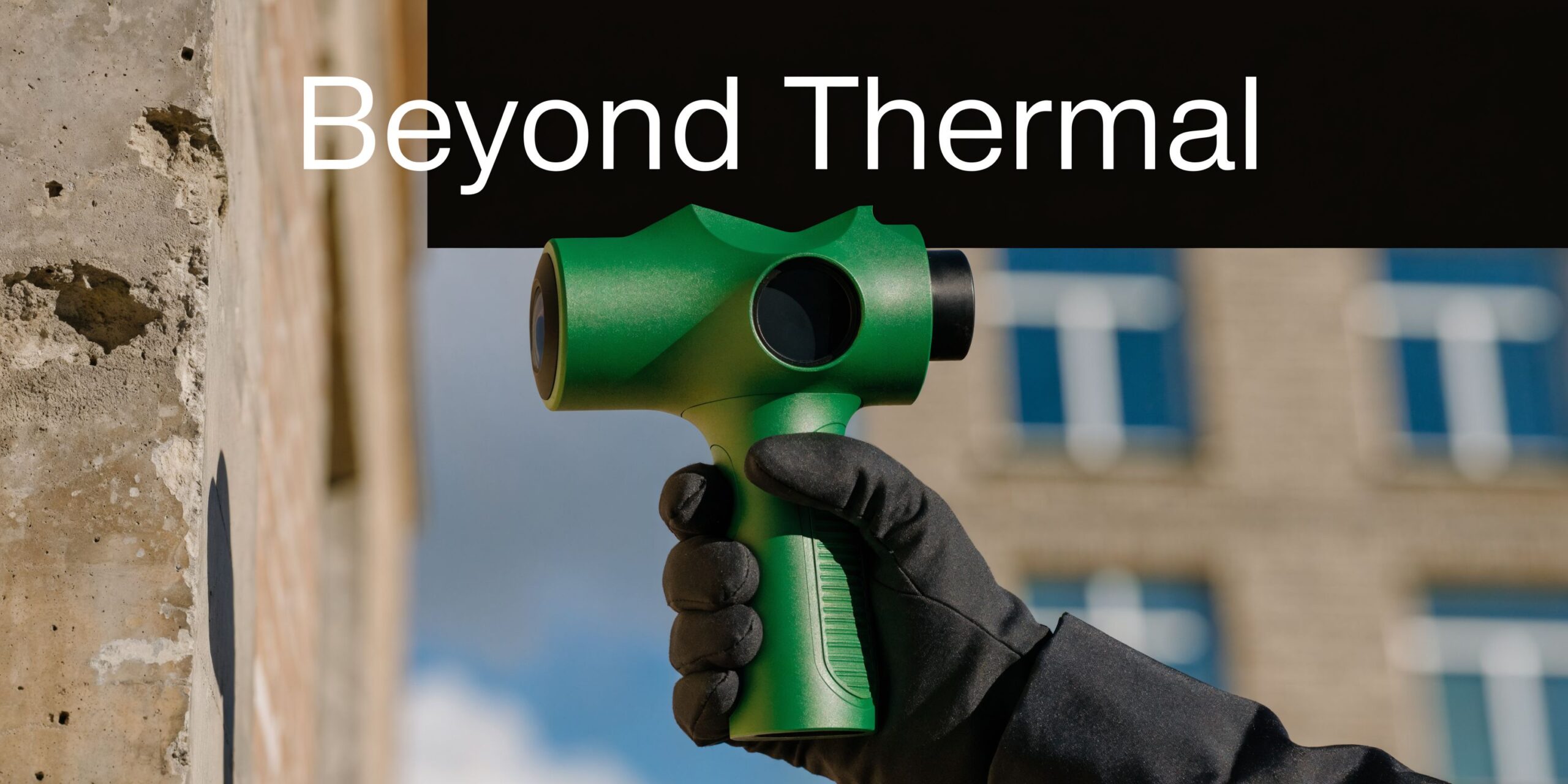
What professionals use instead
State-of-the-art uncooled LWIR sensors can achieve very high spatial resolution, but they still fail against walls because of infrared opacity. For breaching and true interior sensing, professionals integrate systems such as 60GHz FMCW through-wall radar with 1 to 10 m detection range at 1 m resolution, and those hybrid setups have shown 3x better hit rates in cluttered environments, according to Thermal Master’s discussion of thermal limits and radar alternatives.
That matters because radar and thermal answer different questions:
- Thermal asks, “What surfaces are warm right now?”
- Through-wall radar asks, “Is there movement or presence behind this barrier?”
- Borescopes ask, “Can I get visual access through a tiny opening?”
- Acoustic and listening methods ask, “What can I detect without exposing the team?”
The smart approach is layered
Teams get in trouble when they chase one magic device. Good entry work usually stacks tools and observations.
A practical sequence often looks like this:
Exterior thermal scan
Read doors, windows, rooflines, vents, and surface anomalies.Audio and environmental read
Listen for movement, voices, fans, televisions, or tool noise.Structural assessment
Identify likely room layout, utility runs, likely occupancy points, and dead space.Dedicated through-wall tool if authorized and available
Use radar or another purpose-built sensor for motion or presence.Low-tech confirmation
Fiber optic scope, mirror, camera pole, or controlled opening if tactics allow.
A related comparison that helps buyers avoid bad assumptions is Superior Tactical’s guide on thermal scope vs night vision.
Low-tech methods still matter
People often jump straight to exotic gear and forget that simple methods can solve the problem with less uncertainty.
Useful options include:
- Borescopes and fiber optics through existing gaps or small openings
- Mirror checks around angles and partial breaches
- Listening at likely transfer points such as hollow doors and vents
- Observation of airflow and light leaks under doors or through seams
The right answer usually isn’t one device. It’s thermal for exterior clues, another sensor for interior presence, and disciplined tactics to confirm before action.
That’s how professionals keep expectations realistic and decisions grounded.
Frequently Asked Questions About Thermal Vision
Can thermal imaging see through glass
No. In practice, glass is a poor window for thermal imaging. It often reflects infrared energy instead, so you end up reading reflections or the glass surface rather than what’s behind it.
Can thermal imaging see through clothing
Not in the way people imagine. Thermal reads the outer surface temperature it can detect. Heavy clothing, loose layers, and gear all change or block the heat pattern coming off the body.
Can thermal imaging see through smoke or fog
It can work well in smoke and fog compared with visible-light devices, which is one of thermal’s biggest strengths in the field. It still isn’t magic, but it often preserves usable detection when normal optics lose the scene.
Can thermal imaging see through tents, tarps, or thin barriers
Sometimes it can detect heat through thin materials much better than it can through structural walls. Even then, results depend on material, temperature contrast, and how the material is hanging or contacting the heat source.
Can thermal show a person behind drywall
It won’t show a clean human outline through drywall. Under limited conditions, a person near thin interior drywall long enough may create a warm area on the visible side, which can suggest occupancy without confirming identity or exact posture.
Is thermal better than night vision
They do different jobs.
Thermal is usually better for detection because heat stands out in darkness and many obscured environments. Night vision is usually better for detail, navigation, and scene interpretation when ambient or assisted light is available.
What’s the biggest mistake new users make
They mistake a thermal image for a literal photograph of reality. It isn’t. It’s a temperature-based representation of the surfaces the sensor can read.
So what’s the final answer
If you’re asking whether thermal can give you movie-style through-wall vision, the answer is no.
If you’re asking whether a trained user can learn something from the wall surface itself, the answer is sometimes yes. That’s the practical answer professionals work with.
Superior Tactical LLC helps officers, hunters, and serious night users build the right low-light kit without the hype. If you need dependable guidance on thermal optics, night vision, mounts, accessories, or repair support, visit Superior Tactical LLC.
