
Thermal Imaging Buyer’s Guide
Thermal imaging works on a fundamentally different principle than night vision. Where a night vision tube amplifies the small amount of visible and near-infrared light already in the environment, a thermal device sees heat — the long-wave infrared radiation that every object above absolute zero emits. That difference is why a thermal sees through complete darkness, light fog, smoke, and dense vegetation in ways night vision can’t, and why a deer or hog stands out as a glowing white shape against a cool background regardless of how dark the conditions are.
For hog and predator hunters, search and rescue, security, and law enforcement, thermal has become essential equipment. This guide walks through what actually matters when comparing units: form factors, the specs on the data sheet, how thermal differs from night vision, and what to expect at each price tier.
Thermal vs. Night Vision — When to Pick Which
Thermal and night vision aren’t competitors so much as complementary tools. Each does something the other can’t.
- Thermal: Sees heat. Detects living things and warm objects regardless of ambient light. Works through smoke and light fog. Penetrates light vegetation that hides game from night vision. Doesn’t show detail well — a deer is a white blob, not a deer with antlers and texture.
- Night vision: Sees light. Shows the world the way you’d see it in dim moonlight, with full detail and recognition. Doesn’t work in pitch darkness without IR illumination. Can’t see through smoke or vegetation. Shows you what something is.
Serious users often run both — thermal to find animals or threats at distance through cover, night vision to identify and engage. For a buyer choosing one, the answer comes down to use case: hog and predator hunting, search and rescue, and security applications generally favor thermal; close-quarters movement, driving under low light, and tactical work where target identification matters generally favor night vision.
Form Factors
Thermal Monoculars
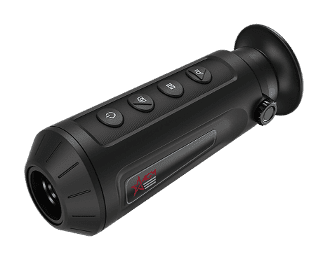
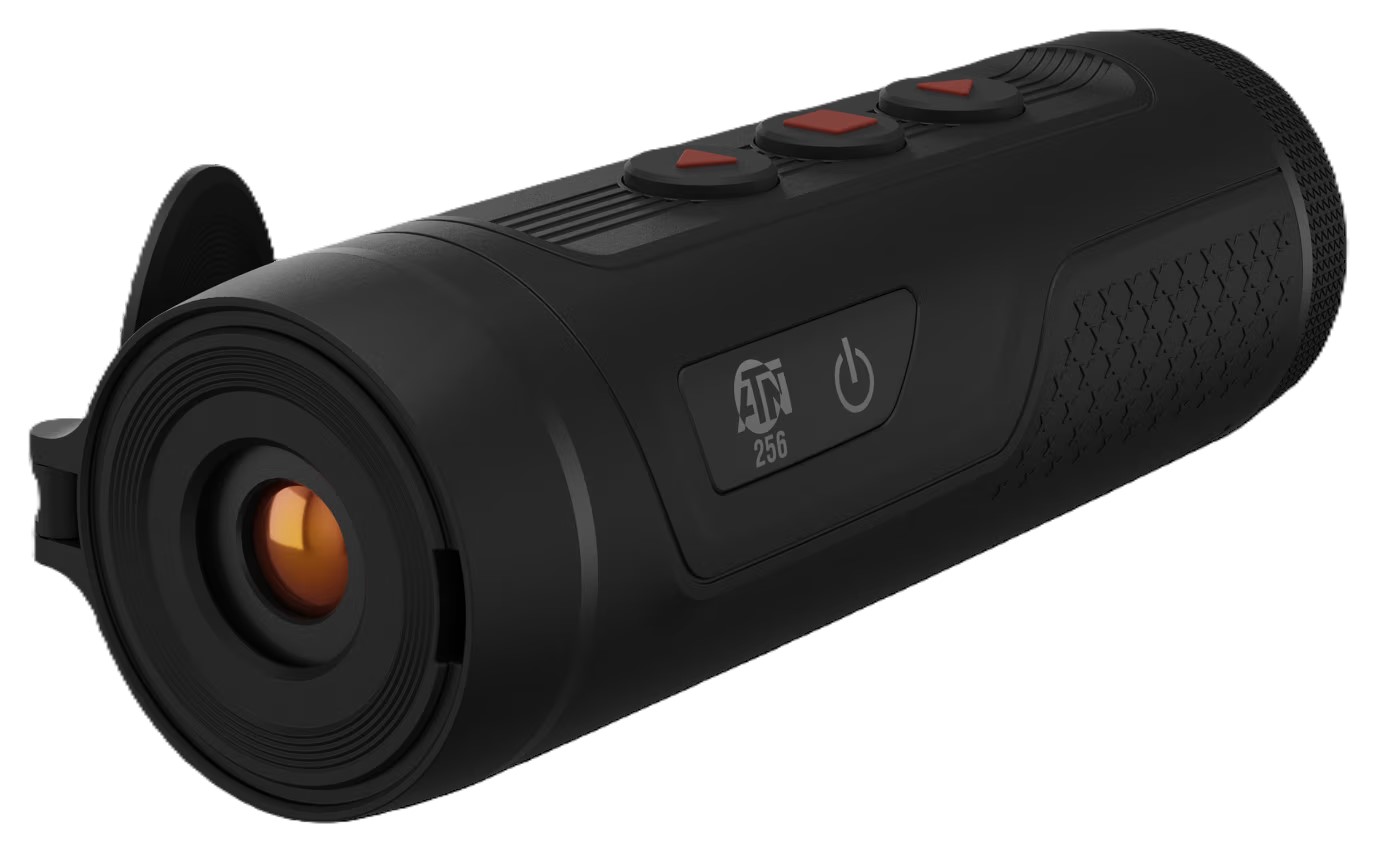
Handheld scanning devices, often with the option to helmet-mount. Ideal for spotting game, scanning a perimeter, or searching for missing persons. The most versatile form factor — you can pair a thermal monocular with a separate night vision device for the find-then-identify workflow many serious users prefer.
Thermal Rifle Scopes
Built for shooting — the thermal equivalent of a rifle scope, with a reticle, zoom, and adjustable POI. Mounted directly to a Picatinny rail. Best for dedicated hog and predator rigs where the rifle is built around the thermal. Higher-end units include onboard ballistic calculators, video recording, and stadiametric rangefinders.
Thermal Clip-Ons
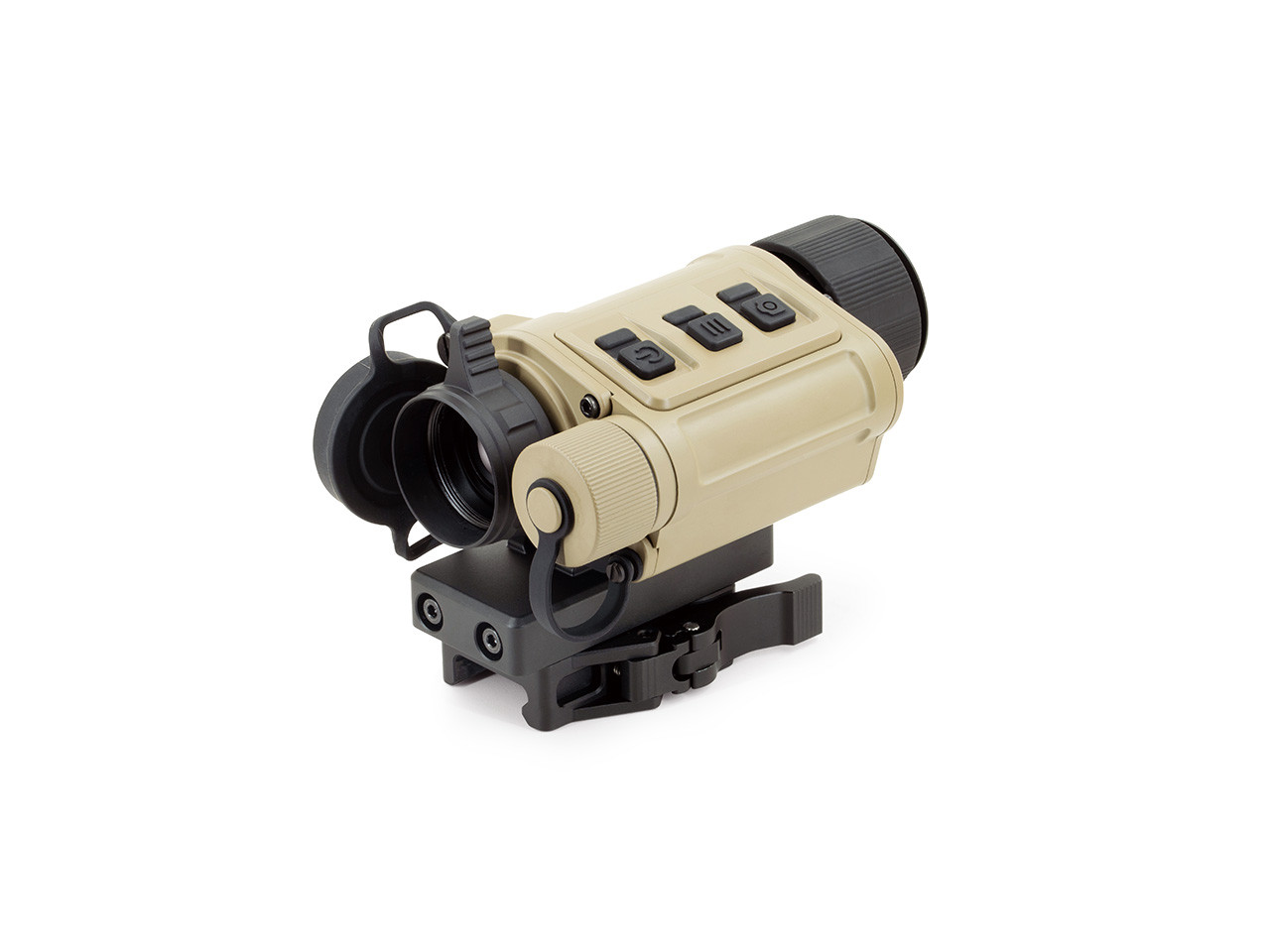
Mount in front of a traditional day scope, converting it into a thermal sighting system without changing zero. The advantage is using your existing day optic and zero — pull the clip-on off and you’re back to a regular day rifle. Premium clip-ons (Trijicon SNIPE-IR, IR Patrol-clip variants, AGM Rattler TS clip-ons) are highly sought after for dual-use rifles, but they’re expensive and require careful day-scope compatibility checks.
Thermal Binoculars
Two thermal sensors in a binocular form factor, delivering depth perception and reduced eye fatigue over extended scanning. Less common than monoculars; typically premium-priced. A specialized choice for users who scan for hours at a time.
The Specs That Actually Matter
Thermal spec sheets are dense, but a handful of numbers determine real-world performance.
Sensor Resolution
The native resolution of the thermal sensor — measured in pixels (e.g., 256×192, 384×288, 640×480, 1280×1024). Higher resolution means more detail at distance and a sharper image. The dominant resolutions in the consumer/LE market are 384×288 (mid-tier) and 640×480 (premium). 256×192 is entry-level; 1280×1024 is top-of-the-line. Resolution matters more than any other single spec for how usable the image is at the distances you’ll actually shoot or identify at.
NETD (Noise Equivalent Temperature Difference)
How small a temperature difference the sensor can detect, measured in millikelvin (mK). Lower is better. NETD <40 mK is acceptable, <30 mK is good, <25 mK is excellent. Lower NETD means more contrast — you’ll see subtle thermal differences (a deer bedded in cool grass, a person hiding in light brush) that a higher-NETD sensor washes out. The difference between a 40 mK and a 25 mK sensor is dramatic in marginal conditions.
Refresh Rate
How many times per second the image updates, measured in hertz (Hz). 60 Hz is the modern standard for quality thermal — smooth tracking of moving targets, no perceptible lag. 50 Hz (common on European-spec units) is functionally equivalent. 30 Hz is noticeably choppier; 9 Hz (mostly legacy export-spec units) is unusable for anything moving. For any quality thermal, expect 50/60 Hz.
Base Magnification and Optical Zoom
Base magnification is the optical zoom of the lens — typically 1x-4x for monoculars and 1.5x-6x for scopes. Many units add digital zoom on top, but digital zoom doesn’t add resolution; it just enlarges what the sensor already captured. Pay attention to the base optical magnification, not the maximum digital zoom. A 384×288 unit at 2x base mag with 4x digital zoom looks worse than a 640×480 unit at 2x base mag with no digital zoom.
Lens Focal Length and Objective Diameter
Longer focal length lenses (35 mm, 50 mm, 75 mm) deliver higher base magnification and greater detection range, at the cost of weight and field of view. Shorter focal length lenses (19 mm, 25 mm) give wider field of view for scanning at the cost of detection range. Match the lens to the use case: long focal length for precision work at distance, shorter for close-range scanning and movement.
Detection / Recognition / Identification Range
Manufacturers publish DRI ranges — the distance at which the unit can detect (something is there), recognize (it’s an animal/person), or identify (it’s a hog vs. a coyote, a man vs. a woman). Identification range is the meaningful number for shooters; detection range is what you’ll use for area scanning. A unit with 1,500 yard detection on a man-sized target may only have 300-400 yard identification range on the same target.
The Major Manufacturers
Pulsar
The dominant brand in the U.S. thermal hunting market. The Helion and Axion lines (monoculars) and the Thermion line (rifle scopes) cover entry through premium tiers. Strong build quality, mature feature sets, excellent app integration, and broad availability. A safe default for most thermal buyers.
Trijicon (formerly IR Defense)
The premium tactical standard. The IR Patrol monocular, REAP-IR rifle scope, and SNIPE-IR clip-on are issued to U.S. military and SOF units and represent the top of the market for build quality, ruggedness, and image performance. Premium pricing reflects mil-spec design and U.S. manufacturing.
InfiRay (iRay USA)
Rapidly gained ground in the U.S. market with the RICO Mk1 and RH/RL series. Strong sensor performance, often using newer 12-micron pixel pitch sensors that deliver more detail per dollar than older designs. Excellent value at the mid-to-premium tier.
AGM Global Vision
Broad lineup across price points — the Rattler TS series at the entry, the Adder/Asp/Taipan series at mid-tier, the Spectrum and Varmint LRF at the premium end. Good value for buyers who want capable thermal without paying for a premium brand name.
N-Vision Optics
U.S.-based manufacturer with a strong reputation in serious hunting and tactical circles. The HALO, HALO-X, and ATLAS lines deliver excellent image quality and are often considered alongside Trijicon for buyers who want premium without the Trijicon price.
Other Quality Brands
FLIR (Teledyne FLIR) — the original thermal manufacturer, with the ThermoSight Pro and Breach lines still relevant. ATN — broad lineup at value pricing, with onboard ballistic features. Bering Optics, Armasight, and Steiner — additional quality options across various tiers.
Use Cases — Picking the Right Tool
- Hog and predator hunting: Thermal scope or monocular + scope combo. 384×288 minimum, 640×480 strongly preferred for shots past 100 yards. NETD <40 mK. Lens focal length 35-50 mm for typical shooting distances.
- Property and perimeter security: Handheld monocular, 384×288 or better, wider field of view (shorter focal length, 19-25 mm) for scanning.
- Search and rescue: Handheld monocular with strong detection range. NETD as low as your budget allows; finding people in cover is exactly the marginal-contrast scenario where NETD matters.
- Tactical / law enforcement: Trijicon-grade clip-on or rifle scope for armed roles; N-Vision or Pulsar premium for spotting and observation. Refresh rate 60 Hz minimum for moving-target tracking.
- Pairing with night vision: Thermal monocular for spotting + NV monocular or goggles for identification and movement. The find-then-identify workflow is how most experienced operators run thermal alongside night vision optics.
Price Tiers
- Entry-level monoculars and scopes: $1,500-$2,500. Typically 256×192 sensors, basic features, NETD around 40 mK. Capable but limited at distance.
- Mid-tier (384×288): $2,500-$4,500. The sweet spot for most hunters and serious users. 384×288 sensors, NETD 25-35 mK, full feature sets including video recording and ballistic reticles.
- Premium (640×480): $4,500-$8,000. Top consumer-grade sensors, premium lenses, NETD <25 mK. Genuine long-range capability.
- Top-tier tactical (Trijicon, premium 640+ and clip-ons): $8,000-$15,000+. Mil-spec build, clip-on capability, the absolute top of the market.
ITAR, Export, and Regulatory Considerations
Thermal imaging is regulated under the U.S. Export Administration Regulations (EAR), separately from the ITAR rules that govern night vision. High-resolution thermal sensors and certain refresh rates have been historically subject to export controls, and specific units may have additional restrictions depending on the cooled vs. uncooled core, refresh rate, and sensor specs. U.S. persons can purchase thermal freely; export, foreign sales, and travel with thermal devices are tightly controlled. We sell only to verified U.S. customers and do not ship internationally, which keeps the compliance posture simple and consistent across our catalog.
Warranty and Support
Thermal warranties vary by manufacturer — Pulsar typically offers 3-year warranties, Trijicon offers lifetime warranties on most thermal products, AGM offers 3-year. Sensor failures are rare on quality units; the more common warranty issues are battery doors, electronics, and lens coatings. We’re a full service facility and can help with warranty claims, configuration, and pairing thermal with the rest of your kit. All units ship within 1-2 business days.
Frequently Asked Questions
Thermal or night vision — which should I buy first?
Depends on your use case. For hog hunting, predator hunting, and most search/security applications, thermal is the more versatile first purchase — it works in any conditions, sees through cover, and excels at finding warm targets. For tactical work, target identification, or driving under low light, night vision is more useful. Many serious users eventually own both and run them together.
What’s the most important thermal spec?
Sensor resolution, then NETD. Resolution determines how much you can see; NETD determines how clearly you can see it in marginal conditions. A 640×480 sensor at NETD <25 mK will dramatically outperform a 256×192 sensor at NETD 40 mK in any real-world scenario.
Is 256×192 resolution enough?
For close-range scanning and budget-constrained buyers, yes. For shots past 100 yards or serious identification work, step up to 384×288 minimum. The price gap is meaningful but the performance gap is bigger.
What does NETD actually mean for me?
It’s the contrast capability of the sensor. Low NETD means a deer bedded in cool grass, a hog standing in warm dirt, or a person hiding in light brush will stand out clearly. High NETD means those same targets blend into the background. NETD matters most in marginal conditions — pre-dawn, post-dusk, when targets are partially obscured.
Can I use a thermal scope as a daytime optic?
Yes, with caveats. Thermal works in daylight — heat is heat regardless of ambient light — but the image looks different from a regular optic. Most modern thermal scopes are usable day or night, which is one of the practical advantages over analog night vision. Clip-on thermal devices are specifically designed for this dual-use case.
Will thermal see through walls or glass?
No. Thermal sees emitted infrared radiation, and most building materials block IR. Thermal will not see through walls, windows, or solid cover. It will see around light vegetation and through smoke or light fog because the IR penetrates those materials. Don’t confuse thermal with X-ray vision — it can’t see through anything that’s opaque to long-wave infrared.
What’s the difference between a thermal monocular and a thermal scope?
A monocular is for scanning and observation; a scope is for shooting. Monoculars typically have wider fields of view, lighter weight, and no reticle. Scopes have a reticle, zoom, mounting hardware for a rail, and ballistic features. Many users own both and use them for what each is built for.
Do thermal devices work in rain or fog?
Light rain and fog: yes, often better than night vision because the longer wavelength penetrates better. Heavy rain or thick fog: degraded for both technologies. Snow, however, can be challenging for thermal because cold ambient temps can wash out contrast on warm targets.
How long does the battery last?
Varies by unit, typically 4-12 hours of continuous use on built-in or removable lithium batteries. Most quality thermal units have user-replaceable batteries (often 18650 or 21700 cells), so carrying a spare is the practical answer for extended use.
Are thermal devices ITAR-controlled?
Thermal is regulated under the EAR (Export Administration Regulations), which is separate from ITAR but functionally similar in terms of restricting export and foreign transfer. U.S. persons can purchase and own thermal freely. We sell only to U.S. customers and do not ship internationally.
How long does shipping take?
All units ship within 1-2 business days.
Trying to figure out the right thermal for your use case? Contact us or call (888) 330-7057 with what you’ll be using it for, your budget, and whether you’ll pair it with night vision — we’ll spec the right unit for the job.
Thermal Imaging Buyer’s Guide
Thermal imaging works on a fundamentally different principle than night vision. Where a night vision tube amplifies the small amount of visible and near-infrared light already in the environment, a thermal device sees heat — the long-wave infrared radiation that every object above absolute zero emits. That difference is why a thermal sees through complete darkness, light fog, smoke, and dense vegetation in ways night vision can’t, and why a deer or hog stands out as a glowing white shape against a cool background regardless of how dark the conditions are.
For hog and predator hunters, search and rescue, security, and law enforcement, thermal has become essential equipment. This guide walks through what actually matters when comparing units: form factors, the specs on the data sheet, how thermal differs from night vision, and what to expect at each price tier.
Thermal vs. Night Vision — When to Pick Which
Thermal and night vision aren’t competitors so much as complementary tools. Each does something the other can’t.
- Thermal: Sees heat. Detects living things and warm objects regardless of ambient light. Works through smoke and light fog. Penetrates light vegetation that hides game from night vision. Doesn’t show detail well — a deer is a white blob, not a deer with antlers and texture.
- Night vision: Sees light. Shows the world the way you’d see it in dim moonlight, with full detail and recognition. Doesn’t work in pitch darkness without IR illumination. Can’t see through smoke or vegetation. Shows you what something is.
Serious users often run both — thermal to find animals or threats at distance through cover, night vision to identify and engage. For a buyer choosing one, the answer comes down to use case: hog and predator hunting, search and rescue, and security applications generally favor thermal; close-quarters movement, driving under low light, and tactical work where target identification matters generally favor night vision.
Form Factors
Thermal Monoculars
Handheld scanning devices, often with the option to helmet-mount. Ideal for spotting game, scanning a perimeter, or searching for missing persons. The most versatile form factor — you can pair a thermal monocular with a separate night vision device for the find-then-identify workflow many serious users prefer.
Thermal Rifle Scopes
Built for shooting — the thermal equivalent of a rifle scope, with a reticle, zoom, and adjustable POI. Mounted directly to a Picatinny rail. Best for dedicated hog and predator rigs where the rifle is built around the thermal. Higher-end units include onboard ballistic calculators, video recording, and stadiametric rangefinders.
Thermal Clip-Ons
Mount in front of a traditional day scope, converting it into a thermal sighting system without changing zero. The advantage is using your existing day optic and zero — pull the clip-on off and you’re back to a regular day rifle. Premium clip-ons (Trijicon SNIPE-IR, IR Patrol-clip variants, AGM Rattler TS clip-ons) are highly sought after for dual-use rifles, but they’re expensive and require careful day-scope compatibility checks.
Thermal Binoculars
Two thermal sensors in a binocular form factor, delivering depth perception and reduced eye fatigue over extended scanning. Less common than monoculars; typically premium-priced. A specialized choice for users who scan for hours at a time.
The Specs That Actually Matter
Thermal spec sheets are dense, but a handful of numbers determine real-world performance.
Sensor Resolution
The native resolution of the thermal sensor — measured in pixels (e.g., 256×192, 384×288, 640×480, 1280×1024). Higher resolution means more detail at distance and a sharper image. The dominant resolutions in the consumer/LE market are 384×288 (mid-tier) and 640×480 (premium). 256×192 is entry-level; 1280×1024 is top-of-the-line. Resolution matters more than any other single spec for how usable the image is at the distances you’ll actually shoot or identify at.
NETD (Noise Equivalent Temperature Difference)
How small a temperature difference the sensor can detect, measured in millikelvin (mK). Lower is better. NETD <40 mK is acceptable, <30 mK is good, <25 mK is excellent. Lower NETD means more contrast — you’ll see subtle thermal differences (a deer bedded in cool grass, a person hiding in light brush) that a higher-NETD sensor washes out. The difference between a 40 mK and a 25 mK sensor is dramatic in marginal conditions.
Refresh Rate
How many times per second the image updates, measured in hertz (Hz). 60 Hz is the modern standard for quality thermal — smooth tracking of moving targets, no perceptible lag. 50 Hz (common on European-spec units) is functionally equivalent. 30 Hz is noticeably choppier; 9 Hz (mostly legacy export-spec units) is unusable for anything moving. For any quality thermal, expect 50/60 Hz.
Base Magnification and Optical Zoom
Base magnification is the optical zoom of the lens — typically 1x-4x for monoculars and 1.5x-6x for scopes. Many units add digital zoom on top, but digital zoom doesn’t add resolution; it just enlarges what the sensor already captured. Pay attention to the base optical magnification, not the maximum digital zoom. A 384×288 unit at 2x base mag with 4x digital zoom looks worse than a 640×480 unit at 2x base mag with no digital zoom.
Lens Focal Length and Objective Diameter
Longer focal length lenses (35 mm, 50 mm, 75 mm) deliver higher base magnification and greater detection range, at the cost of weight and field of view. Shorter focal length lenses (19 mm, 25 mm) give wider field of view for scanning at the cost of detection range. Match the lens to the use case: long focal length for precision work at distance, shorter for close-range scanning and movement.
Detection / Recognition / Identification Range
Manufacturers publish DRI ranges — the distance at which the unit can detect (something is there), recognize (it’s an animal/person), or identify (it’s a hog vs. a coyote, a man vs. a woman). Identification range is the meaningful number for shooters; detection range is what you’ll use for area scanning. A unit with 1,500 yard detection on a man-sized target may only have 300-400 yard identification range on the same target.
The Major Manufacturers
Pulsar
The dominant brand in the U.S. thermal hunting market. The Helion and Axion lines (monoculars) and the Thermion line (rifle scopes) cover entry through premium tiers. Strong build quality, mature feature sets, excellent app integration, and broad availability. A safe default for most thermal buyers.
Trijicon (formerly IR Defense)
The premium tactical standard. The IR Patrol monocular, REAP-IR rifle scope, and SNIPE-IR clip-on are issued to U.S. military and SOF units and represent the top of the market for build quality, ruggedness, and image performance. Premium pricing reflects mil-spec design and U.S. manufacturing.
InfiRay (iRay USA)
Rapidly gained ground in the U.S. market with the RICO Mk1 and RH/RL series. Strong sensor performance, often using newer 12-micron pixel pitch sensors that deliver more detail per dollar than older designs. Excellent value at the mid-to-premium tier.
AGM Global Vision
Broad lineup across price points — the Rattler TS series at the entry, the Adder/Asp/Taipan series at mid-tier, the Spectrum and Varmint LRF at the premium end. Good value for buyers who want capable thermal without paying for a premium brand name.
N-Vision Optics
U.S.-based manufacturer with a strong reputation in serious hunting and tactical circles. The HALO, HALO-X, and ATLAS lines deliver excellent image quality and are often considered alongside Trijicon for buyers who want premium without the Trijicon price.
Other Quality Brands
FLIR (Teledyne FLIR) — the original thermal manufacturer, with the ThermoSight Pro and Breach lines still relevant. ATN — broad lineup at value pricing, with onboard ballistic features. Bering Optics, Armasight, and Steiner — additional quality options across various tiers.
Use Cases — Picking the Right Tool
- Hog and predator hunting: Thermal scope or monocular + scope combo. 384×288 minimum, 640×480 strongly preferred for shots past 100 yards. NETD <40 mK. Lens focal length 35-50 mm for typical shooting distances.
- Property and perimeter security: Handheld monocular, 384×288 or better, wider field of view (shorter focal length, 19-25 mm) for scanning.
- Search and rescue: Handheld monocular with strong detection range. NETD as low as your budget allows; finding people in cover is exactly the marginal-contrast scenario where NETD matters.
- Tactical / law enforcement: Trijicon-grade clip-on or rifle scope for armed roles; N-Vision or Pulsar premium for spotting and observation. Refresh rate 60 Hz minimum for moving-target tracking.
- Pairing with night vision: Thermal monocular for spotting + NV monocular or goggles for identification and movement. The find-then-identify workflow is how most experienced operators run thermal alongside night vision optics.
Price Tiers
- Entry-level monoculars and scopes: $1,500-$2,500. Typically 256×192 sensors, basic features, NETD around 40 mK. Capable but limited at distance.
- Mid-tier (384×288): $2,500-$4,500. The sweet spot for most hunters and serious users. 384×288 sensors, NETD 25-35 mK, full feature sets including video recording and ballistic reticles.
- Premium (640×480): $4,500-$8,000. Top consumer-grade sensors, premium lenses, NETD <25 mK. Genuine long-range capability.
- Top-tier tactical (Trijicon, premium 640+ and clip-ons): $8,000-$15,000+. Mil-spec build, clip-on capability, the absolute top of the market.
ITAR, Export, and Regulatory Considerations
Thermal imaging is regulated under the U.S. Export Administration Regulations (EAR), separately from the ITAR rules that govern night vision. High-resolution thermal sensors and certain refresh rates have been historically subject to export controls, and specific units may have additional restrictions depending on the cooled vs. uncooled core, refresh rate, and sensor specs. U.S. persons can purchase thermal freely; export, foreign sales, and travel with thermal devices are tightly controlled. We sell only to verified U.S. customers and do not ship internationally, which keeps the compliance posture simple and consistent across our catalog.
Warranty and Support
Thermal warranties vary by manufacturer — Pulsar typically offers 3-year warranties, Trijicon offers lifetime warranties on most thermal products, AGM offers 3-year. Sensor failures are rare on quality units; the more common warranty issues are battery doors, electronics, and lens coatings. We’re a full service facility and can help with warranty claims, configuration, and pairing thermal with the rest of your kit. All units ship within 1-2 business days.
Frequently Asked Questions
Thermal or night vision — which should I buy first?
Depends on your use case. For hog hunting, predator hunting, and most search/security applications, thermal is the more versatile first purchase — it works in any conditions, sees through cover, and excels at finding warm targets. For tactical work, target identification, or driving under low light, night vision is more useful. Many serious users eventually own both and run them together.
What’s the most important thermal spec?
Sensor resolution, then NETD. Resolution determines how much you can see; NETD determines how clearly you can see it in marginal conditions. A 640×480 sensor at NETD <25 mK will dramatically outperform a 256×192 sensor at NETD 40 mK in any real-world scenario.
Is 256×192 resolution enough?
For close-range scanning and budget-constrained buyers, yes. For shots past 100 yards or serious identification work, step up to 384×288 minimum. The price gap is meaningful but the performance gap is bigger.
What does NETD actually mean for me?
It’s the contrast capability of the sensor. Low NETD means a deer bedded in cool grass, a hog standing in warm dirt, or a person hiding in light brush will stand out clearly. High NETD means those same targets blend into the background. NETD matters most in marginal conditions — pre-dawn, post-dusk, when targets are partially obscured.
Can I use a thermal scope as a daytime optic?
Yes, with caveats. Thermal works in daylight — heat is heat regardless of ambient light — but the image looks different from a regular optic. Most modern thermal scopes are usable day or night, which is one of the practical advantages over analog night vision. Clip-on thermal devices are specifically designed for this dual-use case.
Will thermal see through walls or glass?
No. Thermal sees emitted infrared radiation, and most building materials block IR. Thermal will not see through walls, windows, or solid cover. It will see around light vegetation and through smoke or light fog because the IR penetrates those materials. Don’t confuse thermal with X-ray vision — it can’t see through anything that’s opaque to long-wave infrared.
What’s the difference between a thermal monocular and a thermal scope?
A monocular is for scanning and observation; a scope is for shooting. Monoculars typically have wider fields of view, lighter weight, and no reticle. Scopes have a reticle, zoom, mounting hardware for a rail, and ballistic features. Many users own both and use them for what each is built for.
Do thermal devices work in rain or fog?
Light rain and fog: yes, often better than night vision because the longer wavelength penetrates better. Heavy rain or thick fog: degraded for both technologies. Snow, however, can be challenging for thermal because cold ambient temps can wash out contrast on warm targets.
How long does the battery last?
Varies by unit, typically 4-12 hours of continuous use on built-in or removable lithium batteries. Most quality thermal units have user-replaceable batteries (often 18650 or 21700 cells), so carrying a spare is the practical answer for extended use.
Are thermal devices ITAR-controlled?
Thermal is regulated under the EAR (Export Administration Regulations), which is separate from ITAR but functionally similar in terms of restricting export and foreign transfer. U.S. persons can purchase and own thermal freely. We sell only to U.S. customers and do not ship internationally.
How long does shipping take?
All units ship within 1-2 business days.
Trying to figure out the right thermal for your use case? Contact us or call (888) 330-7057 with what you’ll be using it for, your budget, and whether you’ll pair it with night vision — we’ll spec the right unit for the job.