
Helmets
Showing all 2 resultsSorted by price: high to low
Tactical Helmets Buyer’s Guide
For night vision users, the helmet isn’t body armor — it’s the platform. It’s what holds the shroud, mounts the optic, distributes the weight across your head, and accepts the headsets, lights, and identification gear that go around it. Whether you need ballistic protection on top of all that is a separate question, and one with a real cost in dollars and weight.
This guide walks through the bump-vs-ballistic decision, the helmet cuts and shapes you’ll encounter, the major brands, and how the helmet fits into the rest of a kit. If you already own night vision and are now figuring out how to wear it, you’re in the right place — and the Mounts and Shrouds guide is the natural next stop after this one.
Bump vs. Ballistic — The Fundamental Decision
Bump Helmets
A bump helmet is a non-ballistic protective shell — designed to protect against impacts (falls, low ceilings, branches, vehicle ingress/egress) but not against bullets. Made of polymer composites or carbon fiber, they’re lighter (typically 18-22 oz) and significantly less expensive than ballistic helmets. For most night vision users — civilians, hunters, recreational shooters, training environments — a bump helmet is the right call. It does what a helmet needs to do as an NV platform without the weight and cost of ballistic protection you statistically aren’t going to use.
Ballistic Helmets
A ballistic helmet adds rated protection against pistol-caliber rounds and fragmentation. Made of aramid fiber (Kevlar), UHMWPE, or composites, they’re heavier (typically 2.5-3.5 lbs depending on cut and rating) and run several times the cost of a comparable bump helmet. The right answer for law enforcement, military, and serious users in environments where the threat justifies the weight. NIJ Level IIIA is the standard ballistic rating — it stops most common pistol rounds (.357, 9mm, .44 Magnum) but is not rated to stop rifle rounds.
For night vision purposes, bump and ballistic helmets are functionally identical — same shroud interface, same rail systems, same mount compatibility. The decision is about protection vs. weight and cost, not about NV functionality.
Helmet Cuts and Shapes
Modern tactical helmets come in several “cuts” describing how much of the head they cover. The dominant choice for NV users is high cut.
- High Cut — cut away above the ears, leaving room for in-ear comms (TCI, Peltor, etc.) and over-the-ear headsets. Lighter, cooler, and the standard choice for most modern users. Does not cover the side of the head.
- Mid Cut — covers slightly more of the side of the head than high cut while still leaving the ear opening clear. A compromise option.
- Full Cut / PASGT — full coverage including over the ears. The older U.S. military standard. Heavier, hotter, less compatible with modern headsets. Mostly seen on legacy or surplus helmets.
For night vision use specifically, high cut is the right answer 95% of the time. Better headset compatibility, lighter weight on a head already carrying NV mass on the front, and that’s the cut all the modern accessory ecosystems are built around.
The Major Brands
Team Wendy
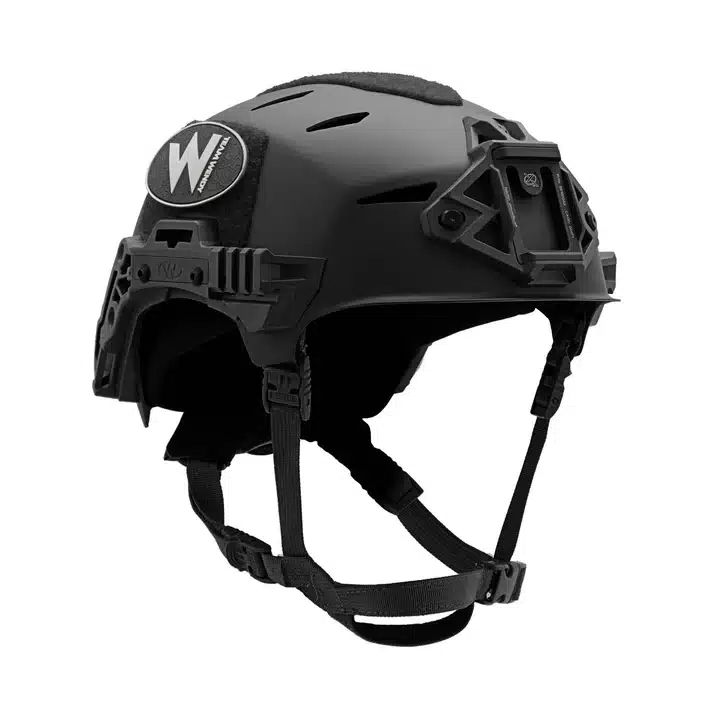
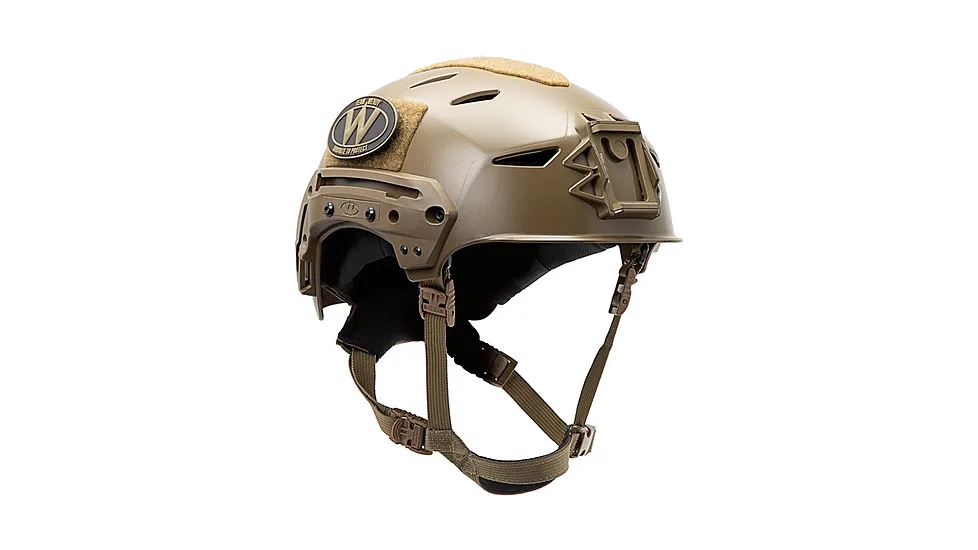
The Team Wendy EXFIL line is among the most widely used tactical helmet platforms — both the EXFIL LTP (Lightweight Tactical Polymer, bump) and the EXFIL Ballistic. Excellent suspension system (CAM Fit retention), comfortable for long wear, robust accessory ecosystem, and a solid balance of weight, durability, and price. A safe default for buyers who want quality without overthinking the decision.
Ops-Core
Ops-Core FAST helmets (FAST Bump, FAST SF, FAST Maritime, FAST Carbon) are the premium-tier standard issued to U.S. SOF units and widely used in serious LE applications. The FAST SF and Carbon ballistic variants are exceptionally light for their protection level. Premium pricing reflects premium materials and manufacturing — the carbon FAST is genuinely class-leading on weight-to-protection.
Crye Precision
The Crye AirFrame uses a vented two-piece shell design that improves airflow and impact dispersion. Distinct look, well-respected, premium pricing. A strong pick for users who run hot under helmets or want the AirFrame’s specific design profile.
Hard Head Veterans
Hard Head Veterans (HHV) ATE helmets deliver legitimate ballistic protection at a meaningfully lower price point than Team Wendy or Ops-Core ballistic options. Heavier than premium-tier helmets at the same protection rating, but the value is real for buyers who want NIJ-rated protection without the premium-tier price.
Sizing
Helmet sizing is based on head circumference, measured at the largest point around the head (just above the eyebrows and ears, around the back of the skull). Most modern helmets cover a range with adjustable suspension (e.g., M/L covers ~22.5″-24″). Measure before ordering — a helmet that’s the wrong size won’t sit correctly, won’t accept the shroud properly, and will throw off optic alignment.
Most manufacturers publish a sizing chart on the product page. If your measurement is right at a boundary between two sizes, size up — you can pad up a slightly large helmet, but you can’t shrink one that’s too small.
Suspension and Padding
The suspension system is what holds the helmet on your head and distributes weight. Two dominant approaches:
- Pad-based systems (Team Wendy Zorbium, Ops-Core Lux Liner) — foam pads stuck inside the shell, with a chinstrap and rear retention. Comfortable for most heads, easy to swap and replace, the standard on most modern helmets.
- Web suspension systems (older Ops-Core H-Nape, legacy military) — webbing or netting that holds the head off the shell. Lighter, cooler, but less impact protection and less common on modern setups.
Both work. Pad-based is the standard recommendation for NV users — better impact protection, more comfortable for the long sessions night vision tends to involve.
Rails and Accessories
Most modern tactical helmets ship with side rails (ARC rails, Wing-Loc, or proprietary) that accept lights, IR strobes, cameras, comms, and other accessories. The ARC rail standard is widely supported across brands — a Team Wendy ARC rail accepts most accessories built for an Ops-Core ARC rail. Verify before ordering accessories from a different brand than your helmet, but compatibility is generally good.
Shroud — The Link to Night Vision
For NV use, the helmet needs a shroud on the front — the metal or polymer plate that the mount attaches to. Some helmets ship with a shroud installed; many don’t. Installation is three bolts through the helmet shell and is straightforward, but if you’d rather not drill into a $400+ helmet yourself, we can install it for you as part of our service work. For a full walk-through of shrouds, mounts, and the rest of the NV mounting chain, see the Night Vision Mounts and Shrouds guide.
Counterweights
Once you mount NV on the front of a helmet, you need weight on the back to balance it. Most tactical helmets have a rear pouch attachment system or an accessory rail that accepts a counterweight pouch. Match the counterweight roughly to the optic weight — 1-1.5 lbs for a PVS-14, more for dual-tube goggles. Skipping the counterweight is the most common first-time helmet mistake. See the Counterweights section of the Mounts and Shrouds guide for more.
NIJ Ratings (Ballistic Helmets)
If you’re shopping ballistic, you’ll see ratings from the National Institute of Justice (NIJ):
- NIJ Level IIIA — the standard tactical helmet rating. Rated to stop common pistol rounds (.357 SIG, 9mm, .44 Magnum) and fragmentation. Most ballistic helmets sold for tactical use are IIIA.
- Above IIIA (rifle-rated) — exists but is uncommon, very heavy, and very expensive. Not the right answer for general tactical use; the weight penalty is severe.
For tactical and law enforcement applications, IIIA is the standard and the right level of protection. Ballistic helmets are not bulletproof against rifle rounds, and no current commercial helmet practically can be at a usable weight.
Price Tiers
- Budget bump helmets: $100-$300. Functional, basic pad systems, reasonable for training and casual use.
- Premium bump helmets: $400-$900. Team Wendy EXFIL LTP at the entry, Ops-Core FAST Bump SF and EXFIL Carbon at the top.
- Mid-tier ballistic (HHV ATE Gen2/Gen3): $500-$800. Real NIJ IIIA protection at value pricing.
- Premium ballistic (Team Wendy EXFIL Ballistic, Ops-Core FAST XR/SF): $1,500-$2,400. Top-tier ballistic, mil-issued quality, lightest weight at IIIA protection.
Helmet shroud, if not included, runs $50-$200 separately. Suspension upgrades (better pad sets, retention systems) typically run $50-$200.
ITAR and Export
Helmets, shrouds, rails, and helmet accessories are generally not ITAR-controlled. We sell only to U.S. customers and do not ship internationally to keep our compliance posture consistent across the catalog.
Warranty and Support
Helmet warranties vary by manufacturer — most premium-tier helmets carry multi-year warranties against manufacturing defect. Damage from impacts is usually not covered, and a ballistic helmet that has taken a real ballistic impact should be replaced regardless of visible damage. We can install shrouds, swap suspension systems, and help spec a complete helmet build through our service facility. All units ship within 1-2 business days.
Frequently Asked Questions
Bump or ballistic — which should I get?
For most civilian users — hunters, recreational shooters, training environments, NV enthusiasts — a bump helmet. Lighter, cheaper, does what a helmet needs to do as an NV platform. Ballistic is the right call if you’re in law enforcement, military, or specifically need pistol-rated protection for the role you’re using it in. For everyone else, the weight and cost of ballistic isn’t justified.
What size helmet do I need?
Measure your head circumference at the largest point — just above the eyebrows, around the back of the skull. Compare to the manufacturer’s sizing chart on the product page. If you’re between sizes, size up. A helmet that’s too small won’t sit correctly and can’t be made to.
High cut, mid cut, or full cut?
For night vision use, high cut. Better headset compatibility, lighter weight (you’ve already got NV adding mass on the front), and the standard around which all the modern accessory ecosystems are built. Mid and full cut have niche uses but high cut is the right answer for almost all current buyers.
Does the helmet come with a shroud?
Sometimes. Premium helmets often include a shroud; budget helmets often don’t. Check the product description before ordering — if no shroud is listed, you’ll need to buy one separately and install it (or have us install it).
Does the helmet come with a rail system?
Most modern tactical helmets ship with side rails (ARC, Wing-Loc, or proprietary). Older or budget helmets sometimes don’t. Check the product page; if rails aren’t included and you need them, factor the additional cost.
Will any shroud fit any helmet?
If both follow the standard 3-hole pattern, yes — and virtually all modern bump and ballistic helmets do. Surplus or legacy military helmets sometimes have non-standard mounting holes; verify before ordering.
Do I need a counterweight?
Yes, if you’ll be wearing NV on the helmet for more than a few minutes. Skipping the counterweight turns into a sore neck within an hour and uncomfortable balance throughout. See the Counterweights section of the Mounts and Shrouds guide.
Will a ballistic helmet stop a rifle round?
No, with rare exceptions for specialty heavy helmets you almost certainly don’t want to wear. NIJ Level IIIA — the standard tactical rating — stops common pistol rounds and fragmentation. Stopping rifle rounds requires Level III or IV, which exists in a few helmets but at weights that aren’t practical for general use.
Can you install a shroud or set up the helmet for me?
Yes. We can install shrouds, configure complete mount-ups, and help spec a full helmet-plus-NV build through our service facility.
Are helmets ITAR-controlled?
Generally no. Helmets, shrouds, and rail accessories are not subject to the same ITAR controls that apply to night vision tubes. We still sell only to U.S. customers and do not ship internationally to keep our compliance posture consistent.
How long does shipping take?
All units ship within 1-2 business days.
Building out a complete kit — helmet, shroud, mount, optic, counterweight — and not sure what works together? Contact us or call (888) 330-7057 with what you’ve got and what you’re trying to do, and we’ll spec the rest.