
Night Vision Mounts and Shrouds
Showing all 11 resultsSorted by price: high to low




Night Vision Mounts and Shrouds Buyer’s Guide
You bought a PVS-14 or a set of goggles. Now you need to put it on your head. That’s where mounts and shrouds come in — and it’s also where most first-time buyers get lost, because what looks like one purchase is actually three or four separate components that all have to talk to each other. This guide walks through the full mounting chain, the brand standards you’ll encounter, and the compatibility traps that send wrong parts back through the mail.
The short version: if you have a helmet, a shroud, a mount, and a J-arm or bridge, you’re set. The rest is picking the right products at each step for your use case and budget.
The Mounting Chain
From the helmet outward, every helmet-mounted night vision setup is built from the same chain of components:
- Helmet — the platform everything attaches to. Bump (lightweight, no ballistic protection) or ballistic.
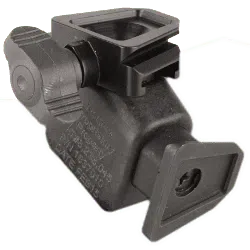
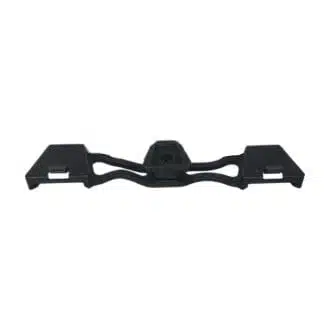
- Shroud — a metal or polymer plate bolted to the front of the helmet, providing the locking interface the mount attaches to.
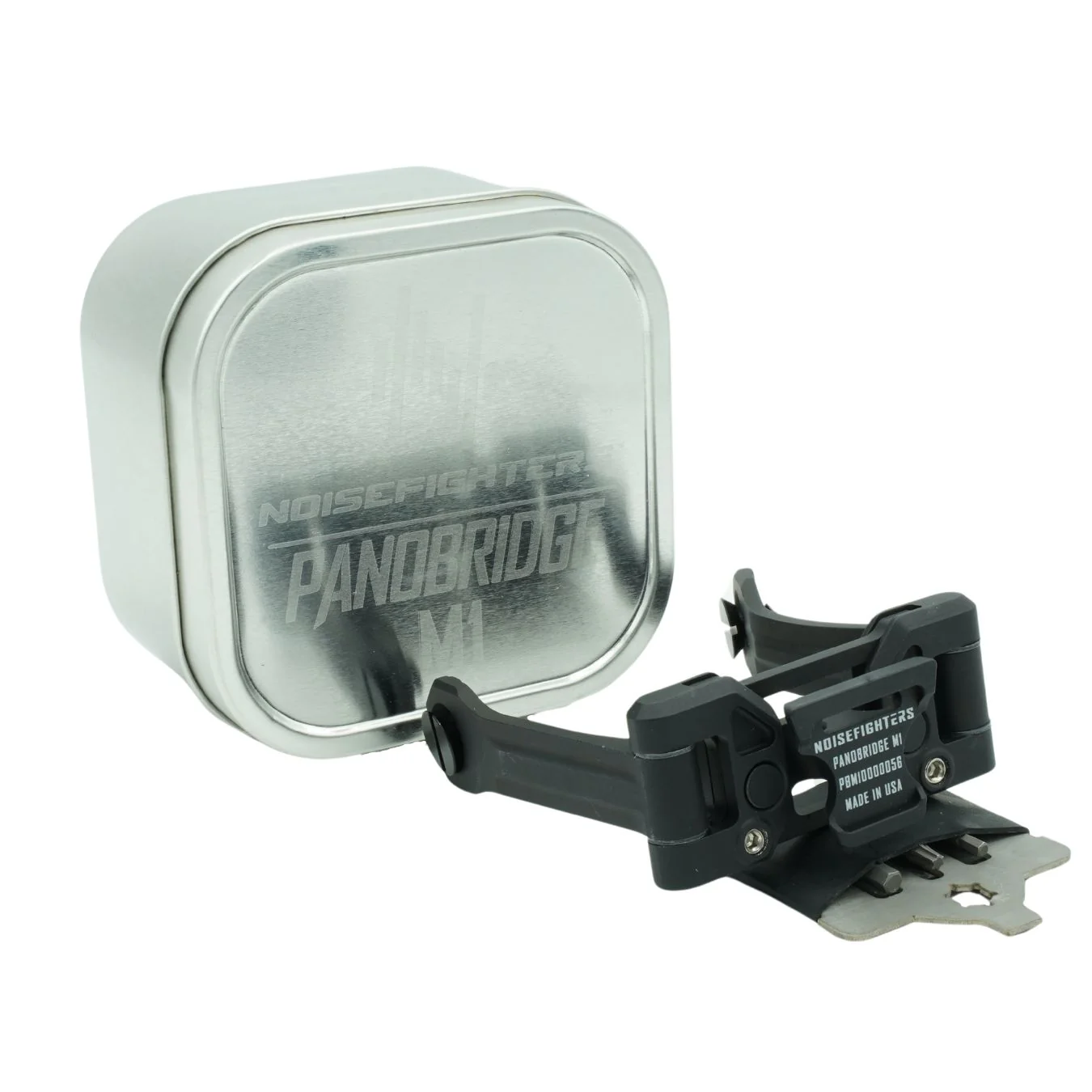
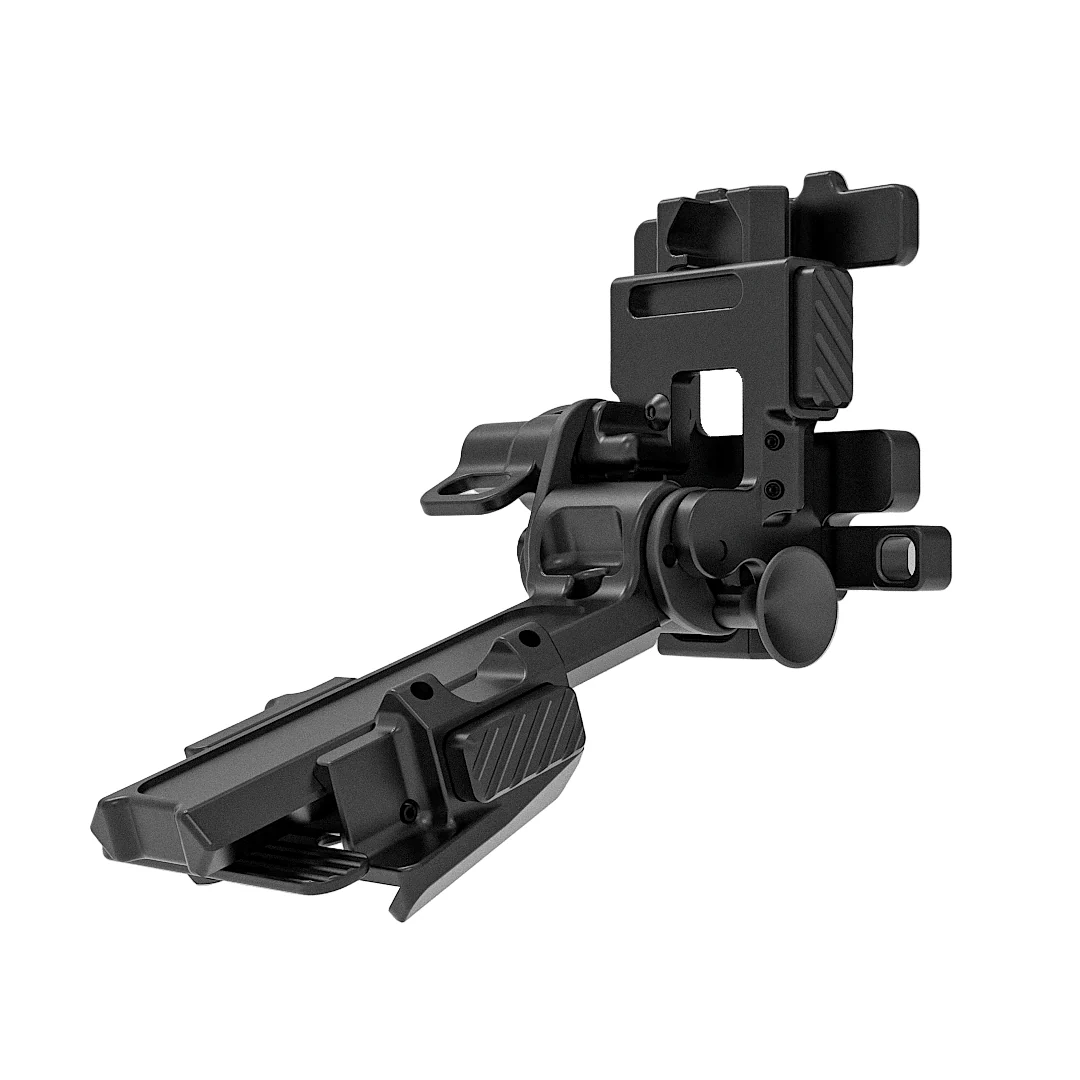
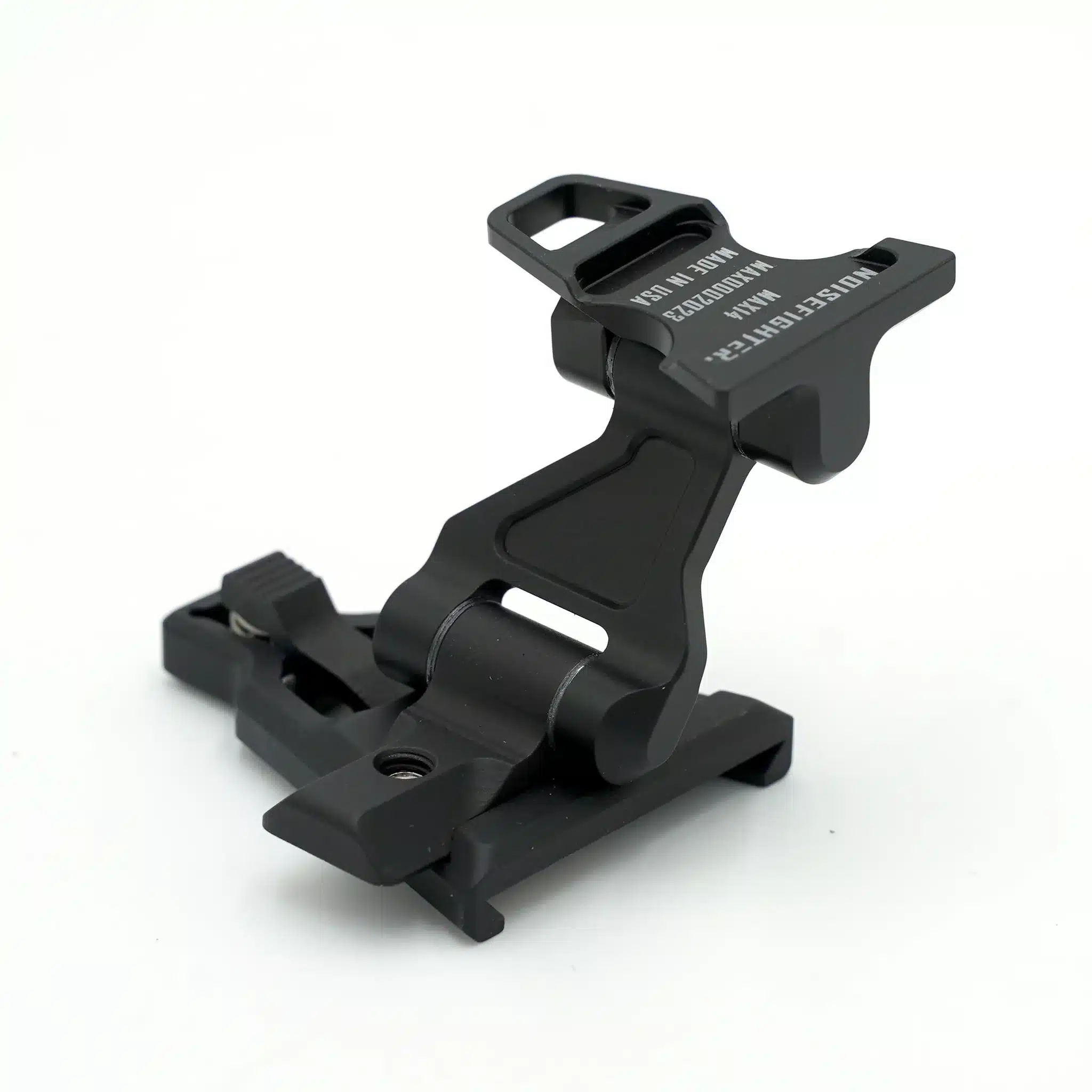
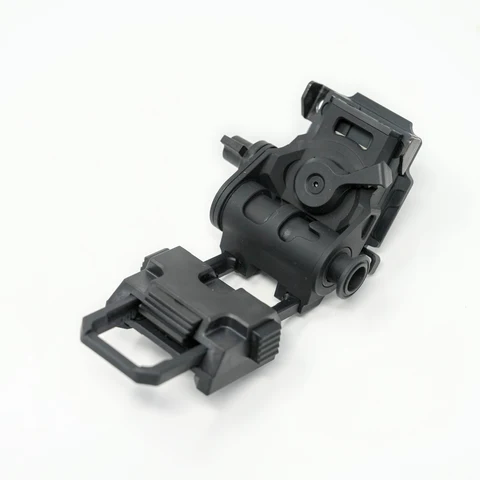
- Mount — the mechanical arm that locks into the shroud and holds the optic. Allows flip-up/flip-down operation, fore-aft adjustment, and (on better mounts) tilt and vertical adjustment.
- J-arm or bridge — connects the specific optic to the mount. PVS-14s use a J-arm; dual-tube goggles use a binocular bridge that’s part of the goggle housing.
- Counterweight — added to the rear of the helmet to balance the weight of the optic on the front. Easy to skip and easy to regret.
Each piece comes from different manufacturers and most are interoperable thanks to industry-standard interfaces — but “most” isn’t “all,” which is where compatibility homework matters.
Shrouds
The shroud is bolted to the front of the helmet. The dominant interface is the 3-hole pattern — also called the Ops-Core VAS or Wilcox 3-Hole pattern depending on who you ask. This is the de facto standard for modern helmets and the interface that virtually all current mounts plug into.
- Ops-Core VAS / Wilcox 3-Hole shrouds — interchangeable bolt pattern, both accept the same generation of mounts via a common shroud-mount interface. Available in metal (more durable, slightly heavier) or polymer (lighter, lower cost).
- Norotos shrouds — Norotos has their own shroud designs that pair with their mounts; some accept standard mounts and some don’t. Verify before buying.
- Legacy / military shrouds — older PASGT or ACH helmets sometimes have shrouds that predate the modern 3-hole standard. If you’re working with surplus, confirm what you have before ordering a mount.
A shroud is a small purchase relative to the rest of the kit and the foundation everything else attaches to — buying a quality metal shroud once is the right call.
Mounts
The mount is the workhorse piece — it locks into the shroud, holds the optic, and lets you flip the device up and down without taking the helmet off. The two dominant manufacturers in this space are Wilcox and Norotos, with several other quality brands and budget options available.
Wilcox
The premium standard. Wilcox mounts are known for high lock force, smooth pivot mechanisms, robust build quality, and excellent fore-aft and tilt adjustment. Models like the G24 and G36 family are widely used by U.S. military and SOF units. The G24 is the lighter, more compact option; the G36 family adds more aggressive locking, breakaway features, and additional adjustment range. Premium pricing, premium product.
Norotos
The other major player. Norotos mounts (INVG, Titanium Tilt, and others) compete directly with Wilcox at similar quality levels and similar price points. Many users prefer the Norotos titanium options for weight and the tilt mechanism design. As with Wilcox, the build quality is very high and the mounts are mil-issued.
Budget and Mid-Tier Options
A range of imported and lower-cost domestic options provide functional mounts at a fraction of the price of Wilcox or Norotos. They work, they hold the optic, and they pivot. The trade-offs are typically less precise lock-up, more flex under load, fewer adjustment features, and shorter service life. A reasonable starting point for budget builds, with the option to upgrade later.
J-Arms and Bridges
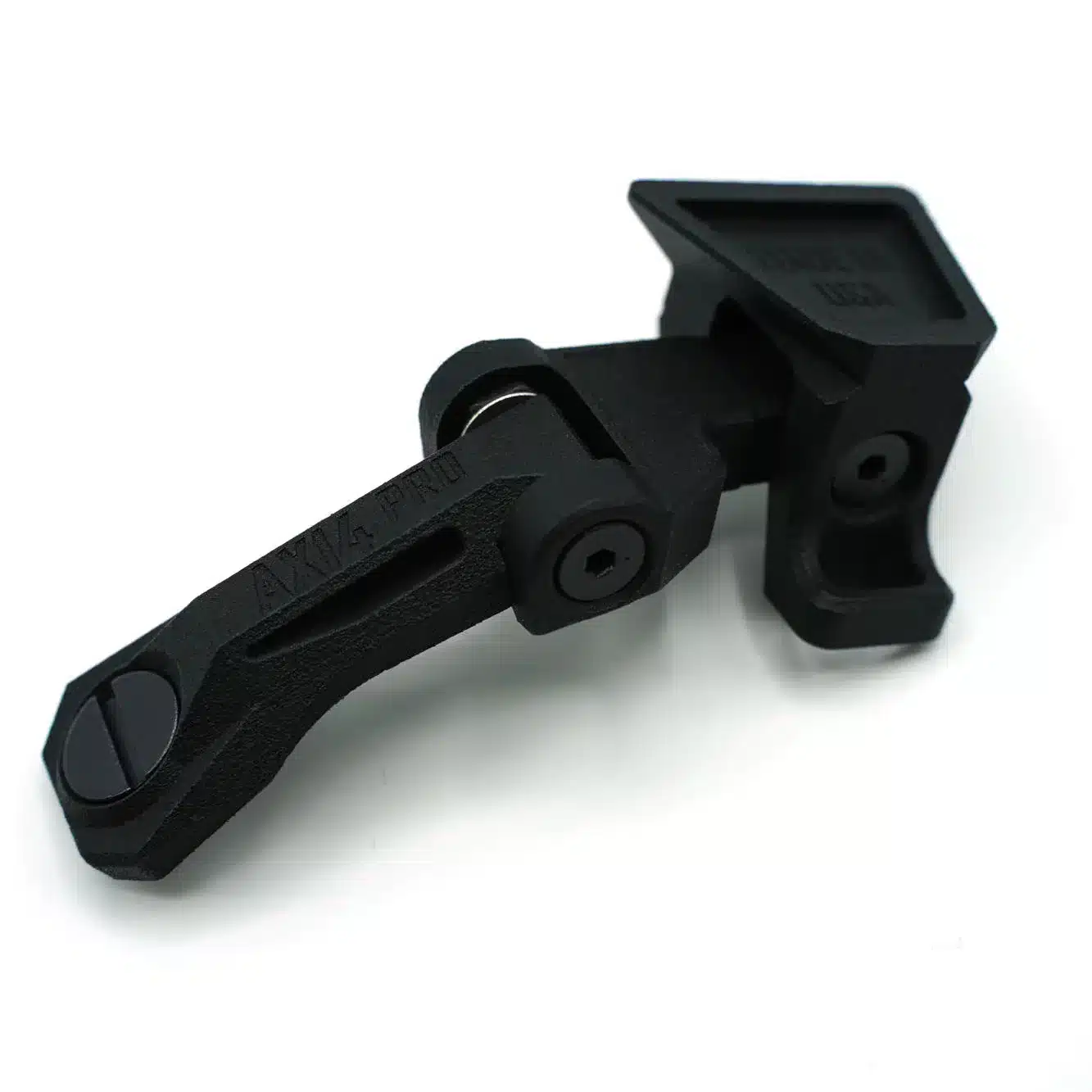
The J-arm is the J-shaped arm that connects a PVS-14 to the mount via the standard PVS-14 dovetail interface — named, naturally, for its shape. Most PVS-14s ship with a basic J-arm; aftermarket J-arms from Wilcox, Norotos, and other manufacturers offer better build quality, eye-relief adjustment, and ambidextrous orientation if you want to switch from right-eye to left-eye dominant.
For dual-tube goggles, the “bridge” is the structural piece between the two pods — usually integrated into the goggle housing itself rather than a separate component. The bridge mounts to a standard dovetail mount the same way a J-arm does, so a single mount can accept either a monocular or goggles depending on what you click into it.
Counterweights
An often-overlooked piece. A PVS-14 plus J-arm and mount weighs around 1.5 pounds; dual-tube goggles plus mount weighs more. All of that mass is hanging off the front of your helmet. Without a counterweight at the rear, the helmet wants to nose-dive forward — uncomfortable in a few minutes, painful over an hour, and a real injury risk if you fall. A simple counterweight pouch on the rear of the helmet, balanced to roughly match the optic weight, makes the difference between a comfortable kit and one you’ll take off after twenty minutes. Don’t skip this.
Compatibility — The Common Mistakes
- Mount won’t fit the shroud: Almost always a 3-hole-standard mount paired with a non-standard or legacy shroud, or vice versa. Check the shroud interface before ordering a mount.
- Mount fits but won’t lock tight: Some budget shrouds have looser tolerances on the mount interface than premium mounts expect. The mount engages but rocks side to side or won’t lock fully. The fix is a quality shroud — tolerances aren’t a place to save money.
- J-arm doesn’t fit the mount: All standard dovetail mounts accept all standard J-arms — but a few proprietary mount/arm combinations exist. If the brands match (Wilcox mount + Wilcox arm, etc.) you’re safe; mixing across brands almost always works but verify if buying both new.
- Buying a goggle bridge for a monocular: Goggle bridges are generally not separate purchases — the bridge is the goggle housing itself. For a single-tube setup, you want a J-arm.
If anything in your build is unusual or you’re piecing it together from multiple sellers, contact us before ordering and we’ll confirm compatibility. Sending a wrong part back through the mail is a slow and expensive way to learn the chain.
Helmet Compatibility
The mounting chain works the same regardless of helmet brand — so long as the helmet accepts a standard 3-hole shroud, any standard mount will work. The major bump and ballistic helmet brands (Ops-Core, Team Wendy, Crye Precision AirFrame, Hard Head Veterans, and others) all accept the standard pattern. For a complete helmet pairing, see our Helmets category.
Price Tiers
- Shrouds: $50-$200. Polymer at the entry, metal Wilcox/Ops-Core at the top.
- Budget mounts: $80-$200. Functional, lower lock force, shorter life.
- Premium mounts (Wilcox / Norotos): $400-$1,000+. Wilcox G24 and similar at the entry, G36 family and Norotos titanium options at the top. Mil-issued quality, full adjustability across the range.
- J-arms: $40-$200 depending on brand and material.
- Counterweights: $30-$100 for a pouch and weights.
A complete mount-up — shroud, mount, J-arm, counterweight — runs $250-$1,500+ depending on tier. For a serious user spending $3,000+ on a PVS-14, the right move is to spend $700-$1,200 on the mount-up; cheap mounts on expensive optics is the opposite of where to compromise.
ITAR and Export
Mounts, shrouds, and J-arms are generally not ITAR-controlled — the controlled component is the night vision tube itself. That said, we sell only to U.S. customers and do not ship internationally to keep our compliance posture consistent across the catalog.
Warranty and Support
Mounts and shrouds carry manufacturer warranties — Wilcox and Norotos warranties are typically lifetime against manufacturing defect, and budget brands range from one year to lifetime depending on manufacturer. We’re a full service facility and can install shrouds, swap mounts, and help diagnose compatibility issues. All units ship within 1-2 business days.
Frequently Asked Questions
Do I need both a shroud and a mount?
Yes. The shroud is bolted to the helmet and provides the interface. The mount clicks into the shroud and holds the optic. They’re separate products and you need both unless you’re using a one-piece mount that bolts directly to the helmet (uncommon and generally not recommended).
Wilcox G24 vs. G36 — which should I pick?
For most users, the G24 is plenty — lighter, more compact, excellent build quality. The G36 family is the right call if you want the most aggressive locking, breakaway features for safety, or the maximum adjustment range. Both are top-tier mounts; the G24 is the better value unless you specifically need what the G36 adds.
Wilcox or Norotos?
Both are excellent and either is a defensible choice. Wilcox tends to lock with more force and have a more mechanical feel; Norotos titanium options are lighter and many users prefer the tilt mechanism design. Pick on price, weight, the specific adjustment feature set you want, and personal preference — you can’t go wrong with either brand.
Can I use the same mount for a monocular and goggles?
Yes, in most cases. Standard dovetail mounts accept either a J-arm (for a PVS-14) or a goggle bridge — so if you start with a monocular and upgrade to goggles later, you keep the same mount and shroud. Just swap the optic and the arm/bridge.
Are budget mounts good enough?
For a starter setup or a backup mount, yes. They hold the optic, they pivot, they work. The trade-offs show up under load, with extended use, and over time — less precise lock-up, more flex, shorter service life. For a $3,000 optic that you’ll use for years, upgrade to Wilcox or Norotos. For a budget Gen 2+ build or a training rig, a budget mount is a reasonable compromise.
Do I really need a counterweight?
Yes. Skipping the counterweight is a common first-time mistake that turns into a sore neck within an hour. The optic mass on the front of the helmet wants to pull your head forward — the counterweight balances it. A simple weighted pouch on the rear of the helmet is inexpensive and dramatically improves comfort.
Will any shroud fit any helmet?
If both follow the 3-hole standard, yes. Modern bump and ballistic helmets from major brands (Ops-Core, Team Wendy, Crye AirFrame, etc.) accept standard 3-hole shrouds. Older surplus or legacy military helmets sometimes have non-standard mounting holes — verify the helmet’s shroud pattern before ordering.
What about helmets that don’t have a shroud?
Some helmets ship without a shroud and need one installed before mounting NV. Installation is straightforward — three bolts through the helmet shell — but if you’d rather not drill into your own helmet, we can install the shroud for you as part of our service work.
Are mounts ITAR-controlled?
Generally no. Mounts, shrouds, and J-arms are not subject to the same ITAR controls that apply to the night vision tube. We still sell only to U.S. customers and do not ship internationally to keep our compliance posture consistent.
How long does shipping take?
All units ship within 1-2 business days.
Can you install the shroud or set up my mount for me?
Yes. We’re a full service facility and can install shrouds on helmets, set up complete mount-ups, and diagnose compatibility problems with parts you already own.
Building out a complete kit and not sure what fits with what? Contact us or call (888) 330-7057 with what you’ve got and what you’re trying to do. — we’ll spec the rest.