
Description
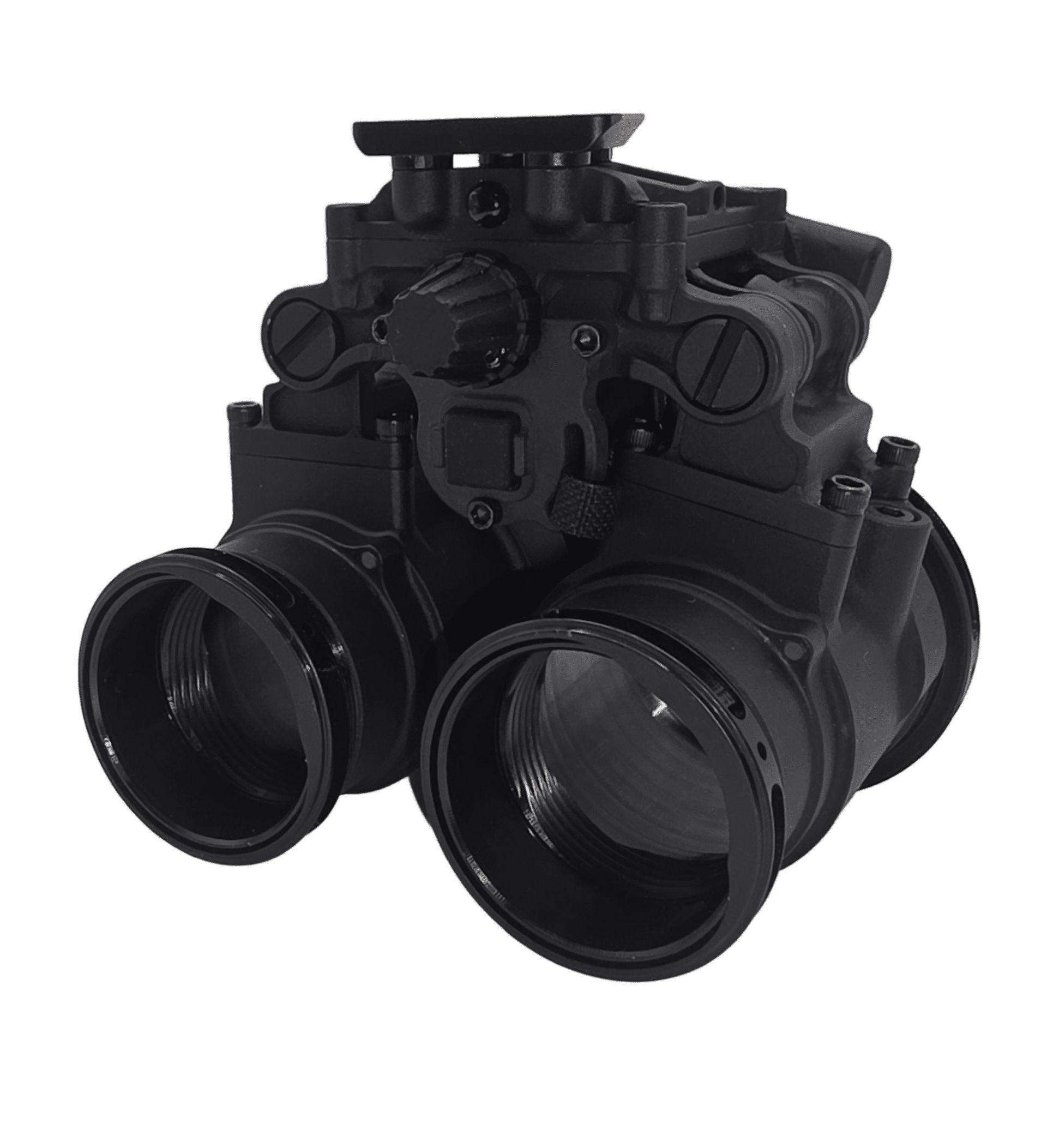
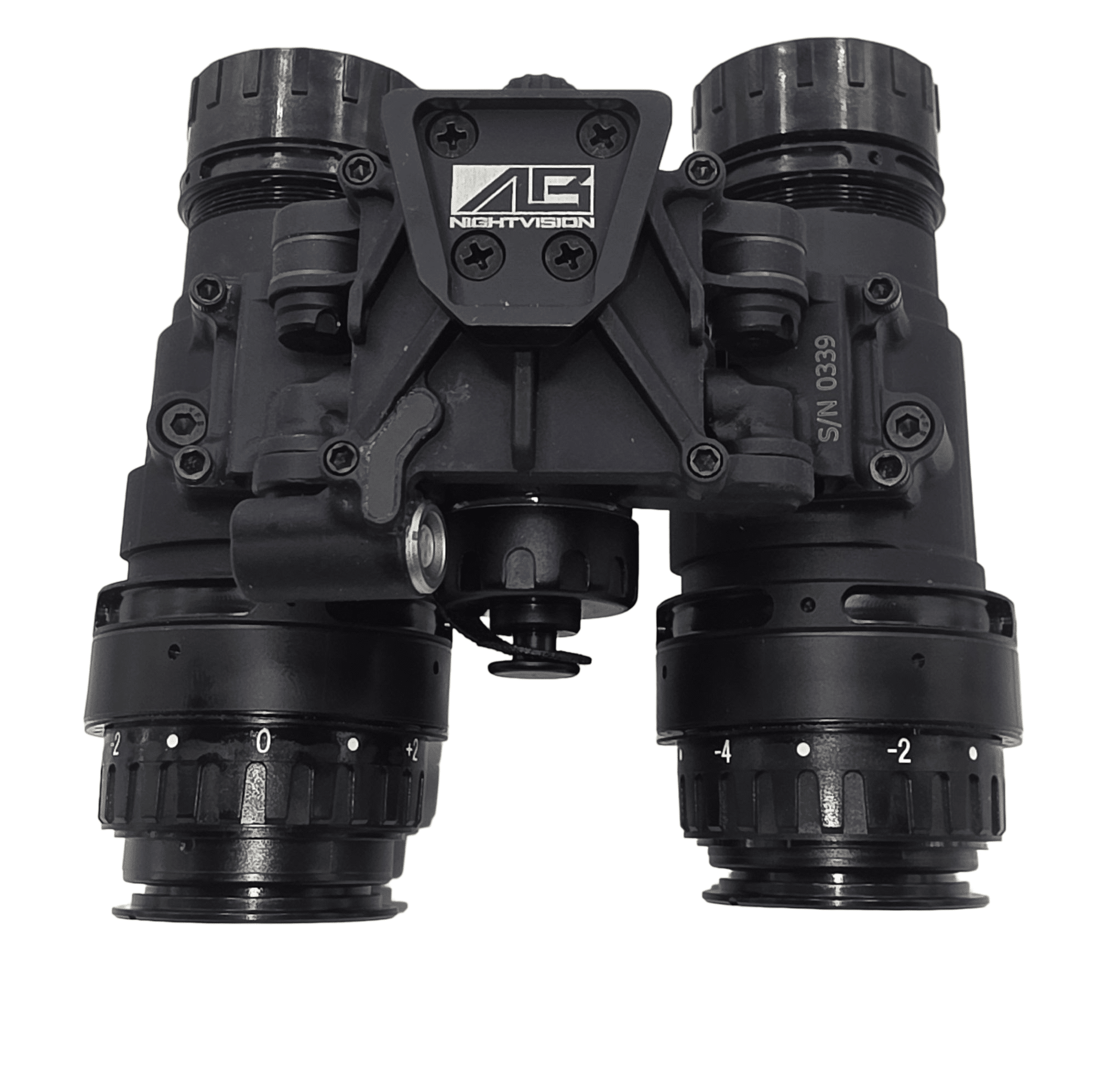
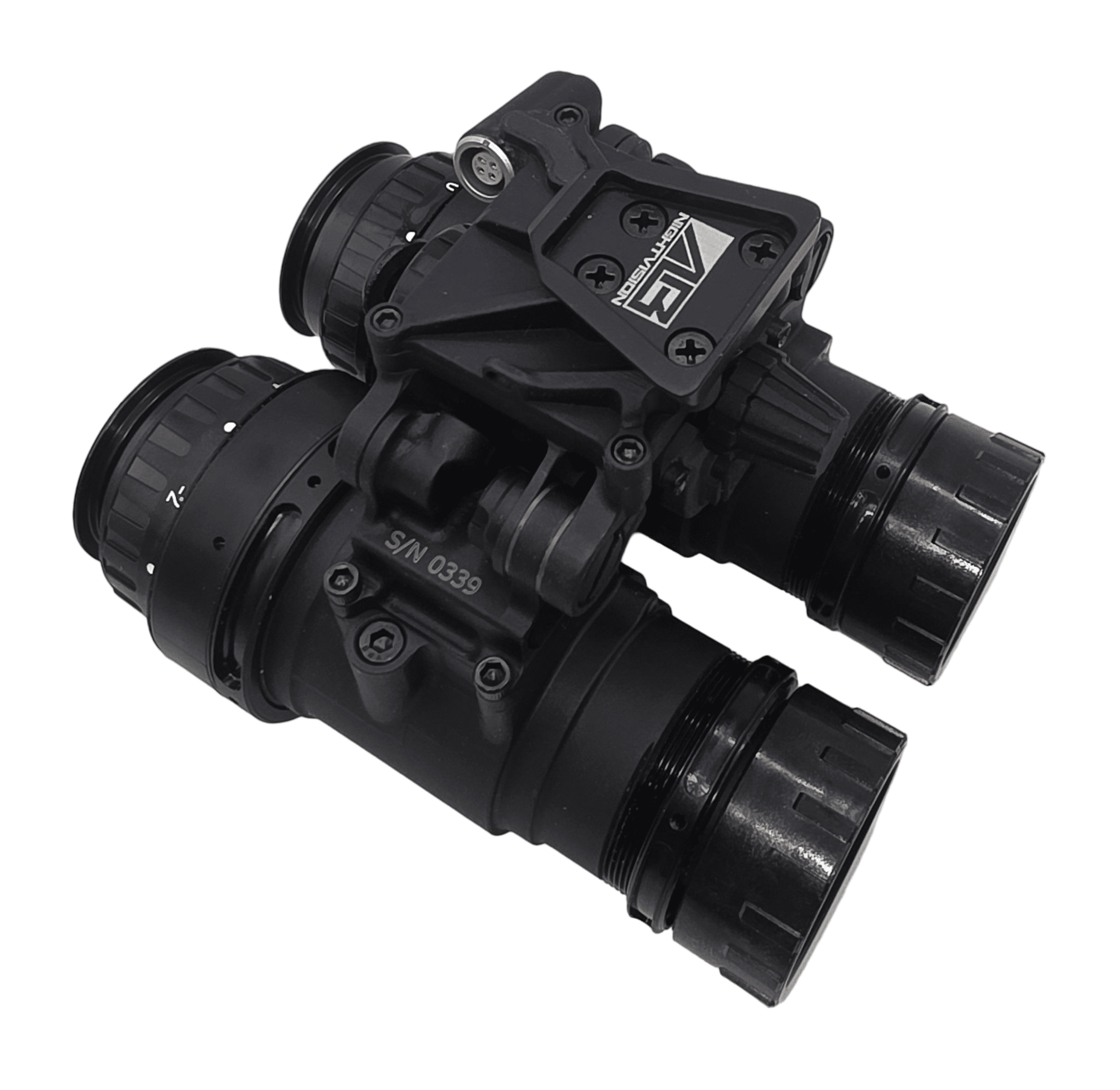
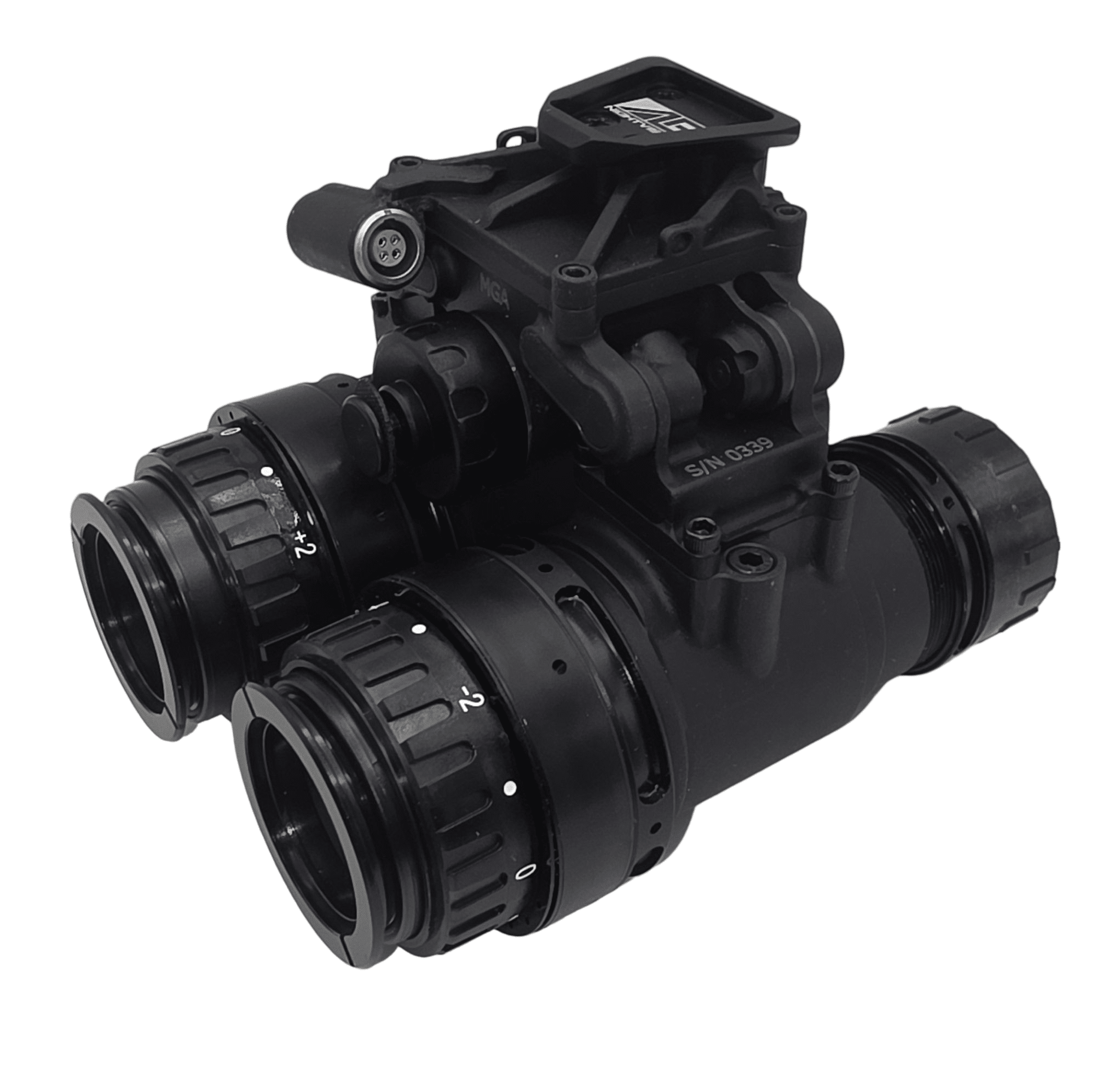
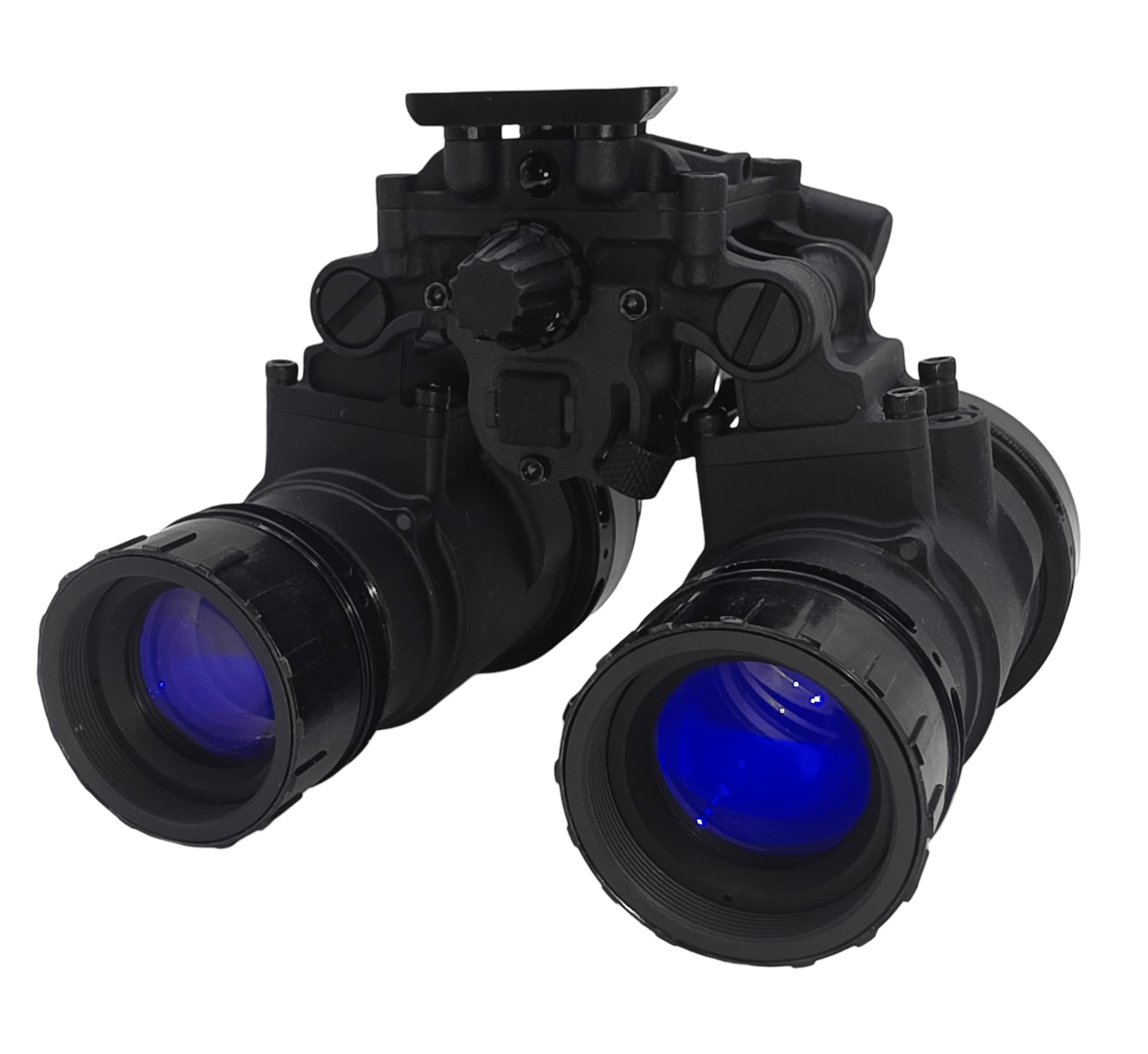
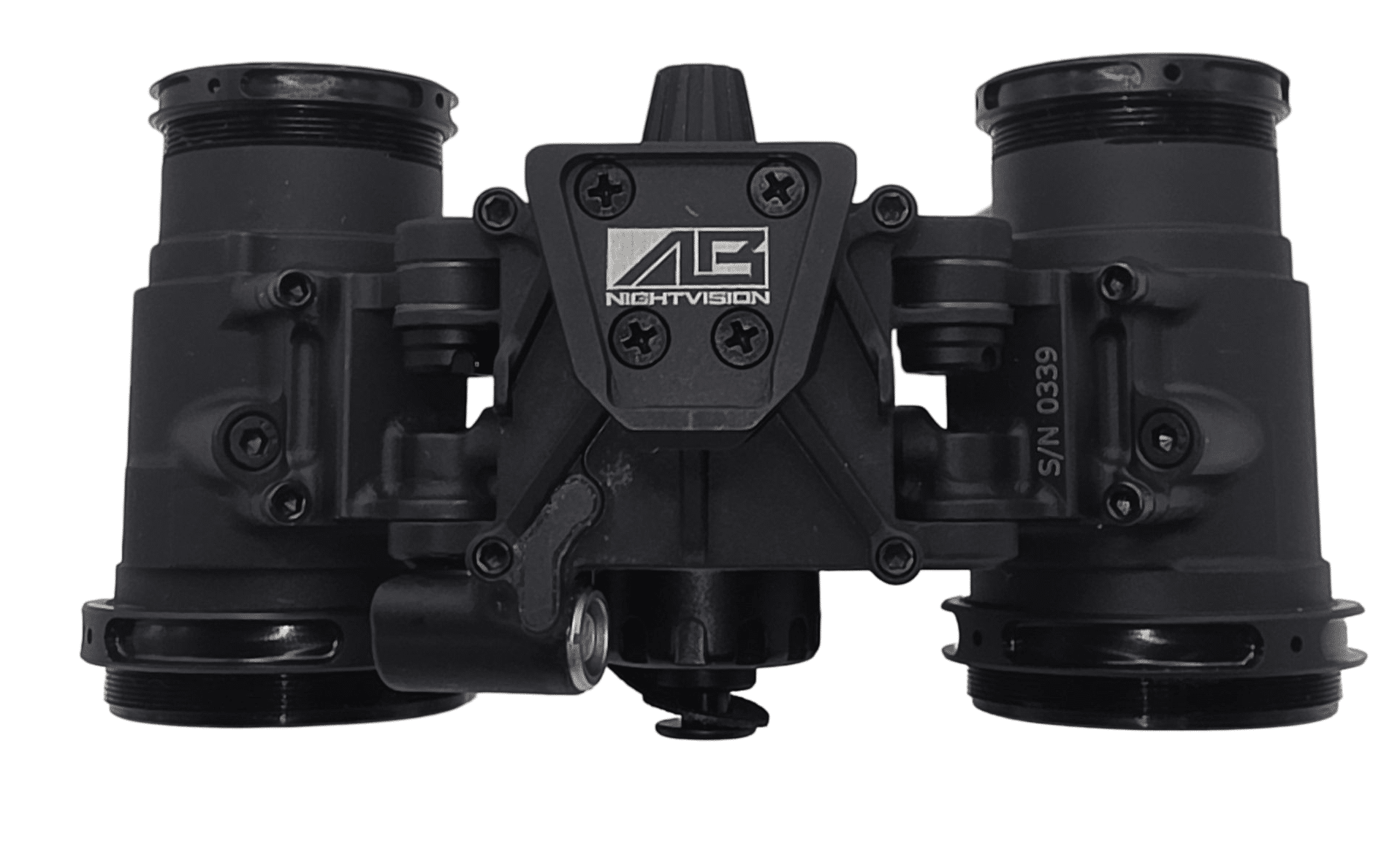
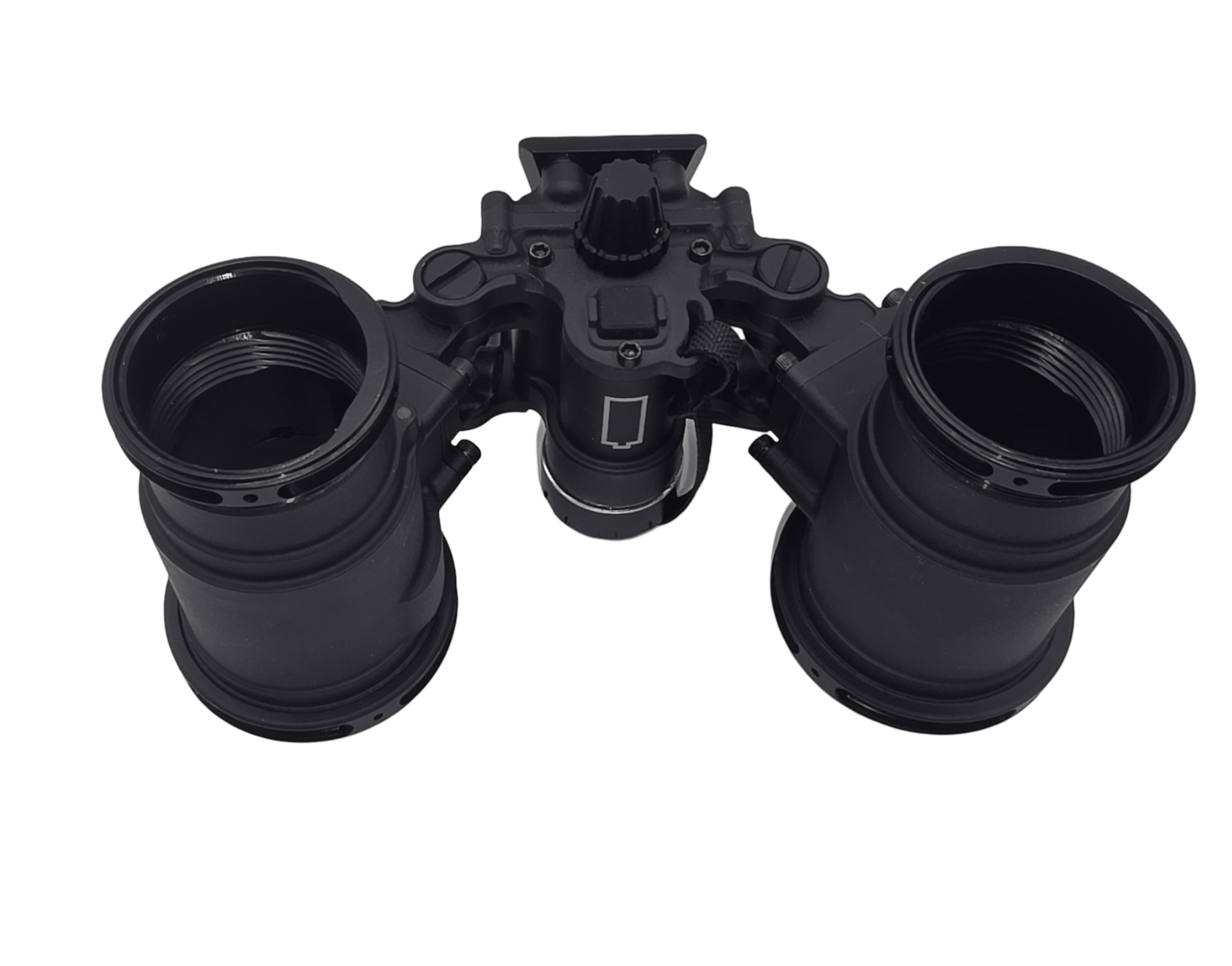
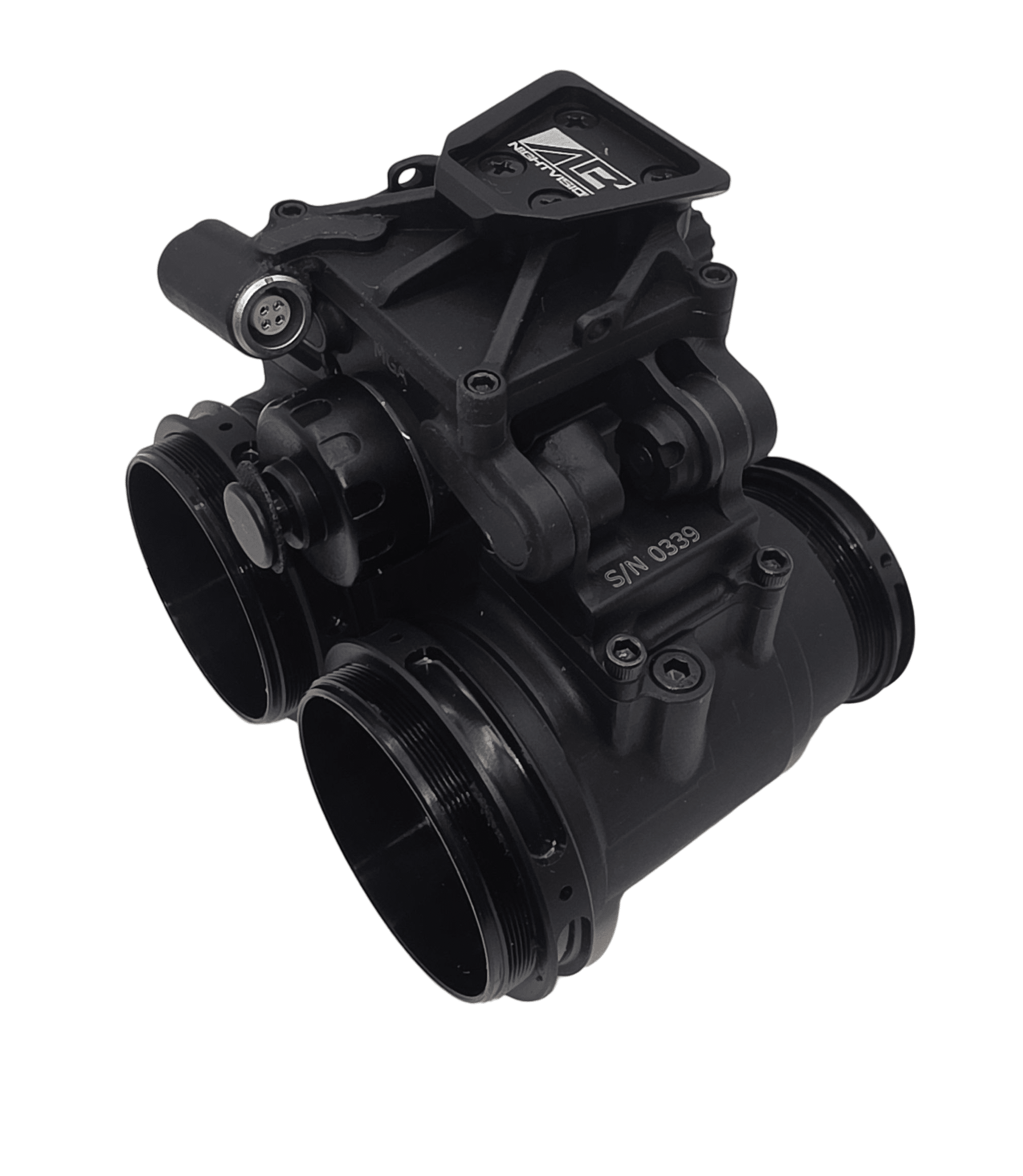
This listing is the AB Nightvision MGA housing — a build kit chassis for assembling a complete night vision binocular, or for moving the tubes and optics from a unit you already own into a better housing. The kit is the body. Tubes and (optionally) optics are added by you, by us, or by a builder of your choice to finish the build.
If this is your first night vision build, the rest of this page is written to help you understand what you’re buying, what you still need to source, and how the pieces fit together.
What a night vision unit is made of
A working night vision device is three core components:
- The housing — the structural chassis. It holds the tubes, controls power, IR illumination, gain, and physical adjustments, and is what mounts to your helmet shroud. The MGA is the housing.
- The image intensifier tubes — the actual night vision optical core that amplifies ambient light into a viewable image. Tubes are sold separately, and the tube grade you choose drives most of the cost and performance of the finished unit. A binocular like the MGA needs two tubes.
- The optics — the objective lens (front) that gathers light and the eyepiece (back) you look through. Optics screw into the housing and are interchangeable.
This listing is the housing. The Optics dropdown lets you add a Noctis Technologies (Carson) optic set to the order if you want optics included. Tubes are not included in either configuration and are sourced separately.
The MGA platform
The MGA — Manual Gain Articulating — is AB Nightvision’s articulating binocular housing built on the proven RNVG-A platform with the addition of user-controlled manual gain. The chassis is billet machined from 7075 alloy aluminum at AB Nightvision’s facility in Bristol, Virginia. In drop testing the housing far exceeded MIL-STD-810H requirements, surviving impacts onto bare concrete from heights beyond what the tubes and optics inside it can handle.
What sets the MGA apart from the standard RNVG-A is the rotary control switch, which serves double duty as the power switch and a manual gain adjustment knob. Operators can dial image brightness up or down to match changing ambient light — a feature pulled from high-end aviation NV systems and brought down into a ground-mount housing. A separate push-button activates the onboard IR illuminator. In-view indicators tell the user when the IR is active and warn of a low battery without taking the eye off the scene.
Articulating pods
The two pods pivot up independently. Rotating a pod upward cuts power to that tube — useful for preserving battery life, for protecting a tube during transitions, and for running one eye on a thermal optic or passive aimer while keeping NV on the other. The pods also stow tight to the helmet for a lower profile in vehicles or confined spaces.
The force required to pivot each pod is user-adjustable using the included Pivot Spanner tools, or a coin in a pinch. Operators who run their MGA hard can dial pod tension to preference rather than living with a factory setting that’s either too loose for vehicle work or too stiff for fast transitions.
Optics compatibility
The MGA accepts standard PVS-14-style eyepiece and objective lenses. This is the same lens format used across thousands of PVS-14 monoculars and most binocular housings on the market, so the field of compatible optics is wide — fresh from a vendor, pulled used from another unit, or transferred in from your existing build.
The MGA is also compatible with RPO 3.0 lenses (Rochester Precision Optics, a separate manufacturer). RPO 3.0 lenses cut roughly 90g off the standard mil-spec optic loadout, which is meaningful for a helmet-mounted unit you wear over a long day.
If you select the Noctis Technologies (Carson) optic upgrade on this listing, a complete Carson-manufactured Noctis optic set arrives pre-installed in the housing.
Tube assembly
Assembly does not require removing the flex cables from the image intensifier tubes. This preserves the original tube manufacturer’s warranty, which is forfeited on most other housings where the flex has to be detached for the build. The MGA also does not require the flex to twist or crimp during assembly, further reducing the risk of damage.
Configuration options
Housing only (Optics: None) — You receive the MGA housing, the included Pivot Spanner tools, and the warranty paperwork. No tubes, no optics. You’ll need to source two image intensifier tubes and a set of PVS-14-style optics before the unit is functional. You can build it yourself, ship it to us for installation and collimation, or use any qualified builder. Installation pricing through Superior Tactical depends on whether you supply the tubes or buy them through us — see the installation fee FAQ below for details.
Housing with Noctis Technologies (Carson) Optics — You receive the MGA housing with a complete Noctis optic set pre-installed. You’ll still need to source two image intensifier tubes before the unit is functional. Tube install can be done by you or shipped to us.
Upgrading an existing unit
If you already own a binocular night vision device or a PVS-14 monocular and want to move into the MGA, the tubes from your existing unit will work in this housing — they are standard 18mm image intensifier tubes, the format used in PVS-14s and most binocular housings. The optics from a PVS-14 will also transfer. We can handle the removal and reinstall, or you can do it yourself. Tubes are fragile and not user-serviceable without the right tools and a clean workspace — if you’re not sure, ship the donor unit to us with your order and we’ll do the transfer. Tube transfer, installation, and collimation through Superior Tactical is typically $250 when working with tubes you already own, and is often included when tubes are purchased through us — call us at (888) 330-7057 before shipping anything in so we can scope your exact situation.
Operational specs
- Magnification: 1X
- Field of view: 40° with standard mil-spec optics
- Focus range: 9.8 inches to infinity
- Diopter adjustment: -6 to +2
- IPD (interpupillary distance): ~47mm to over 80mm
- Power: single CR123 onboard with ~30 hours of runtime, or external pack via 4-pin LEMO-style connector
- Submersibility: 66 feet (20 meters)
- Dimensions: 4.14″ × 4.2″ × 3.5″
- Bare housing weight: 210g
- Assembled with standard mil-spec optics and L3 tubes, no battery: 580g (20.45 oz)
- Assembled with RPO 3.0 lenses and L3 tubes, no battery: 492g (17.35 oz)
Color and warranty
The MGA ships in Flat Black, anodized over a media-blasted non-reflective matte base. AB Nightvision provides a lifetime warranty on housing parts and workmanship. Image intensifier tubes carry their own separate warranty from the tube manufacturer.
ITAR controlled. For sale to U.S. persons only.
If you have questions about which configuration is right for you, what tubes to buy, or how to handle a swap from an existing unit, call us at (888) 330-7057 or email sales@superiortac.com.
Frequently Asked Questions
What does this listing actually include?
You receive the MGA housing, the Pivot Spanner adjustment tools, and the warranty paperwork. If you select the Noctis Technologies (Carson) optic upgrade, a complete Carson-manufactured optic set arrives pre-installed in the housing. Image intensifier tubes are not included in any configuration.
I’ve never built a night vision unit. What else do I need to buy to make this work?
Two image intensifier tubes (18mm format, standard PVS-14 type) and, if you chose Housing Only, a set of PVS-14-style eyepiece and objective optics. Tubes are sold separately because they are the highest-cost component and customers want to choose the spec themselves. If you’re not sure where to start, call us at (888) 330-7057 and we can walk you through current options.
I already own a PVS-14 monocular. Can I use my tube in this housing?
Yes. Standard 18mm tubes from a PVS-14 transfer directly into the MGA. The optics from a PVS-14 will also work. You’ll need a second tube to populate the binocular’s other pod. You can ship your PVS-14 to us with your order and we’ll pull the tube and assemble the MGA for you — see the installation fee FAQ below for typical pricing.
Is there a fee for tube installation and collimation?
Yes, typically $250 when you supply your own tubes, and often included at no charge when the tubes are purchased through Superior Tactical. Because exact pricing depends on what you’re sending in and what work is required — a full new build, a tube transfer from a donor unit, or a collimation-only check — reach out at (888) 330-7057 or sales@superiortac.com before shipping anything in and we’ll give you a firm quote.
What is the difference between the “None” and “Noctis” configurations?
“None” is the housing only — no optics, no tubes. You source those separately. “Noctis Technologies (Carson) Optics” includes a Carson-manufactured Noctis optic set pre-installed in the housing — but still no tubes. Tubes are sourced separately in both cases.
What is the difference between the MGA and the RNVG-A?
The MGA adds a manual gain control to the RNVG-A platform. The rotary power switch on the MGA doubles as a gain adjustment knob, letting the operator dial image brightness up or down to match changing ambient light. The two platforms otherwise share the same billet 7075 chassis, articulating pod design, and IR illuminator layout.
What optics does the MGA accept?
Standard PVS-14-style eyepiece and objective lenses, and RPO 3.0 lenses from Rochester Precision Optics. The Noctis Technologies (Carson) optic upgrade installs in the same PVS-14-style optic mount.
Will the assembly void my tube warranty?
No. The MGA is designed so that the image intensifier flex cables do not need to be removed from the tube during assembly, and the flex does not twist or crimp during the build. This preserves the original tube manufacturer’s warranty — a benefit not all housings provide.
Is the MGA waterproof?
The MGA is submersible to 66 feet (20 meters).
How is the unit powered?
A single CR123 battery onboard, or an external battery pack via a 4-pin LEMO-style connector. Onboard runtime is approximately 30 hours.
What is the housing weight?
The bare housing is 210 grams. Assembled with standard mil-spec optics and L3 tubes, no battery, the unit weighs 580 grams (20.45 oz). Assembled with RPO 3.0 lenses and L3 tubes, no battery, it weighs 492 grams (17.35 oz).
What are the operational specs — FOV, focus, runtime?
1X magnification, 40° field of view with standard mil-spec optics, focus from 9.8 inches to infinity, diopter -6 to +2, IPD 47mm to over 80mm. Runtime is approximately 30 hours on a single onboard CR123 battery. Overall dimensions are 4.14″ × 4.2″ × 3.5″.
What warranty does the housing carry?
Lifetime warranty on parts and workmanship from AB Nightvision per their warranty policy. Tubes carry their own separate warranty from the tube manufacturer.
Can this be exported?
No. This product is ITAR controlled and for sale to U.S. persons only.
Prefer it complete? Grab the assembled AB Nightvision MGA goggle, or browse all our housing build kits.
Additional information
| Color | Black |
|---|---|
| Optics | No Optics, Noctis/Carson Industries, Brightpath |
Only logged in customers who have purchased this product may leave a review.
AB Night Vision MGA Night Vision Goggle Housing
Price range: $2,299.00 through $3,235.00
Description
This listing is the AB Nightvision MGA housing — a build kit chassis for assembling a complete night vision binocular, or for moving the tubes and optics from a unit you already own into a better housing. The kit is the body. Tubes and (optionally) optics are added by you, by us, or by a builder of your choice to finish the build.
If this is your first night vision build, the rest of this page is written to help you understand what you’re buying, what you still need to source, and how the pieces fit together.
What a night vision unit is made of
A working night vision device is three core components:
- The housing — the structural chassis. It holds the tubes, controls power, IR illumination, gain, and physical adjustments, and is what mounts to your helmet shroud. The MGA is the housing.
- The image intensifier tubes — the actual night vision optical core that amplifies ambient light into a viewable image. Tubes are sold separately, and the tube grade you choose drives most of the cost and performance of the finished unit. A binocular like the MGA needs two tubes.
- The optics — the objective lens (front) that gathers light and the eyepiece (back) you look through. Optics screw into the housing and are interchangeable.
This listing is the housing. The Optics dropdown lets you add a Noctis Technologies (Carson) optic set to the order if you want optics included. Tubes are not included in either configuration and are sourced separately.
The MGA platform
The MGA — Manual Gain Articulating — is AB Nightvision’s articulating binocular housing built on the proven RNVG-A platform with the addition of user-controlled manual gain. The chassis is billet machined from 7075 alloy aluminum at AB Nightvision’s facility in Bristol, Virginia. In drop testing the housing far exceeded MIL-STD-810H requirements, surviving impacts onto bare concrete from heights beyond what the tubes and optics inside it can handle.
What sets the MGA apart from the standard RNVG-A is the rotary control switch, which serves double duty as the power switch and a manual gain adjustment knob. Operators can dial image brightness up or down to match changing ambient light — a feature pulled from high-end aviation NV systems and brought down into a ground-mount housing. A separate push-button activates the onboard IR illuminator. In-view indicators tell the user when the IR is active and warn of a low battery without taking the eye off the scene.
Articulating pods
The two pods pivot up independently. Rotating a pod upward cuts power to that tube — useful for preserving battery life, for protecting a tube during transitions, and for running one eye on a thermal optic or passive aimer while keeping NV on the other. The pods also stow tight to the helmet for a lower profile in vehicles or confined spaces.
The force required to pivot each pod is user-adjustable using the included Pivot Spanner tools, or a coin in a pinch. Operators who run their MGA hard can dial pod tension to preference rather than living with a factory setting that’s either too loose for vehicle work or too stiff for fast transitions.
Optics compatibility
The MGA accepts standard PVS-14-style eyepiece and objective lenses. This is the same lens format used across thousands of PVS-14 monoculars and most binocular housings on the market, so the field of compatible optics is wide — fresh from a vendor, pulled used from another unit, or transferred in from your existing build.
The MGA is also compatible with RPO 3.0 lenses (Rochester Precision Optics, a separate manufacturer). RPO 3.0 lenses cut roughly 90g off the standard mil-spec optic loadout, which is meaningful for a helmet-mounted unit you wear over a long day.
If you select the Noctis Technologies (Carson) optic upgrade on this listing, a complete Carson-manufactured Noctis optic set arrives pre-installed in the housing.
Tube assembly
Assembly does not require removing the flex cables from the image intensifier tubes. This preserves the original tube manufacturer’s warranty, which is forfeited on most other housings where the flex has to be detached for the build. The MGA also does not require the flex to twist or crimp during assembly, further reducing the risk of damage.
Configuration options
Housing only (Optics: None) — You receive the MGA housing, the included Pivot Spanner tools, and the warranty paperwork. No tubes, no optics. You’ll need to source two image intensifier tubes and a set of PVS-14-style optics before the unit is functional. You can build it yourself, ship it to us for installation and collimation, or use any qualified builder. Installation pricing through Superior Tactical depends on whether you supply the tubes or buy them through us — see the installation fee FAQ below for details.
Housing with Noctis Technologies (Carson) Optics — You receive the MGA housing with a complete Noctis optic set pre-installed. You’ll still need to source two image intensifier tubes before the unit is functional. Tube install can be done by you or shipped to us.
Upgrading an existing unit
If you already own a binocular night vision device or a PVS-14 monocular and want to move into the MGA, the tubes from your existing unit will work in this housing — they are standard 18mm image intensifier tubes, the format used in PVS-14s and most binocular housings. The optics from a PVS-14 will also transfer. We can handle the removal and reinstall, or you can do it yourself. Tubes are fragile and not user-serviceable without the right tools and a clean workspace — if you’re not sure, ship the donor unit to us with your order and we’ll do the transfer. Tube transfer, installation, and collimation through Superior Tactical is typically $250 when working with tubes you already own, and is often included when tubes are purchased through us — call us at (888) 330-7057 before shipping anything in so we can scope your exact situation.
Operational specs
- Magnification: 1X
- Field of view: 40° with standard mil-spec optics
- Focus range: 9.8 inches to infinity
- Diopter adjustment: -6 to +2
- IPD (interpupillary distance): ~47mm to over 80mm
- Power: single CR123 onboard with ~30 hours of runtime, or external pack via 4-pin LEMO-style connector
- Submersibility: 66 feet (20 meters)
- Dimensions: 4.14″ × 4.2″ × 3.5″
- Bare housing weight: 210g
- Assembled with standard mil-spec optics and L3 tubes, no battery: 580g (20.45 oz)
- Assembled with RPO 3.0 lenses and L3 tubes, no battery: 492g (17.35 oz)
Color and warranty
The MGA ships in Flat Black, anodized over a media-blasted non-reflective matte base. AB Nightvision provides a lifetime warranty on housing parts and workmanship. Image intensifier tubes carry their own separate warranty from the tube manufacturer.
ITAR controlled. For sale to U.S. persons only.
If you have questions about which configuration is right for you, what tubes to buy, or how to handle a swap from an existing unit, call us at (888) 330-7057 or email sales@superiortac.com.
Frequently Asked Questions
What does this listing actually include?
You receive the MGA housing, the Pivot Spanner adjustment tools, and the warranty paperwork. If you select the Noctis Technologies (Carson) optic upgrade, a complete Carson-manufactured optic set arrives pre-installed in the housing. Image intensifier tubes are not included in any configuration.
I’ve never built a night vision unit. What else do I need to buy to make this work?
Two image intensifier tubes (18mm format, standard PVS-14 type) and, if you chose Housing Only, a set of PVS-14-style eyepiece and objective optics. Tubes are sold separately because they are the highest-cost component and customers want to choose the spec themselves. If you’re not sure where to start, call us at (888) 330-7057 and we can walk you through current options.
I already own a PVS-14 monocular. Can I use my tube in this housing?
Yes. Standard 18mm tubes from a PVS-14 transfer directly into the MGA. The optics from a PVS-14 will also work. You’ll need a second tube to populate the binocular’s other pod. You can ship your PVS-14 to us with your order and we’ll pull the tube and assemble the MGA for you — see the installation fee FAQ below for typical pricing.
Is there a fee for tube installation and collimation?
Yes, typically $250 when you supply your own tubes, and often included at no charge when the tubes are purchased through Superior Tactical. Because exact pricing depends on what you’re sending in and what work is required — a full new build, a tube transfer from a donor unit, or a collimation-only check — reach out at (888) 330-7057 or sales@superiortac.com before shipping anything in and we’ll give you a firm quote.
What is the difference between the “None” and “Noctis” configurations?
“None” is the housing only — no optics, no tubes. You source those separately. “Noctis Technologies (Carson) Optics” includes a Carson-manufactured Noctis optic set pre-installed in the housing — but still no tubes. Tubes are sourced separately in both cases.
What is the difference between the MGA and the RNVG-A?
The MGA adds a manual gain control to the RNVG-A platform. The rotary power switch on the MGA doubles as a gain adjustment knob, letting the operator dial image brightness up or down to match changing ambient light. The two platforms otherwise share the same billet 7075 chassis, articulating pod design, and IR illuminator layout.
What optics does the MGA accept?
Standard PVS-14-style eyepiece and objective lenses, and RPO 3.0 lenses from Rochester Precision Optics. The Noctis Technologies (Carson) optic upgrade installs in the same PVS-14-style optic mount.
Will the assembly void my tube warranty?
No. The MGA is designed so that the image intensifier flex cables do not need to be removed from the tube during assembly, and the flex does not twist or crimp during the build. This preserves the original tube manufacturer’s warranty — a benefit not all housings provide.
Is the MGA waterproof?
The MGA is submersible to 66 feet (20 meters).
How is the unit powered?
A single CR123 battery onboard, or an external battery pack via a 4-pin LEMO-style connector. Onboard runtime is approximately 30 hours.
What is the housing weight?
The bare housing is 210 grams. Assembled with standard mil-spec optics and L3 tubes, no battery, the unit weighs 580 grams (20.45 oz). Assembled with RPO 3.0 lenses and L3 tubes, no battery, it weighs 492 grams (17.35 oz).
What are the operational specs — FOV, focus, runtime?
1X magnification, 40° field of view with standard mil-spec optics, focus from 9.8 inches to infinity, diopter -6 to +2, IPD 47mm to over 80mm. Runtime is approximately 30 hours on a single onboard CR123 battery. Overall dimensions are 4.14″ × 4.2″ × 3.5″.
What warranty does the housing carry?
Lifetime warranty on parts and workmanship from AB Nightvision per their warranty policy. Tubes carry their own separate warranty from the tube manufacturer.
Can this be exported?
No. This product is ITAR controlled and for sale to U.S. persons only.
Prefer it complete? Grab the assembled AB Nightvision MGA goggle, or browse all our housing build kits.
Additional information
| Color | Black |
|---|---|
| Optics | No Optics, Noctis/Carson Industries, Brightpath |
Reviews
There are no reviews yet.
Only logged in customers who have purchased this product may leave a review.
Reviews
There are no reviews yet.