
The Tactical Bump Helmet Explained A Practical Guide
First things first, let's clear up a common misconception. A tactical bump helmet is not armor. It’s a lightweight, non-ballistic piece of headgear designed for two main jobs: protecting your head from impacts, bumps, and falls, and acting as a stable platform for mounting critical gear.
Think of it less like a soldier's steel pot and more like a high-performance chassis for your head, where modularity and comfort are the name of the game, especially for long stretches in the field.
What Is a Tactical Bump Helmet
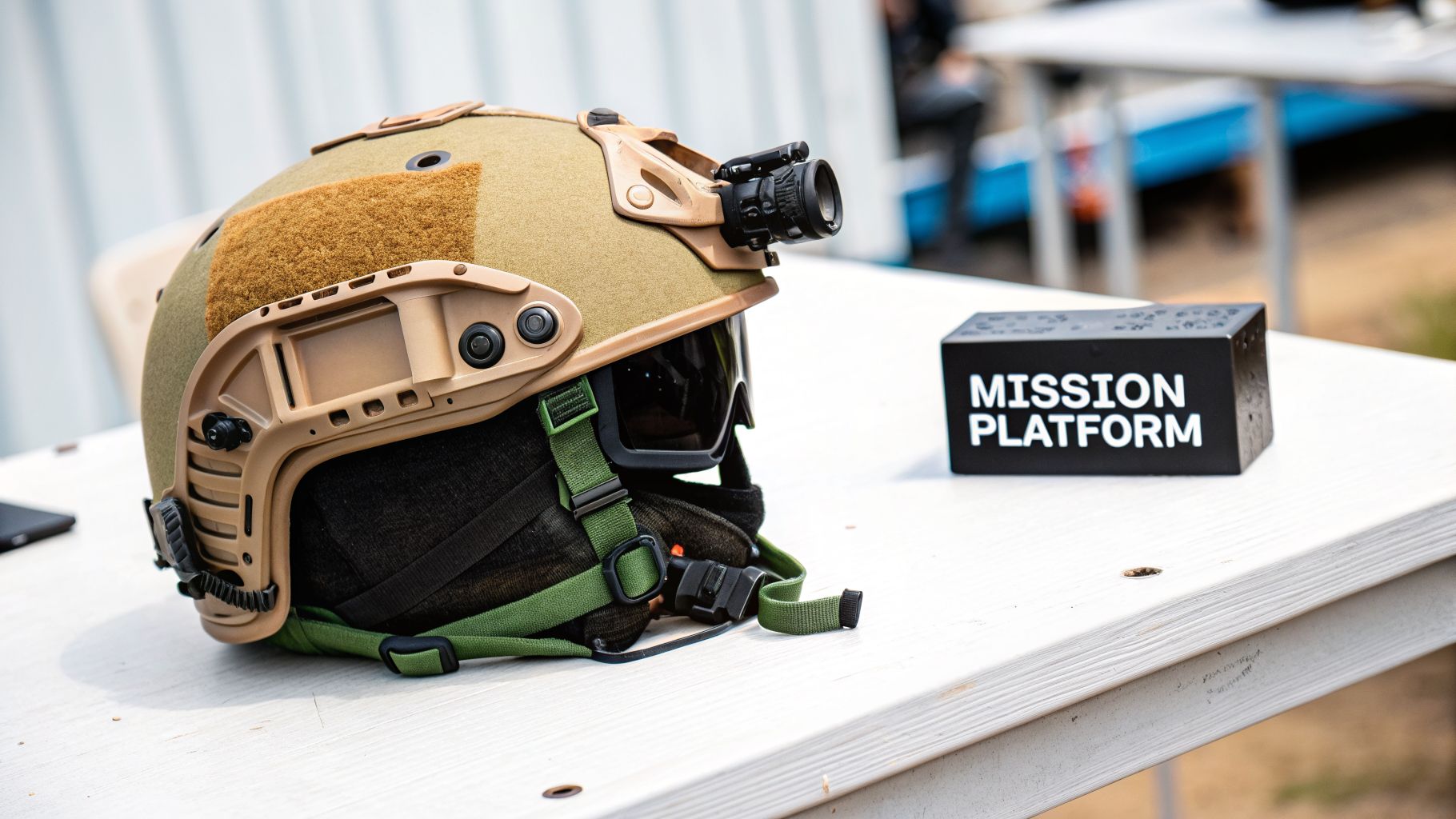
At its core, a tactical bump helmet is a lot like a specialized sports helmet—think rock climbing or whitewater kayaking—but built from the ground up for tactical needs. While it won’t stop a bullet, its real value comes from shielding you from the everyday hazards of a dynamic environment. We're talking about bumping your head in a tight doorway, getting hit with falling debris, or taking a knock during training.
But its purpose goes way beyond just impact protection. A tactical bump helmet is the central hub for your most important equipment, turning your head into a fully integrated system. By skipping the heavy ballistic materials, it offers a much more comfortable and breathable solution for any situation where flying lead isn't the primary concern.
To help you get a quick overview, here's a simple breakdown of what these helmets are all about.
Tactical Bump Helmet At a Glance
| Core Function | Primary User Groups | Key Advantage |
|---|---|---|
| Impact protection (bumps, falls, debris) and a stable platform for mounting gear. | Law Enforcement (training), Search & Rescue, Airsoft/Milsim Players, Hunters, Security Contractors. | Lightweight comfort for extended use without the neck strain of ballistic helmets. |
This table really captures the essence of the bump helmet: it's all about functional protection and gear integration when ballistic threats are off the table.
The Mission Platform Concept
Here’s where a bump helmet truly shines—as a "mission platform." This isn't just marketing speak. It means the helmet is the foundation that enhances your awareness and capabilities, and it does this with a few key features.
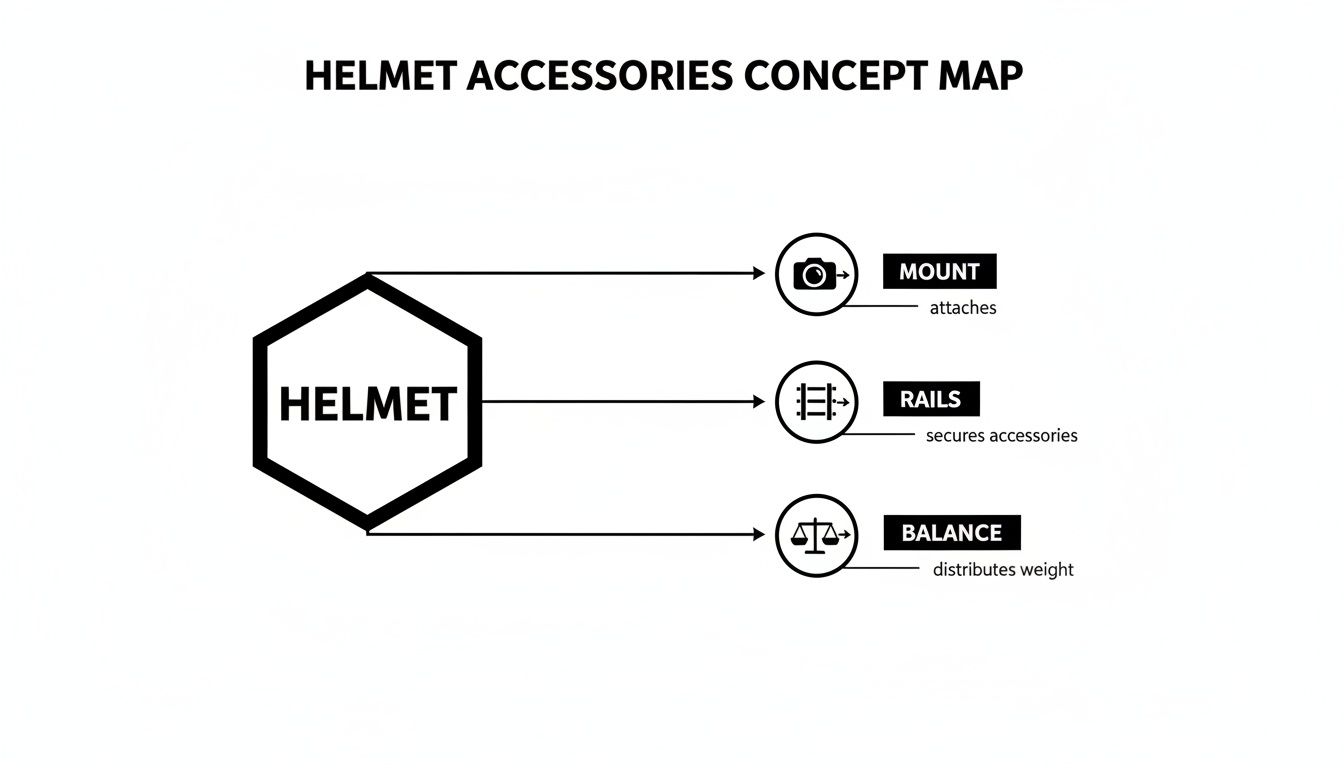
- Accessory Rails: Those rails on the side (usually ARC-style) are your bread and butter for attaching lights, comms headsets, cameras, and IR strobes.
- NVG Shroud: The mount on the front is a secure docking station for your night vision device (NVD) or thermal optics.
- Lightweight Build: Constructed from tough polymers or even carbon fiber, these helmets are designed to cut down on neck fatigue. This is a huge deal when you've got a pair of night vision goggles hanging off the front.
It’s this plug-and-play modularity that makes the tactical bump helmet so versatile. You'll see a SWAT officer using one for a long training day to save weight, or a search and rescue tech relying on it to mount a powerful headlamp for hands-free work in a collapsed structure.
At the end of the day, a bump helmet solves a critical problem: how to carry essential head-mounted technology comfortably and securely without the weight and heat of a ballistic helmet.
This makes them perfect for anyone who needs to run a full setup for hours on end. Night hunters, serious airsoft players, and contractors in low-threat areas all get huge benefits from this blend of protection and utility. As you dive deeper, it's worth understanding the different cuts available, like the popular high-cut helmet, to see how different designs cater to specific needs. This focus on system integration is what elevates a modern bump helmet far beyond a simple hard hat.
Bump vs. Ballistic Helmets: Choosing the Right Head Protection
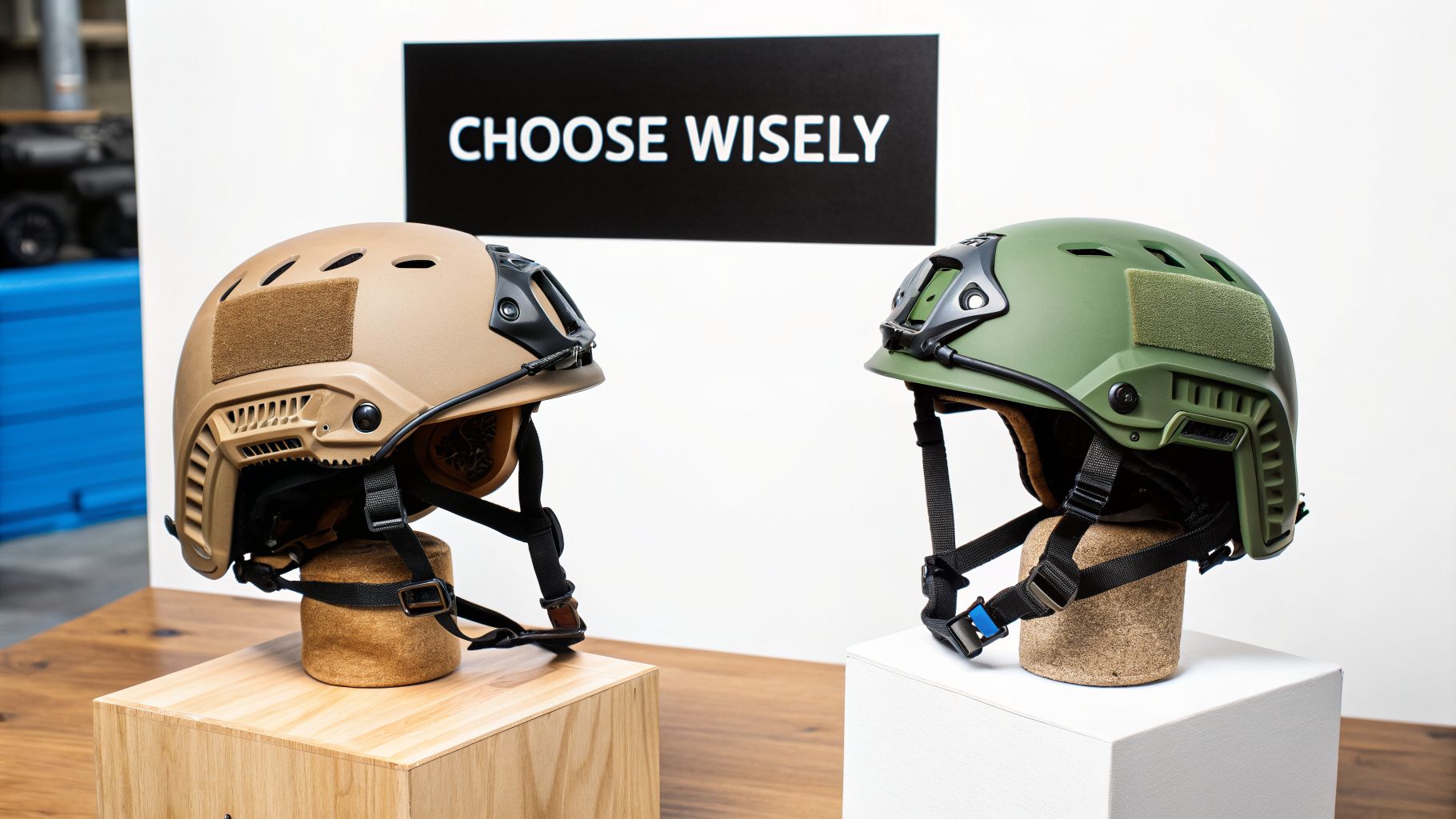
One of the biggest questions we get is about bump helmets versus ballistic helmets. They might look similar, but they're worlds apart in function. Picking the right one isn't just a matter of preference; it's about honestly assessing the threats you're most likely to face.
Think of it this way: a tactical bump helmet is like the roll cage in a race car. It’s built to protect you from impacts, bumps, and falls—the dangers within your immediate environment. Its job is to absorb blunt force trauma.
A ballistic helmet? That’s the armored truck. Its entire purpose is to stop high-velocity threats, like bullets and shrapnel, from ever reaching you. Both protect your head, but they're engineered for completely different kinds of danger.
The Great Trade-Off: Protection vs. Weight
Every piece of kit is a compromise, and helmets are no exception. The choice almost always boils down to a trade-off between protection, weight, and cost.
A ballistic helmet offers life-saving protection against projectiles, but that armor comes with a hefty penalty in both weight and price. That extra weight isn't just a number on a spec sheet—it's real strain on your neck and shoulders that builds up over hours, leading to serious fatigue.
On the flip side, a tactical bump helmet ditches the ballistic armor for a massive weight advantage. This makes it far more comfortable for long-duration missions, especially when you start adding accessories like night vision. Less fatigue means you stay sharper and more effective for longer.
A SWAT operator making a high-risk entry needs the NIJ Level III-A protection of a ballistic helmet, no question. But put that same operator on a long search and rescue mission or a multi-day training exercise, and the bump helmet becomes the smarter choice. In those situations, mobility and fatigue become the biggest enemies.
The core principle is simple: match the helmet to the most probable threat. If the risk is an impact, a bump helmet wins. If the risk involves bullets, you need armor.
To make this crystal clear, let's break down the key differences side-by-side.
Bump Helmet vs. Ballistic Helmet Key Differences
| Attribute | Tactical Bump Helmet | Ballistic Helmet |
|---|---|---|
| Primary Function | Impact and blunt force protection (falls, bumps, debris). | Stops ballistic threats (bullets, shrapnel). |
| Material | High-impact polymer or carbon fiber. | Aramid fibers (Kevlar) or UHMWPE (Dyneema). |
| Weight | Very lightweight (typically 1-1.5 lbs). | Significantly heavier (typically 2.5-4+ lbs). |
| Cost | More affordable. | Significantly more expensive. |
| Best For | Training, recce, search & rescue, night vision use. | High-threat direct action, SWAT, combat operations. |
| Fatigue Factor | Low; ideal for extended wear. | High; can cause significant neck strain over time. |
As you can see, these are two specialized tools for two different jobs. Choosing the wrong one either leaves you dangerously under-protected or needlessly weighed down.
Why Weight Savings Matter So Much
The moment you mount accessories, helmet weight becomes exponentially more important. A standard dual-tube night vision goggle (NVG) system can easily add over a pound to the front of your helmet. Thanks to leverage, that one pound feels like five on your neck.
- Ballistic Helmet + NVGs: This setup can quickly push past four or five pounds. The front-heavy imbalance creates a constant strain on your neck and back muscles, leading to faster exhaustion.
- Bump Helmet + NVGs: With a bump helmet, the total weight is often cut by 40-50%. This isn't just a minor improvement; it's a game-changer for comfort and endurance.
This massive weight difference is why the tactical bump helmet is the undisputed king for any activity involving prolonged night vision use. For hunters, search and rescue teams, and contractors in low-threat environments, being able to wear your gear comfortably for hours is a mission-critical advantage.
The global military segment—which relies on bump helmets as lightweight platforms—is a huge part of the overall bulletproof helmet market, which is projected to grow from USD 1.86 billion to USD 2.71 billion by 2033. You can see a deeper dive into these trends in the full report on the bulletproof helmet market.
Ultimately, choosing wisely comes down to that honest threat assessment. Understand the role of each helmet, and you can pick the right tool for the job—one that enhances your safety and effectiveness without becoming a burden.
Who Actually Uses a Tactical Bump Helmet
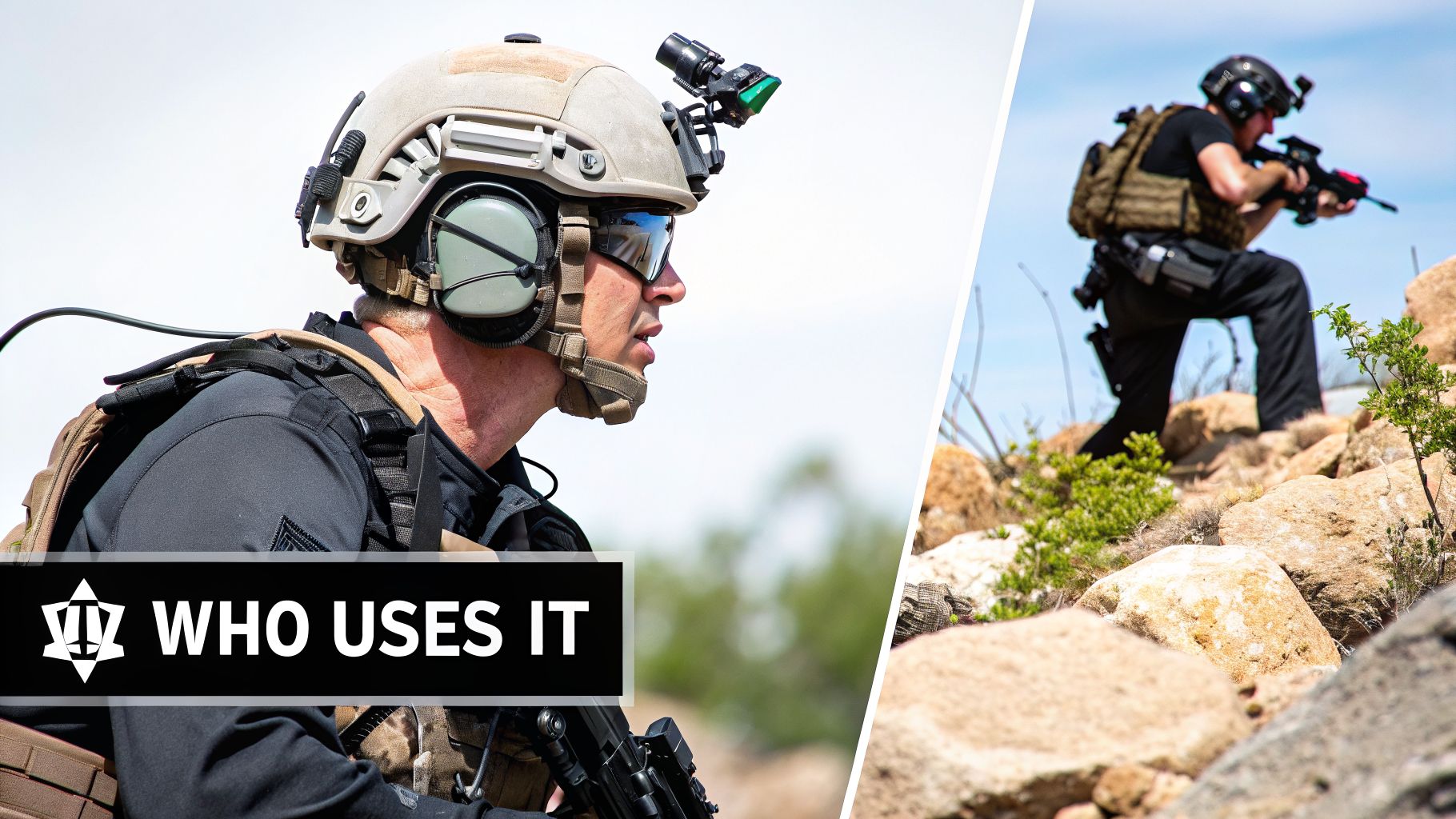
It’s one thing to talk about specs and materials, but where does the rubber really meet the road for a tactical bump helmet? The truth is, these helmets aren't just plastic shells; they're purpose-built tools that solve very specific problems for a surprising range of people.
Understanding who puts this gear on and why they pick it over a heavy ballistic helmet tells the whole story. From long training days to navigating a pitch-black forest, the bump helmet strikes a critical balance between protection, comfort, and its ability to carry essential gear. Its lightweight design is often the #1 selling point, letting the user focus on the mission instead of fighting neck pain.
Law Enforcement and SWAT Training
For cops, and especially SWAT teams, training is a grind. Think about an officer running through drills for an eight-hour day—clearing rooms, practicing forced entries, and running force-on-force scenarios. Wearing a full-weight ballistic helmet through all that is brutal. It leads to serious exhaustion and can even increase the risk of injury.
This is exactly where the tactical bump helmet shines as a training tool. It lets an officer mount their entire operational kit—comms headset, IR strobes, and training-grade night vision—but at a fraction of the weight. They can build the right muscle memory with their gear in its proper place, all without the crippling strain. That way, when a real call comes in, they're physically ready to go.
The whole point of using a bump helmet for training is to replicate the real-world loadout, letting officers focus on building endurance and smooth movement. It gives them protection from the inevitable knocks and bumps of hard training, without the cumulative fatigue that comes from wearing armor.
This move toward smarter, more modular gear is a huge trend. In a ballistic helmets market that hit USD 1.5 billion in 2023, the non-ballistic bump helmet is carving out a serious niche. With over 1.2 million helmets in service across the U.S., you're seeing more and more special units adopt the bump helmet for specific roles. You can read more about the growth of the tactical helmet market and what’s driving it.
Hunters and Outdoorsmen
The modern hunter is often more high-tech than people realize, using every piece of gear to their advantage. For anyone hunting at night or in the early dawn, a helmet-mounted thermal or night vision optic is a total game-changer. Trying to juggle a heavy rifle while moving over uneven ground is hard enough without adding a heavy helmet to the mix.
A hunter with a tactical bump helmet can securely mount their PVS-14 or thermal optic, keeping both hands free for their rifle and for navigating safely. The lightweight build means they can stalk prey for hours without feeling like their head is in a vice. It also offers real-world protection from low-hanging branches, unseen rocks, and the occasional slip or fall in the dark.
- Hands-Free Operation: Keeps optics stable and lets you scan your surroundings without tying up your hands.
- Impact Protection: A much-needed guard against the common bumps and scrapes you encounter on rough terrain.
- All-Night Comfort: Drastically cuts down on neck strain during those long hunts that last from sundown to sunrise.
Security Contractors and Low-Threat Environments
Let’s be honest: not every security job calls for ballistic armor. For private security contractors working in what's considered a low-threat environment—think maritime security, protecting a static asset, or running a VIP detail in a stable country—mobility and awareness are far more important than stopping a bullet.
Here, the tactical bump helmet becomes the perfect command center for their equipment. It's a stable platform for mounting comms systems to talk to the team, lights to check dark corners, and cameras to record events. For these pros, working a 12-hour shift without being physically wiped out is key to doing the job right. The bump helmet gives them that edge, providing the impact protection they need without the burden of weight they don't.
How to Accessorize Your Tactical Bump Helmet
A bare tactical bump helmet is really just a starting point. Think of it as a blank canvas—full of potential, but its true value only comes out when you start adding the right tools. Accessorizing isn't about looks; it's about strategically adding force multipliers that boost your awareness, communication, and overall ability to get the job done.
But it’s not just about slapping on every gadget you can find. You need to be smart about what you add, where you put it, and how everything works together. The end goal is a setup that’s balanced, functional, and comfortable enough that you forget you’re even wearing it. It’s a personalized cockpit for your head, with every critical tool right where you need it.
The Foundation: Your Mounting Systems
Before you can add any of that cool gear, you need to have a solid base to work from. This starts with the mounting points built right into the helmet itself. These are standardized interfaces that let you connect a huge range of tactical accessories.
- NVG Shroud: This is the bracket right on the front of the helmet. Its entire job is to be a secure docking station for your night vision mount. For anyone planning to run optics, a high-quality, machined aluminum shroud is non-negotiable. It’s what prevents wobble and ensures your very expensive gear doesn't take a tumble.
- Accessory Rails (ARC Rails): Running along the sides of the helmet, these rails are the prime real estate for everything else. They use a standard slot system that lets you slide on and lock down lights, communication headsets, cameras, and more.
Getting familiar with these two systems is your first step. The shroud is for your primary optic; the rails are for your support equipment. Using both correctly is the key to building a truly capable helmet.
Core Accessories: The Mission-Essential Trio
While the options are nearly endless, most truly effective setups are built around three core components. These are the accessories that form the functional backbone of a great helmet system and should be the first things you consider.
Night Vision and Mounts: Let's be honest—this is the number one reason people buy a bump helmet. The mount is the critical link between your helmet's shroud and the optic itself. A good mount gives you plenty of adjustment and a rock-solid lock-up, keeping your view of the world stable. To really get into the weeds on this, you can learn more about choosing the right helmet night vision mount and see why a quality one is so critical.
Illumination (Task Lights and IR Strobes): Hands-free lighting is a game-changer. Small, rail-mounted task lights give you visible white light for admin work like checking a map or fixing gear without tying up your hands. If you're running night vision, an Infrared (IR) strobe is a must-have for team identification, letting friendlies with NVGs know where you are.
Communication Headsets: Modern electronic hearing protection does a lot more than just block gunshots; it often ties right into your radio. Headsets from brands like Peltor or Sordin can be fitted with adapters that clip directly onto the ARC rails. This gets rid of the traditional headband, which means fewer pressure points and a much cleaner, more comfortable fit.
Achieving Perfect Balance: The Art of the Counterweight
As soon as you mount gear to the front—especially a night vision device—your helmet is going to become front-heavy. This creates a constant downward pull that goes straight to your neck, leading to serious fatigue. After just a few hours, it can feel like you’ve been in a headlock all day.
This is where a counterweight system becomes absolutely essential.
A counterweight isn't an optional accessory; it's a mandatory component for any helmet running a front-mounted optic. It restores the center of gravity to the middle of your head, making a three-pound helmet feel like it weighs half as much.
These are simple pouches that stick to the back of the helmet with hook-and-loop. You can fill them with lead weights, spare batteries for your gear, or a dedicated battery pack for your NODs. Getting the balance right is the single most important thing you can do for long-term comfort. It makes a world of difference, turning a clumsy, front-heavy rig into a stable platform that feels almost weightless.
Choosing the Right Tactical Bump Helmet
Stepping into the world of tactical gear can feel like a lot, but picking the right tactical bump helmet is simpler than you might think. It really comes down to a few key decisions. Think of it like buying tires for your truck—you wouldn't put highway tires on for a mud bog, right? You need to match the gear to the mission. To make a smart choice, you just need to nail down three things: the shell material, the suspension system, and getting a perfect fit.
First up is the helmet shell material. This is a big one because it directly affects the helmet's weight, how tough it is, and what it's going to cost you.
- Polymer (ABS Plastic): This is your workhorse option. It's the most common and affordable choice for a reason. Polymer shells give you excellent protection from everyday knocks and impacts, making them a solid all-around pick for training, airsoft, and general-purpose use.
- Carbon Fiber: If you're counting every single ounce, carbon fiber is where you want to be. These shells are incredibly light but still ridiculously strong. They're the go-to for guys running heavy night vision gear where reducing neck strain is a top priority.
Both materials will absolutely do the job of protecting your head from bumps and scrapes. Your decision will likely come down to your budget and exactly what you'll be doing.
Finding Your Perfect Fit and Suspension
Look, a helmet that wobbles on your head is worse than no helmet at all. It's not just annoying; it’s a liability. An unstable helmet can't support your accessories properly, and it won't give you consistent protection when you need it. This is why the fit and the suspension system are, without a doubt, the most important part of this whole equation.
The suspension is the internal harness that cradles your head, spreading out the weight and absorbing shock. You'll mostly see two types: dial liners and pad systems.
A proper fit isn't a "nice-to-have"—it's a requirement. A helmet that fits you correctly will feel like a natural extension of your body, giving you a stable platform that stays comfortable even after hours of use.
For instance, a dial liner system, which you'll find on most modern helmets, lets you tighten an internal band with a knob on the back. This gives you a snug, 360-degree fit you can adjust on the fly. The more traditional pad systems use a set of repositionable foam pads in different thicknesses to customize the fit. Once you get it dialed in, they can be incredibly comfortable. To see some great examples of these systems in action, take a look at our breakdown of the Team Wendy helmet line.
A helmet is more than just a shell; it's a platform for critical equipment. The mount, rails, and overall balance are key to making it work for you.
How to Measure for Your Tactical Helmet
Getting the size right is easy, but don't skip this step. Taking two minutes to measure will make sure you get a helmet that fits perfectly from day one.
- Grab a soft measuring tape. A flexible tailor’s tape is perfect. No tape? A piece of string and a ruler will work just fine.
- Wrap it around your head. Place the tape about an inch above your eyebrows and ears. Keep it level all the way around to measure the widest part of your head.
- Check the measurement. Note the number in inches or centimeters. The tape should be snug, but don't pull it so tight that it's uncomfortable.
- Compare with the manufacturer's size chart. Every brand sizes their helmets a little differently. Match your measurement to their chart to find your size (like M/L or XL).
This simple process is the single best thing you can do to guarantee your helmet is comfortable and stable. With a focus on fit and modularity, the adoption of bump helmets has exploded, with over 300,000 units sold in 2023 to special units and contractors alone. The entire combat helmet market is growing fast, with tactical models seeing a 6.11% CAGR as they become more common in law enforcement and private security. You can discover more insights about helmet market growth trends on marketgrowthreports.com.
By focusing on material, fit, and a proper measurement, you'll end up with a helmet that does more than just protect you—it'll actually improve your performance.
Common Questions About Tactical Bump Helmets
Even with all the details covered, it's natural to have a few lingering questions. A good bump helmet is an investment, and it’s smart to get all your ducks in a row before you commit. We've pulled together the most common questions we get from customers to give you clear, no-nonsense answers.
Think of this as the final check before you make your choice. We’ll tackle everything from legality and maintenance to the first accessories you should consider, so you can feel completely confident in your gear.
Are Tactical Bump Helmets Legal for Civilians?
Let's clear this one up right away: yes, a tactical bump helmet is 100% legal for civilians to buy and own in the United States. This is a huge point of confusion for many, but the answer is refreshingly simple.
Bump helmets contain no ballistic-rated materials, which puts them in a completely different category from regulated body armor. They are considered non-ballistic personal protective equipment, just like a high-end construction hard hat or a specialized sports helmet.
Because they don't stop bullets, they aren't subject to the regulations that can sometimes apply to armor. This makes them easily accessible to anyone, whether you’re a hunter, an airsoft player, or a civilian focused on preparedness.
Owning a tactical bump helmet is no different than owning a top-tier climbing or cycling helmet. There are no background checks or special requirements for purchase, making them readily available to the general public.
This total legality is a major reason why their popularity has exploded well beyond the military and law enforcement communities.
Can I Use a Bump Helmet for Climbing or Cycling?
It might seem like a helmet is a helmet, but using your tactical bump helmet for sports like climbing or cycling is a bad idea. While it offers great impact protection, it’s not designed for the specific threats those activities present.
Helmets built for sports are engineered and tested against very specific industry safety standards. For instance:
- Climbing Helmets: These have to meet standards like UIAA or CE EN 12492, which test for impacts from falling rocks and ice.
- Cycling Helmets: These must pass CPSC certification, which is all about protecting you from the kind of falls you’d experience on a bike.
A tactical bump helmet is built for a different world—bumping your head inside a vehicle, in tight spaces, and, most importantly, providing a rock-solid platform for heavy gear. Always stick with a helmet certified for the sport you're playing. It’s the only way to be sure you have the right kind of protection.
How Do I Properly Maintain My Bump Helmet?
Taking care of your bump helmet is simple, but it's crucial for keeping it ready for action and ensuring it lasts. A little routine maintenance goes a long way.
Get in the habit of inspecting the shell for cracks, deep gouges, or any signs of delamination, particularly after taking a hard knock. To clean it, just use a soft cloth with mild soap and warm water. Avoid harsh chemical cleaners, solvents, and paints at all costs—they can eat away at the polymer or carbon fiber, weakening the shell and compromising its integrity.
Most modern helmets have removable pads. You can hand-wash those with a gentle soap, rinse them well, and let them air dry completely before putting them back in. Lastly, give the suspension, chin strap, and adjustment dials a quick check for wear and tear to make sure everything is working smoothly. Storing it in a cool, dry spot away from direct sun will also protect it from UV damage over time.
What Is the First Accessory I Should Buy?
This is a great question because the answer gets right to the heart of why these helmets are so effective. For almost everyone, the first and most critical accessory purchase is a quality night vision shroud and mount.
The whole point of a modern bump helmet is to serve as a stable, lightweight platform for optics. Even if you don't own NVGs yet, getting a good shroud (the interface on the helmet) and mount sets you up for success. Using a cheap, wobbly mount will ruin the experience of using expensive night vision, making the image unstable and practically useless.
Your very next purchase should be a counterweight system. The moment you hang gear off the front of the helmet, you throw off its balance. A simple pouch with weights on the back instantly restores the center of gravity, making the helmet far more comfortable and saving your neck from strain during long nights.
At Superior Tactical LLC, we focus on providing the essential gear that turns a helmet into a fully capable system. We've hand-picked a selection of top-tier night vision mounts, shrouds, and accessories to help you build out your perfect setup. Visit us at https://superiortac.com to get started.
