
Digital Night Vision

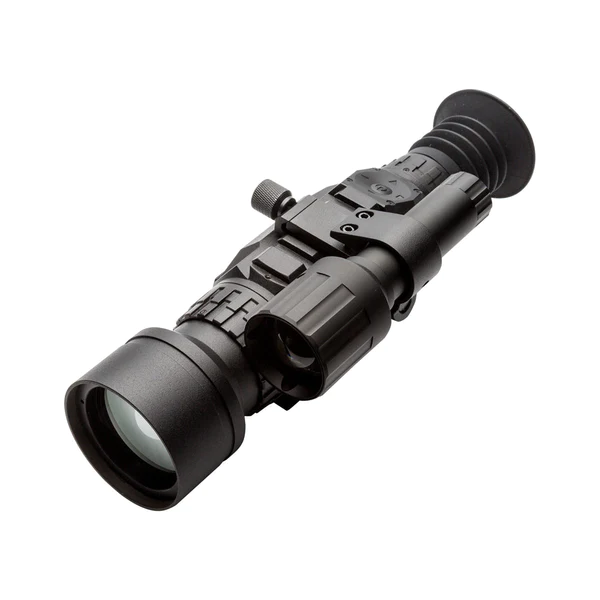
Sightmark Wraith HD 4-32×50 Digital Rifle Scope

$499.97
Add to cart

Digital Night Vision Buyer’s Guide

Digital night vision uses a low-light digital sensor (typically CMOS) to capture an image and display it on a small screen, rather than the photocathode-and-MCP image-intensifier process that drives analog night vision. The result is a different tool with different strengths — usually significantly cheaper, often with daytime use, with built-in video recording and Wi-Fi, but with image quality and low-light performance that’s a step (or several) below quality Gen 3 analog NV.

This guide walks through how digital differs from analog tubes, where each technology wins, the major brands, and what to expect at each price tier.

Digital vs. Analog (Tube) Night Vision

The two technologies do the same job — let you see in low light — but they get there by different routes.

  • Analog (tube-based) NV: A photocathode tube amplifies available ambient light through electron multiplication. Image is delivered directly to the eyepiece. Strengths: best low-light performance, fastest response, no battery-drain video processing, mature technology. Weaknesses: cost ($3,000-$5,000+ for quality Gen 3), ITAR-controlled, no daytime use without lens cap, no native recording. See our Night Vision Optics guide for the analog side.
  • Digital NV: A digital sensor captures the scene; an LCD or OLED displays it. Strengths: lower cost ($300-$2,000), works in daylight, native video and photo recording, Wi-Fi/app integration, ballistic calculators on scopes, no ITAR restrictions on most units. Weaknesses: weaker low-light performance than quality analog tubes (especially in genuinely dark environments), display lag, battery-dependent, lower-resolution image, doesn’t match the analog “look.”

For most buyers in moonlit or partial-light conditions, digital is now genuinely usable and significantly cheaper. For buyers who need true starlight performance, ultra-fast target acquisition, or the kind of image quality serious tactical and military users require, analog tubes still win.

Form Factors

Digital Monoculars and Binoculars

Handheld digital units for general-purpose night observation. Sionyx Aurora and Aurora Pro are the dominant standalone digital monoculars; ATN BinoX and similar units fill the binocular space. Useful for hunting, property surveillance, search work, and general low-light observation.

Digital Rifle Scopes

The largest segment of the digital category. Day/night scopes from Pulsar (Digex), ATN (X-Sight 4K Pro), Sightmark (Wraith), and others combine a digital sensor with a rifle-scope form factor, ballistic calculators, video recording, and Wi-Fi. Popular with hog and predator hunters who want one optic for both daytime and night use.

Digital Clip-Ons

Mount in front of a daytime scope and convert it to a night-capable system. Less common than thermal clip-ons, but exist for buyers who want to keep their existing day optic and zero. Sionyx and Pulsar make the main civilian-grade options.

The Specs That Matter

Sensor Resolution and Type

Digital NV uses CMOS sensors, with resolution typically expressed in megapixels for the sensor itself and pixel count for the display (e.g., 1280×720 OLED). Higher-resolution sensors capture more detail, but in low-light conditions the larger factor is sensor sensitivity (low-light gain) rather than pixel count alone. Sionyx’s Ultra Low Light CMOS technology is one of the meaningful sensor advances in this space.

Display Resolution

The internal display you actually look at. 1280×720 (HD) is the modern standard; 1920×1080 (Full HD) is the premium spec. Display refresh rate matters less than display resolution for most users.

Detection Range

Manufacturers publish detection ranges under specified ambient light conditions. Real-world performance varies dramatically based on actual moon phase, cloud cover, and environment. Digital units generally need more ambient light than analog tubes to deliver usable image quality at distance.

Battery Life

Digital units run on rechargeable lithium batteries (often built-in 18650 or proprietary packs). Runtime ranges from 4-12 hours of continuous use; recording video and using Wi-Fi reduces battery life. Carrying spare batteries or a USB-C power bank is the practical answer for extended use.

Recording and Connectivity

Most modern digital units include onboard video and photo recording (microSD card), Wi-Fi for live streaming to a phone app, and onboard ballistic calculators (on scopes). If video documentation matters for your use case (hunting, security, training), digital wins on this dimension by default.

Major Brands

Sionyx

The premium digital monocular brand. The Aurora and Aurora Pro use proprietary Ultra Low Light CMOS sensors that deliver color night vision performance unmatched by other digital units. The clear choice for buyers who want digital with the best low-light image quality currently available outside of analog tubes.

Pulsar (Digital)

The Digex line (digital rifle scopes) brings Pulsar’s mature feature set — Wi-Fi, ballistic reticles, recording, refined controls — to digital. Strong choice for hunters who already trust the Pulsar ecosystem.

ATN

The X-Sight 4K Pro and similar scopes from ATN offer broad day/night use, onboard ballistic calculators (Smart Mil-Dot, ABL rangefinder integration), and competitive pricing. Popular with hog hunters and the broader prosumer hunting market.

Sightmark

The Wraith and Wraith 4K series are the value leaders in the digital scope category. Lower price than ATN or Pulsar, capable feature set, and a popular choice for buyers entering digital NV without a premium budget. See our Sightmark category for the full lineup.

Other Brands

Bering Optics, Nightfox, and similar value-tier brands occupy the entry-level segment with capable budget units. Newer entrants (Liemke, AGM digital line) round out the field.

Use Cases — Picking the Right Tool

  • Hog and predator hunting (mid-budget): Pulsar Digex or ATN X-Sight 4K Pro on the rifle, Sionyx Aurora as a handheld scanner. Digital makes sense here because most hunting takes place in moonlit conditions where digital performs well, and recording capability adds real value.
  • Property security and observation: Sionyx Aurora or ATN BinoX. Daytime usability and recording are the wins; ambient light is generally available around populated areas.
  • Search and rescue: Sionyx Aurora Pro for the best digital low-light performance, or step up to thermal — see our Thermal guide.
  • Tactical / serious low-light work: Analog tubes (PVS-14, dual-tube goggles) deliver performance digital can’t match in genuinely dark environments. See our Night Vision Optics guide.
  • Budget entry to night vision: Sightmark Wraith digital scope or budget Sionyx delivers genuine night-capable optics for under $1,000 — the easiest entry point.

Price Tiers

  • Budget digital scopes (Sightmark Wraith and similar): $400-$800. Real night-capable digital scopes with recording at the easiest entry price.
  • Mid-tier digital monoculars (Sionyx Aurora): $700-$1,200. Premium digital low-light performance in a handheld form factor.
  • Mid-tier digital scopes (ATN X-Sight 4K Pro, Pulsar Digex entry): $800-$2,000. Full feature sets, ballistic calculators, Wi-Fi.
  • Premium digital (Sionyx Aurora Pro, premium Pulsar Digex): $1,500-$3,000. Top-tier digital sensors, premium glass, full feature sets.

For comparison, quality analog Gen 3 monoculars start around $3,000 and run to $4,500+; dual-tube goggles run $7,500-$12,000+. Digital is genuinely budget-friendly relative to analog at every tier.

ITAR and Export

Most consumer digital NV units are not ITAR-controlled — the sensor technology doesn’t reach the same regulatory threshold as analog tubes. We sell only to U.S. customers and do not ship internationally to keep our compliance posture consistent across the catalog.

Warranty and Support

Pulsar offers 3-year warranties; ATN offers 2-year on most models; Sionyx offers 2-year; Sightmark offers limited lifetime on Wraith units. Battery-related issues and screen failures are the most common warranty claims. We’re a full service facility and can help with mounting, zeroing, and configuration. All units ship within 1-2 business days.

Frequently Asked Questions

Digital or analog night vision — which should I buy?

For budget-constrained buyers, hunters in moonlit conditions, and users who want recording and daytime use, digital. For serious tactical use, target acquisition under genuinely dark conditions, and users who need the absolute best low-light image quality, analog tubes. Many serious users eventually own both for different roles.

How does digital perform in true darkness?

Worse than analog. Digital sensors need some ambient light to produce a usable image; in genuinely dark environments (overcast moonless night, dense canopy), digital units may need IR illumination to work, while analog Gen 3 tubes will still deliver a usable image. For starlight performance, analog wins.

Can I use digital NV during the day?

Yes. Most digital units automatically transition to a daytime mode (or simply work normally because the sensor handles bright light). Analog tubes can be permanently damaged by daytime light and require lens caps. Daytime usability is one of digital’s clear advantages.

Is the Sionyx Aurora as good as a PVS-14?

For color night vision and recording capability, the Aurora is unmatched. For pure low-light performance and detail at distance, a quality Gen 3 PVS-14 is significantly better in genuinely dark conditions. Different tools — many users own both.

What about the ATN X-Sight 4K Pro?

A capable digital day/night scope at a reasonable price, with onboard ballistic calculator and recording. Popular for hog and predator hunting at moonlit conditions. Image quality is solid for the price; battery life and software refinement are areas where premium-tier units (Pulsar Digex) pull ahead.

Will digital NV work with an IR illuminator?

Yes — most digital units include built-in IR illuminators or accept external IR illuminators (like the IR illuminator on combo lasers — see our Lasers guide). IR illumination dramatically extends the usable range and image quality of digital NV in low ambient light.

Are digital NV scopes legal for hunting in my state?

State regulations vary widely on night hunting and on what optics are legal. Texas, Louisiana, and several other states permit night hunting of hogs and predators with digital and analog NV; other states restrict or prohibit it. Check your state’s specific regulations before purchasing.

Are digital units ITAR-controlled?

Most aren’t — digital NV doesn’t fall under the same ITAR rules as analog Gen 3 tubes. We still sell only to U.S. customers and do not ship internationally to keep compliance simple.

How long does shipping take?

All units ship within 1-2 business days.

Trying to decide between digital and analog or pick the right digital scope for your use case? Contact us or call (888) 330-7057 with what you’ll be using it for and your budget — we’ll spec the right unit.

Digital Night Vision Buyer’s Guide

Digital night vision uses a low-light digital sensor (typically CMOS) to capture an image and display it on a small screen, rather than the photocathode-and-MCP image-intensifier process that drives analog night vision. The result is a different tool with different strengths — usually significantly cheaper, often with daytime use, with built-in video recording and Wi-Fi, but with image quality and low-light performance that’s a step (or several) below quality Gen 3 analog NV.

This guide walks through how digital differs from analog tubes, where each technology wins, the major brands, and what to expect at each price tier.

Digital vs. Analog (Tube) Night Vision

The two technologies do the same job — let you see in low light — but they get there by different routes.

  • Analog (tube-based) NV: A photocathode tube amplifies available ambient light through electron multiplication. Image is delivered directly to the eyepiece. Strengths: best low-light performance, fastest response, no battery-drain video processing, mature technology. Weaknesses: cost ($3,000-$5,000+ for quality Gen 3), ITAR-controlled, no daytime use without lens cap, no native recording. See our Night Vision Optics guide for the analog side.
  • Digital NV: A digital sensor captures the scene; an LCD or OLED displays it. Strengths: lower cost ($300-$2,000), works in daylight, native video and photo recording, Wi-Fi/app integration, ballistic calculators on scopes, no ITAR restrictions on most units. Weaknesses: weaker low-light performance than quality analog tubes (especially in genuinely dark environments), display lag, battery-dependent, lower-resolution image, doesn’t match the analog “look.”

For most buyers in moonlit or partial-light conditions, digital is now genuinely usable and significantly cheaper. For buyers who need true starlight performance, ultra-fast target acquisition, or the kind of image quality serious tactical and military users require, analog tubes still win.

Form Factors

Digital Monoculars and Binoculars

Handheld digital units for general-purpose night observation. Sionyx Aurora and Aurora Pro are the dominant standalone digital monoculars; ATN BinoX and similar units fill the binocular space. Useful for hunting, property surveillance, search work, and general low-light observation.

Digital Rifle Scopes

The largest segment of the digital category. Day/night scopes from Pulsar (Digex), ATN (X-Sight 4K Pro), Sightmark (Wraith), and others combine a digital sensor with a rifle-scope form factor, ballistic calculators, video recording, and Wi-Fi. Popular with hog and predator hunters who want one optic for both daytime and night use.

Digital Clip-Ons

Mount in front of a daytime scope and convert it to a night-capable system. Less common than thermal clip-ons, but exist for buyers who want to keep their existing day optic and zero. Sionyx and Pulsar make the main civilian-grade options.

The Specs That Matter

Sensor Resolution and Type

Digital NV uses CMOS sensors, with resolution typically expressed in megapixels for the sensor itself and pixel count for the display (e.g., 1280×720 OLED). Higher-resolution sensors capture more detail, but in low-light conditions the larger factor is sensor sensitivity (low-light gain) rather than pixel count alone. Sionyx’s Ultra Low Light CMOS technology is one of the meaningful sensor advances in this space.

Display Resolution

The internal display you actually look at. 1280×720 (HD) is the modern standard; 1920×1080 (Full HD) is the premium spec. Display refresh rate matters less than display resolution for most users.

Detection Range

Manufacturers publish detection ranges under specified ambient light conditions. Real-world performance varies dramatically based on actual moon phase, cloud cover, and environment. Digital units generally need more ambient light than analog tubes to deliver usable image quality at distance.

Battery Life

Digital units run on rechargeable lithium batteries (often built-in 18650 or proprietary packs). Runtime ranges from 4-12 hours of continuous use; recording video and using Wi-Fi reduces battery life. Carrying spare batteries or a USB-C power bank is the practical answer for extended use.

Recording and Connectivity

Most modern digital units include onboard video and photo recording (microSD card), Wi-Fi for live streaming to a phone app, and onboard ballistic calculators (on scopes). If video documentation matters for your use case (hunting, security, training), digital wins on this dimension by default.

Major Brands

Sionyx

The premium digital monocular brand. The Aurora and Aurora Pro use proprietary Ultra Low Light CMOS sensors that deliver color night vision performance unmatched by other digital units. The clear choice for buyers who want digital with the best low-light image quality currently available outside of analog tubes.

Pulsar (Digital)

The Digex line (digital rifle scopes) brings Pulsar’s mature feature set — Wi-Fi, ballistic reticles, recording, refined controls — to digital. Strong choice for hunters who already trust the Pulsar ecosystem.

ATN

The X-Sight 4K Pro and similar scopes from ATN offer broad day/night use, onboard ballistic calculators (Smart Mil-Dot, ABL rangefinder integration), and competitive pricing. Popular with hog hunters and the broader prosumer hunting market.

Sightmark

The Wraith and Wraith 4K series are the value leaders in the digital scope category. Lower price than ATN or Pulsar, capable feature set, and a popular choice for buyers entering digital NV without a premium budget. See our Sightmark category for the full lineup.

Other Brands

Bering Optics, Nightfox, and similar value-tier brands occupy the entry-level segment with capable budget units. Newer entrants (Liemke, AGM digital line) round out the field.

Use Cases — Picking the Right Tool

  • Hog and predator hunting (mid-budget): Pulsar Digex or ATN X-Sight 4K Pro on the rifle, Sionyx Aurora as a handheld scanner. Digital makes sense here because most hunting takes place in moonlit conditions where digital performs well, and recording capability adds real value.
  • Property security and observation: Sionyx Aurora or ATN BinoX. Daytime usability and recording are the wins; ambient light is generally available around populated areas.
  • Search and rescue: Sionyx Aurora Pro for the best digital low-light performance, or step up to thermal — see our Thermal guide.
  • Tactical / serious low-light work: Analog tubes (PVS-14, dual-tube goggles) deliver performance digital can’t match in genuinely dark environments. See our Night Vision Optics guide.
  • Budget entry to night vision: Sightmark Wraith digital scope or budget Sionyx delivers genuine night-capable optics for under $1,000 — the easiest entry point.

Price Tiers

  • Budget digital scopes (Sightmark Wraith and similar): $400-$800. Real night-capable digital scopes with recording at the easiest entry price.
  • Mid-tier digital monoculars (Sionyx Aurora): $700-$1,200. Premium digital low-light performance in a handheld form factor.
  • Mid-tier digital scopes (ATN X-Sight 4K Pro, Pulsar Digex entry): $800-$2,000. Full feature sets, ballistic calculators, Wi-Fi.
  • Premium digital (Sionyx Aurora Pro, premium Pulsar Digex): $1,500-$3,000. Top-tier digital sensors, premium glass, full feature sets.

For comparison, quality analog Gen 3 monoculars start around $3,000 and run to $4,500+; dual-tube goggles run $7,500-$12,000+. Digital is genuinely budget-friendly relative to analog at every tier.

ITAR and Export

Most consumer digital NV units are not ITAR-controlled — the sensor technology doesn’t reach the same regulatory threshold as analog tubes. We sell only to U.S. customers and do not ship internationally to keep our compliance posture consistent across the catalog.

Warranty and Support

Pulsar offers 3-year warranties; ATN offers 2-year on most models; Sionyx offers 2-year; Sightmark offers limited lifetime on Wraith units. Battery-related issues and screen failures are the most common warranty claims. We’re a full service facility and can help with mounting, zeroing, and configuration. All units ship within 1-2 business days.

Frequently Asked Questions

Digital or analog night vision — which should I buy?

For budget-constrained buyers, hunters in moonlit conditions, and users who want recording and daytime use, digital. For serious tactical use, target acquisition under genuinely dark conditions, and users who need the absolute best low-light image quality, analog tubes. Many serious users eventually own both for different roles.

How does digital perform in true darkness?

Worse than analog. Digital sensors need some ambient light to produce a usable image; in genuinely dark environments (overcast moonless night, dense canopy), digital units may need IR illumination to work, while analog Gen 3 tubes will still deliver a usable image. For starlight performance, analog wins.

Can I use digital NV during the day?

Yes. Most digital units automatically transition to a daytime mode (or simply work normally because the sensor handles bright light). Analog tubes can be permanently damaged by daytime light and require lens caps. Daytime usability is one of digital’s clear advantages.

Is the Sionyx Aurora as good as a PVS-14?

For color night vision and recording capability, the Aurora is unmatched. For pure low-light performance and detail at distance, a quality Gen 3 PVS-14 is significantly better in genuinely dark conditions. Different tools — many users own both.

What about the ATN X-Sight 4K Pro?

A capable digital day/night scope at a reasonable price, with onboard ballistic calculator and recording. Popular for hog and predator hunting at moonlit conditions. Image quality is solid for the price; battery life and software refinement are areas where premium-tier units (Pulsar Digex) pull ahead.

Will digital NV work with an IR illuminator?

Yes — most digital units include built-in IR illuminators or accept external IR illuminators (like the IR illuminator on combo lasers — see our Lasers guide). IR illumination dramatically extends the usable range and image quality of digital NV in low ambient light.

Are digital NV scopes legal for hunting in my state?

State regulations vary widely on night hunting and on what optics are legal. Texas, Louisiana, and several other states permit night hunting of hogs and predators with digital and analog NV; other states restrict or prohibit it. Check your state’s specific regulations before purchasing.

Are digital units ITAR-controlled?

Most aren’t — digital NV doesn’t fall under the same ITAR rules as analog Gen 3 tubes. We still sell only to U.S. customers and do not ship internationally to keep compliance simple.

How long does shipping take?

All units ship within 1-2 business days.

Trying to decide between digital and analog or pick the right digital scope for your use case? Contact us or call (888) 330-7057 with what you’ll be using it for and your budget — we’ll spec the right unit.