Tactical Ballistic Helmets: 2026 Buyer’s Guide & Best Picks
It's easy to look at a modern tactical ballistic helmet and just see head protection. But that’s selling it short. Think of it less like a hat and more like the dashboard of a fighter jet—it’s the central hub that connects you to all your mission-critical systems.
Why a Ballistic Helmet Is More Than Just Headwear
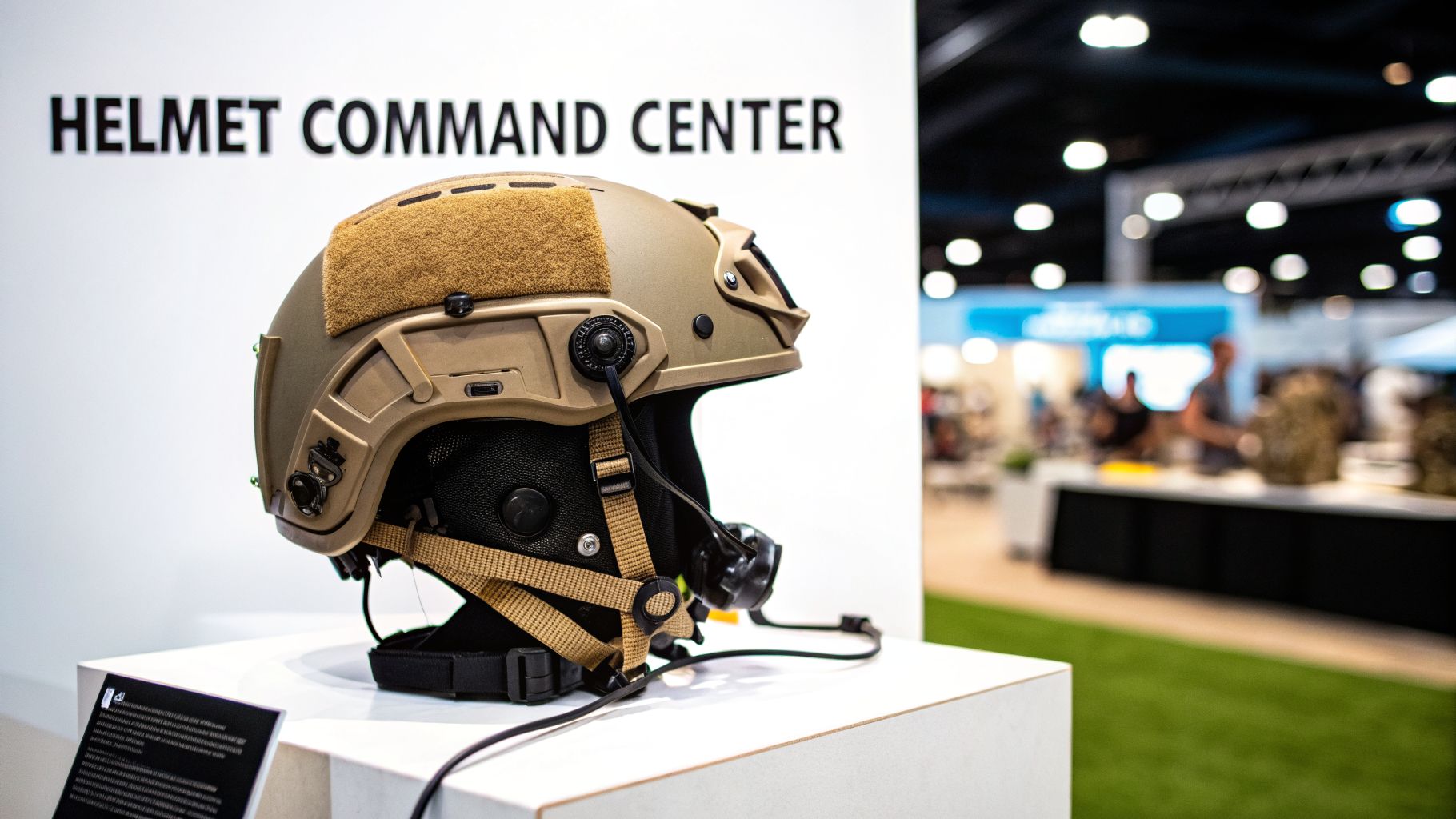
The days of the heavy, clunky "steel pot" are long gone. We've moved from simple, passive armor to lightweight, intelligent platforms built for the modern operator. Today's helmet is an active tool designed from the ground up to boost your awareness, keep you connected, and ultimately make you more effective when it counts.
This isn't just a trend; it's a fundamental shift driven by the demands of complex, high-stakes environments. The global market for ballistic helmets was valued at $1.5 billion back in 2023, and it's only growing as military and law enforcement units modernize their gear. Agencies are finally ditching outdated systems like the old PASGT for helmets that offer a quantum leap in protection and awareness. You can dig into more data on the ballistic helmet market to see the full picture.
The Modern Helmet as a Force Multiplier
While stopping bullets and shrapnel is still the helmet's number one job, its real value comes from what you can build on it. It’s a foundation for a complete operational system.
Think of a bare helmet as the frame of a vehicle. It's the foundation, but its true performance is only unlocked when you add the engine, electronics, and suspension—the night vision, comms, and advanced padding systems.
A properly set-up helmet isn't just gear; it's a direct advantage in the field. That’s why picking the right one is so important for anyone working in a high-threat world.
A modern helmet has to juggle several key roles:
- Ballistic and Impact Protection: First and foremost, it has to protect your head from gunfire, fragmentation, and blunt force trauma. Advanced materials like aramids and UHMWPE get this done without weighing you down.
- Accessory Integration Platform: This is where the magic happens. Integrated shrouds and rail systems are non-negotiable, allowing you to mount night vision, communication gear, lights, and strobes. Your helmet becomes a tool perfectly tailored to you and the mission.
- Enhanced Situational Awareness: By giving your optics and comms a stable home, the helmet helps you see, hear, and communicate clearly, especially when the lights go out or chaos erupts.
Who Needs a Tactical Ballistic Helmet?
This kind of gear isn't just for military special operations anymore. SWAT teams and other law enforcement units depend on them for high-risk entries and warrants. Private security contractors working in dangerous places rely on them for their personal safety every single day.
We're also seeing a huge uptick in adoption by serious civilians. Experienced hunters, competitive shooters, and prepared citizens understand the game-changing advantage of running night vision hands-free while having reliable head protection. No matter your mission, the right helmet is an investment in your own capability and survivability.
Understanding Ballistic Protection Levels and Materials
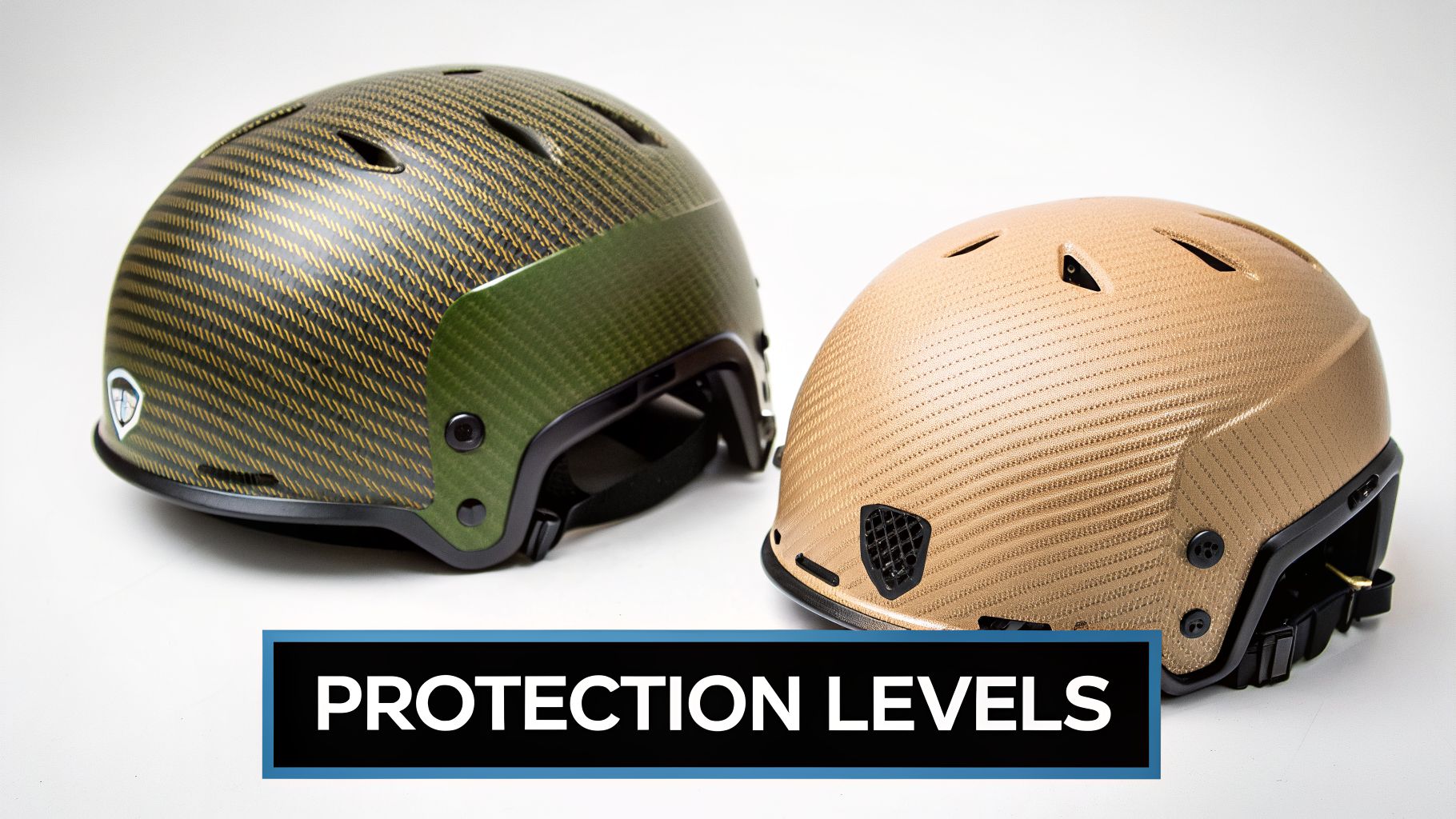
When you're looking at tactical helmets, you'll see ratings like "NIJ Level IIIA." These aren't just marketing terms; they're certifications that tell you exactly what kind of threat the helmet is built to stop. Understanding these standards is the first step to trusting the gear that protects your head.
The most widely recognized standard for ballistic headgear comes from the National Institute of Justice (NIJ). While their body armor standards go much higher, NIJ Level IIIA has become the established benchmark for modern tactical helmets. It’s the gold standard for defeating the most common handgun rounds and fragmentation threats.
To help clarify what these levels mean in practical terms, the table below breaks down the most relevant NIJ rating for helmets.
NIJ Ballistic Protection Levels Explained
| NIJ Level | Protects Against (Ammunition Type) | Common User Scenario |
|---|---|---|
| Level IIIA | .357 SIG FMJ Flat Nose (FN) and .44 Magnum Semi Jacketed Hollow Point (SJHP) | Standard for law enforcement and military helmets; protects against common handgun threats and explosive fragmentation. |
This table shows why Level IIIA is so prevalent—it's designed specifically for the threats an operator is most likely to encounter in close-quarters situations or from explosive devices.
Think of it this way: a Level IIIA helmet is engineered to stop powerful handgun rounds up to a .44 Magnum and submachine gun fire like a 9mm. It’s not about just deflecting a random piece of shrapnel; it's about being tested and certified to stop a specific projectile at a specific velocity.
It’s also crucial to have realistic expectations. A Level IIIA helmet is not designed to stop a direct hit from a high-velocity rifle round, such as a 5.56mm or 7.62x39mm. Its primary role is defeating handgun and fragmentation threats, which statistically pose the greatest risk in many operational environments.
The Science Behind the Shield: Materials
So, how does a helmet stop a bullet while staying light enough to wear for hours? The answer lies in two incredible composite materials: Aramid fibers and Ultra-High-Molecular-Weight Polyethylene (UHMWPE).
An Aramid helmet, made from fibers like DuPont's famous Kevlar, works like a high-tech net. When a bullet hits, thousands of incredibly strong, interwoven fibers absorb and disperse the impact energy across the shell's surface, effectively "catching" the projectile and preventing it from passing through. Aramid is a battle-proven material known for its excellent heat and flame resistance.
On the other hand, UHMWPE (often sold as Dyneema) takes a different approach. Instead of catching the bullet, it shatters it. Sheets of UHMWPE are layered and bonded under extreme heat and pressure to create a single, solid piece. When struck, the material delaminates and transfers the energy laterally, breaking the projectile apart.
Comparing Aramid and UHMWPE
Choosing between Aramid and UHMWPE really comes down to balancing weight, performance, and cost against your specific needs.
Weight: UHMWPE is the undisputed champion of lightweight protection. A UHMWPE helmet can be up to 30% lighter than a comparable Aramid one, which makes a massive difference in operator fatigue, especially when you start mounting night vision and other accessories.
Ballistic Performance: Both materials offer certified NIJ Level IIIA protection. However, UHMWPE tends to exhibit less backface deformation—the indentation on the inside of the helmet after an impact. This means less kinetic energy is transferred to the wearer's head.
Environmental Resistance: Aramid holds the edge in heat resistance, making it a reliable choice for operations in scorching climates. UHMWPE, while more sensitive to extreme heat, offers superior resistance to moisture, making it perfect for maritime missions.
Cost: The complex manufacturing process for UHMWPE generally makes it the more expensive option. For many, budget will be a key factor in deciding between the two.
The demand for this kind of advanced head protection is surging. The global market for advanced combat helmets hit an estimated $3.13 billion in 2025 and is forecasted to reach $4.35 billion by 2030. This growth is driven by military modernization and the fact that in modern conflicts, head injuries can account for over 20% of all battlefield casualties. You can dive deeper by exploring the latest research on the ballistic protective equipment market.
Choosing the Right Helmet Cut for Your Mission
When you're looking at ballistic helmets, the first thing you'll notice is that they come in different shapes. This isn't just for looks; the physical shape, or cut, is one of the most critical decisions you'll make. It directly impacts your protection, your comfort, and what kind of gear you can actually use with it.
Picking a helmet cut is a lot like choosing tires. You wouldn't put slicks on a rock crawler or mud-boggers on a track car. You need the right tool for the job. The cut you go with will either make your life easier or fight you every step of the way when you're trying to run your gear.
The High-Cut Helmet
Walk onto any modern range or look at what special operations forces are running, and you'll see the High-Cut helmet everywhere. Also called an Above The Ear (ATE) or Maritime cut, this design has become the gold standard for anyone serious about integrating their helmet with other essential kit.
Its defining feature is the aggressive cut high above the ears. This single design choice is what makes it so popular: it leaves a wide-open space for over-the-ear communications headsets and active hearing protection. If you plan on running gear like Peltors or Sordins, a high-cut isn't just an option—it's a necessity. You simply can't get a proper seal and clear comms with a lower-cut helmet.
For a deeper dive, check out our guide on why the High-Cut helmet has become the go-to choice for so many operators.
https://superiortac.com/your-ultimate-guide-to-the-high-cut-helmet/
This streamlined profile is also what makes the High-Cut the best platform for running night vision. It’s lighter and creates a more stable base, which is crucial for fighting neck fatigue when you have a PVS-14 or a set of dual tubes hanging off the front. In fact, the market for these helmets is expected to hit $500 million by 2025, a testament to their effectiveness. Modern versions can weigh as little as 2.5 pounds while offering full NIJ IIIA protection, reducing fatigue by up to 35% over older, bulkier designs, as noted in this market report on high-cut helmet growth.
The Mid-Cut Helmet
The Mid-Cut is the classic, do-it-all workhorse of the helmet world. Think of the venerable Advanced Combat Helmet (ACH) or the Modular Integrated Communications Helmet (MICH) that served for years. This cut strikes a balance, giving you more protection than a High-Cut but more accessory compatibility than a Full-Cut.
The shell on a Mid-Cut comes down to cover the top of the ears, offering more side protection from fragmentation and impacts. While this extra coverage can get in the way of larger headsets, it works perfectly fine with in-ear comms or some of the lower-profile hearing protection options on the market.
The Mid-Cut is the all-terrain vehicle of helmets. It might not be the specialized champion in any one category, but it’s dependable and gets the job done across a huge range of tasks.
This blend of solid coverage and functional mounting space makes it a favorite for law enforcement agencies and military units who need a versatile helmet for general duty.
The Full-Cut Helmet
The Full-Cut helmet offers the absolute most coverage you can get. As a direct descendant of the old PASGT "K-Pot," its shell extends completely down and over the ears. This provides the best possible protection from side impacts, blunt force trauma, and shrapnel.
That maximum protection comes with a significant trade-off, though. The design makes it almost impossible to use with modern over-the-ear comms, and it's the heaviest of the three styles. Because of these limitations, the Full-Cut has become a specialized piece of equipment for situations where sheer protection trumps everything else.
You'll typically see Full-Cut helmets being used by:
- Riot Control Units: Where head protection from thrown objects and blunt weapons is the number one priority.
- Breaching Teams: Giving them extra safety from debris and overpressure inside buildings.
- Vehicle Crews: To protect against head injuries from sudden vehicle movements or accidents.
For these professionals, the added weight is a small price to pay for the confidence that comes with having complete head coverage.
How To Achieve the Perfect Fit and Stability
An improperly fitted ballistic helmet isn't just uncomfortable—it's a dangerous liability. If a helmet is loose, it can shift at the worst possible moment, blocking your vision or, even worse, failing to properly absorb an impact. Getting a perfect fit is the single most important final step to make sure your head protection actually performs, especially when you start loading it up with accessories.
Think of it like the suspension on a high-performance vehicle. A sloppy suspension makes a car feel unstable and unpredictable. It's the same with a helmet; a poor fit introduces wobble and instability, which is completely unacceptable when your life depends on a clear, steady sight picture through your night vision.
Measuring for Your Correct Helmet Size
Before you can start fine-tuning, you have to get into the right size shell. This is a simple but critical first step that keeps you from ending up with a helmet that’s fundamentally too big or too small from the get-go.
- Grab a soft measuring tape. A flexible tailor’s tape is ideal, but a piece of string and a ruler will work in a pinch.
- Find the right spot. Wrap the tape around the widest part of your head, which is usually about one inch above your eyebrows and ears.
- Take the measurement. Pull the tape snug, but not uncomfortably tight. It's a good idea to record the measurement in both inches and centimeters, as manufacturers have different sizing charts.
- Check the manufacturer's chart. Always compare your number to the specific sizing chart for the helmet brand you're buying. Never assume a "Large" from one company is the same as a "Large" from another—they often aren't.
Getting this initial measurement puts you in the right ballpark. The real magic, however—the part that delivers that rock-solid stability—comes from the helmet's internal suspension and padding.
Dialing In Stability with Modern Suspension Systems
Modern tactical helmets are light-years beyond the old, simple webbing you might be used to. Today’s systems are all about micro-adjustments, ensuring the helmet feels less like something you're wearing and more like an extension of your head.
The most effective and common setup is the dial-adjustable liner. You’ll find a knob at the back of the helmet that tightens or loosens an internal band. With just a few quick twists, you can lock the helmet down, completely eliminating that annoying forward and backward tilt. It's a fast, simple, and incredibly effective way to get a secure fit.
A helmet without a stable fit is just dead weight. Modern suspension and padding systems are what transform a protective shell into a high-performance platform, ensuring that your night vision and optics stay perfectly aligned with your eyes when you need them most.
Beyond the main liner, modular pad kits are where you get to truly customize the fit to your exact head shape. These kits include multiple pads of different thicknesses that you can place anywhere inside the shell using Velcro. This allows you to add, remove, or reposition pads to get rid of any hot spots or gaps. If you feel your current setup could be better, customizing your helmet with advanced padding solutions can make a world of difference.
By strategically placing thicker pads where you have a gap or thinner ones where you feel a pressure point, you ensure the helmet makes even, firm contact all the way around your head. This isn't just about comfort for long-term wear; it dramatically improves the helmet's ability to manage impact energy safely and effectively.
Building Your Complete Mission-Ready Helmet Setup
A ballistic helmet right out of the box is just a shell. It offers protection, sure, but its real job begins when you start building it into a complete, integrated system. This is how you turn a piece of armor into a force multiplier, customizing it with the exact tools you need to see, communicate, and operate effectively in any environment.
The first piece of the puzzle, and arguably the most important, is the Night Vision Goggle (NVG) shroud. This is the small bracket, often molded right into the front of the helmet, that serves as the docking station for your optics. A quality shroud, like the standard three-hole Wilcox pattern, is non-negotiable. It's the anchor that ensures your expensive night vision is securely attached and perfectly aligned.
Integrating Accessories with Rail Systems
With your optics mount sorted, the rest of your gear attaches to the sides. This is where accessory rails come into play, with the ARC (Accessory Rail Connector) style being the gold standard on modern high-cut and mid-cut helmets. These rails are the load-bearing framework for your mission-critical tools.
Think of an ARC rail just like the Picatinny rail on your rifle—it’s a universal mounting platform that opens up a massive ecosystem of compatible gear. This is what allows you to adapt your helmet on the fly, whether you're adding a light for a structure search or a strobe for team tracking. You can explore a wide range of options in our collection of tactical ballistic helmet accessories.
Before you start bolting things on, however, the foundation has to be perfect. The image below shows the simple but critical process for getting a stable fit.
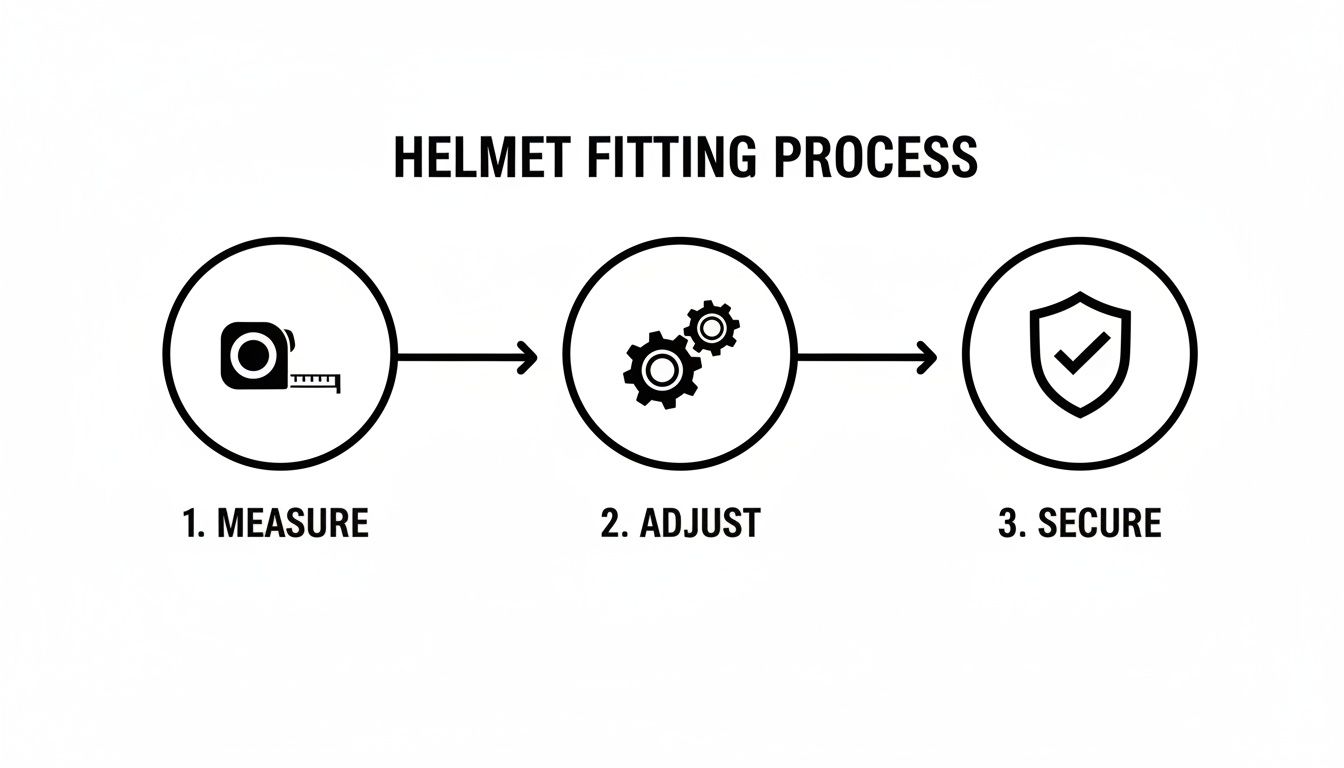
This measure, adjust, and secure sequence is the absolute starting point. A loose or wobbly helmet makes every accessory on it less effective, especially night vision.
Essential Helmet Accessory Integration
Choosing the right accessories and knowing how they integrate is key to building a balanced and functional setup. This table breaks down some of the most common and essential additions for any mission-ready helmet.
| Accessory | Primary Function | Mounting System | Recommended Superior Tactical Product |
|---|---|---|---|
| Night Vision Mount | Secures NVGs to the helmet shroud. | Helmet Shroud | G24 Breakaway Mount |
| Counterweight | Balances the helmet's weight to reduce neck strain. | Rear Velcro/Straps | Helmet Counterweight Pouch |
| Comms Headset | Provides hearing protection and radio communication. | ARC Rail Adapters | Earmor M32 Headset with Adapters |
| Task Light | Offers hands-free illumination for admin tasks. | ARC Rail | Nitecore NU07 VR |
| IR Strobe/Beacon | Marks friendly positions, visible only under NVGs. | Top/Rear Velcro or ARC Rail | IR Identification Strobe |
| Helmet Cover | Provides camouflage and protects the helmet's finish. | Velcro | Agilite Gen4 Helmet Cover |
These components work together to create a cohesive system. The goal isn't just to add gear, but to add the right gear in a way that enhances your capability without creating new problems like imbalance or snag hazards.
A Practical Build Example: PVS-14 Setup
Let's put this into practice with a classic and incredibly effective build: a high-cut helmet paired with a PVS-14 monocular. This setup is a favorite among law enforcement, hunters, and contractors for its fantastic balance of performance, weight, and cost.
Start with a High-Cut Helmet: Grab a quality high-cut helmet, either in Aramid or UHMWPE. The high cut is essential for giving you clearance to properly mount your communications headset directly to the rails.
Attach the NVG Arm and Mount: Your PVS-14 will screw into a "J-arm," which then clicks into a mount like the popular G24. This entire assembly then slides into the shroud on your helmet. This gives you the ability to flip the optic up and out of your line of sight or switch it between your left and right eyes.
Add a Counterweight: Don't skip this step. A monocular hanging off the front of your helmet will constantly pull it down, causing significant neck fatigue and an unstable image. A counterweight pouch on the back of the helmet is the simple fix, making the entire setup feel balanced and comfortable for long-term use.
Mount Your Support Gear: Now, use the ARC rails. Click your comms headset into one side. On the other, mount a small task light with a white and IR function. Finally, slap an IR strobe on the top or rear of the helmet for positive identification to your team.
A well-built helmet shouldn't feel like a bunch of parts strapped to your head. It should feel like a single, balanced piece of kit where every component works together seamlessly. Getting this right is the difference between fighting your gear and fighting the problem.
By following this logical build order, you take a simple piece of armor and turn it into a fully capable system that enhances your awareness, communication, and overall effectiveness when it matters most.
Maintaining Your Helmet for Long-Term Reliability
A ballistic helmet isn't a piece of gear you can just toss in a locker and forget about. It's a serious investment in your safety, and just like any other piece of life-saving equipment, it needs regular care to do its job.
You wouldn't trust your life to a dirty, uninspected rifle, would you? Your helmet deserves that same level of professional attention. Its ability to stop a threat is directly tied to the integrity of its materials, and neglect is the fastest way to compromise them.
Routine Inspection and Cleaning
First things first: get in the habit of giving your helmet a quick once-over before and after every single use. This simple check is your best defense against gear failure, helping you spot small issues before they become big problems.
During your inspection, pay close attention to these key areas:
- The Shell: Look for any cracks, deep gouges, or signs of delamination—that’s when the composite layers start to peel apart. A chalky or faded look can also be a red flag for UV damage.
- Suspension System: Run the dial adjuster and work the chin strap buckles to make sure everything functions smoothly. Any frayed straps or cracked plastic components are an immediate no-go and need to be replaced.
- Padding: Inspect the interior pads for heavy compression or tearing. Remember, worn-out pads don't just feel uncomfortable; they seriously reduce the helmet's ability to manage blunt impact.
When it's time to clean, the most important rule is to be gentle. The advanced materials in your helmet can be surprisingly sensitive to harsh chemicals.
Never use solvents, industrial cleaners, or strong detergents on the helmet shell. These can chemically attack the ballistic fibers and resin, silently weakening the helmet's protective capabilities. A simple, careful wipe-down is all you need.
Use a soft cloth with a bit of mild soap and water for the outer shell. You can typically remove the interior pads and hand-wash them with a gentle detergent. Let them air dry completely before putting them back in—this also keeps the sweat and grime from building up.
Storage and Understanding Service Life
Just as important as cleaning is where you keep your helmet when you're not wearing it. Constant exposure to extreme heat and direct sunlight will absolutely shorten its lifespan. UV radiation is notorious for breaking down the fibers in both Aramid and UHMWPE shells.
The solution is simple: store your helmet in a cool, dry place, safe from direct sunlight. A gear locker or a padded helmet bag is perfect. The worst thing you can do is leave it on the dashboard of your truck or in a hot storage unit to bake all summer.
Finally, every helmet comes with a manufacturer-recommended service life, which is usually around five to seven years. This isn't a marketing ploy to get you to buy a new one. It's a critical safety guideline based on how ballistic materials naturally age over time. Even if a helmet looks pristine on the outside, its ability to perform degrades as it gets older. Always replace your helmet if it takes a serious hit or once it reaches the end of that service life.
Answering Your Top Questions on Ballistic Helmets
Stepping up to a serious ballistic helmet is a big investment, and it’s only natural to have some questions before you pull the trigger. We get it. Getting straight answers is the only way to feel confident in your gear. Let's tackle some of the most common things people ask us about tactical helmets.
Are These Helmets Legal for Me to Own?
This is probably the most frequent question we hear, and the answer is refreshingly simple: Yes, in the United States, it is perfectly legal for a law-abiding citizen to buy and own a ballistic helmet. These are considered defensive equipment, and there are no federal laws standing in your way.
There is one major exception to keep in mind, though. It is a felony for a convicted felon to possess body armor, which can include helmets. A few states or cities might also have their own specific rules, so it’s always a good idea to double-check your local regulations. A quick search will ensure you’re good to go.
What's the Real-World Lifespan of a Helmet?
Most manufacturers will tell you their helmets have a service life of about five to seven years. That’s not a made-up number designed to sell more gear; it’s based on the hard science of the materials themselves.
Think of it like the tires on your car. A helmet's ability to stop a round comes from advanced composites like Aramid and UHMWPE. Over the years, things like UV light, moisture, and even just sitting in a hot trunk will slowly break those materials down. Following the recommended service life is how you ensure it will work when you need it most.
And this is critical: if your helmet takes any kind of serious knock—getting dropped on concrete or, God forbid, stopping a round—it needs to be replaced. Immediately. The internal structure can be compromised even if you don't see a single crack on the outside. Don't risk it.
Will a Ballistic Helmet Stop a Rifle Round?
This is a point of confusion for many, so let's be crystal clear. The standard Level IIIA helmets that make up the vast majority of the market are designed to stop handgun calibers and fragmentation. They are absolutely not rated to stop rifle rounds like a 5.56mm or 7.62x39mm.
Yes, there are some ultra-specialized helmets out there that use add-on armor plates (called appliques) to achieve a rifle rating. But these come with a massive penalty in weight and are not what most people are wearing.
The best way to think about it is this: your helmet protects your head from common pistol threats, while your plate carrier and hard armor plates protect your vitals from rifle threats. They are two different tools for two different jobs.
At Superior Tactical LLC, we're here to make sure you have the right tools for the job. Check out our hand-picked selection of night vision, thermal optics, and essential tactical accessories to build out your entire system.
