Your Ultimate Guide to the High Cut Helmet
At its core, a high cut helmet is exactly what it sounds like: a helmet with a higher, more aggressive cut around the ears. This design isn't for looks—it's a deliberate choice that makes it a lightweight, modular platform for the modern operator.
Why High Cut Helmets Are The Modern Standard
The move to high cut helmets really changed the game for head protection. We stopped thinking of a helmet as just a dumb bucket to stop shrapnel and started seeing it as the central hub for all our mission-critical gear.
The most obvious feature, that signature cut above the ears, is the key to it all. It seems like a small tweak, but it solves a massive headache that plagued older, full-coverage helmets: total gear incompatibility. This new philosophy isn't about passive protection anymore; it's about creating an active system that works with you, not against you.
The Problem With Older Helmet Designs
If you’ve ever worn a classic PASGT or similar low-cut helmet for more than an hour, you know the problem. While they offered a bit more coverage, their low profile would press down hard on any over-the-ear comms gear. This created wicked pressure points and, just as bad, broke the seal on your headset, letting ambient noise bleed in and making it impossible to hear radio traffic.
For anyone relying on constant communication to stay alive, this wasn't just uncomfortable—it was a critical failure. It compromised your situational awareness and your team's ability to coordinate.
A helmet’s primary job has always been protection, but what "protection" means has evolved. Today, the ability to communicate clearly, hear an enemy’s footsteps, and use night vision is just as vital to your survival as stopping a bullet. The high cut helmet is built for that reality.
A Platform Built for Integration
Beyond just making room for your headset, the high cut is engineered from the ground up to integrate your entire system. It’s a dock for all the accessories that give you an edge, especially when the lights go out.
- Improved Mobility: By carving away material and using advanced, lighter composites, these helmets drastically cut down on weight. You really feel the difference in your neck and shoulders after a long night with NVGs mounted up front.
- Accessory Rails: Most high cuts come with integrated side rails (like the common ARC style). This gives you a simple, "plug-and-play" system for attaching mission essentials like lights, strobes, and cameras.
- NVG Shrouds: A shroud built right into the front of the helmet provides a rock-solid docking station for your night vision mount. No more wobbly, unreliable setups when you need them most.
This blend of lightweight design, comms compatibility, and easy modularity is exactly why the high cut helmet has become the go-to for everyone from special operations units and law enforcement tactical teams to dedicated civilian shooters. It hits the perfect balance of protection, mobility, and tech integration.
Choosing Your Profile: High Cut vs. Mid Cut and Full Cut Helmets
Picking the right tactical helmet goes way beyond just choosing a color. It's a critical decision that forces you to weigh protection against mobility and your ability to run essential equipment. The choice between a high cut, mid cut, and full cut helmet really boils down to a fundamental trade-off: do you want maximum coverage or maximum capability?
Each design has a specific job, and understanding the real-world differences is the first step toward building a headborne system that actually works for you, not against you.
To put it simply, think of it like choosing a vehicle for a mission. A full cut is like an old-school armored truck—it offers the most protection, but it’s heavy, clumsy, and not very agile. The high cut is more like a modern, off-road buggy—lightweight, fast, and built to adapt to any accessory you bolt onto it. And the mid cut? It's the all-wheel-drive SUV, sitting right in the middle.
Full Cut Helmets: The Traditional Choice
The full cut helmet, sometimes called a "low cut," gives you the most surface area of protection. The shell comes down over the ears and sits low on the back of your neck, providing maximum coverage against frags and impacts. This was the standard for decades, typified by helmets like the classic PASGT (Personnel Armor System for Ground Troops).
But all that coverage comes with a major downside in the modern era. It’s nearly impossible to comfortably wear most over-the-ear communication headsets. The helmet's edge grinds down on the ear cups, creating painful hot spots and breaking the acoustic seal. That compromises both your hearing protection and your radio comms—a non-starter for anyone who needs to stay connected.
This is where the idea of the helmet as a "platform" comes in. It’s not just a helmet; it's the foundation for your entire headborne system.
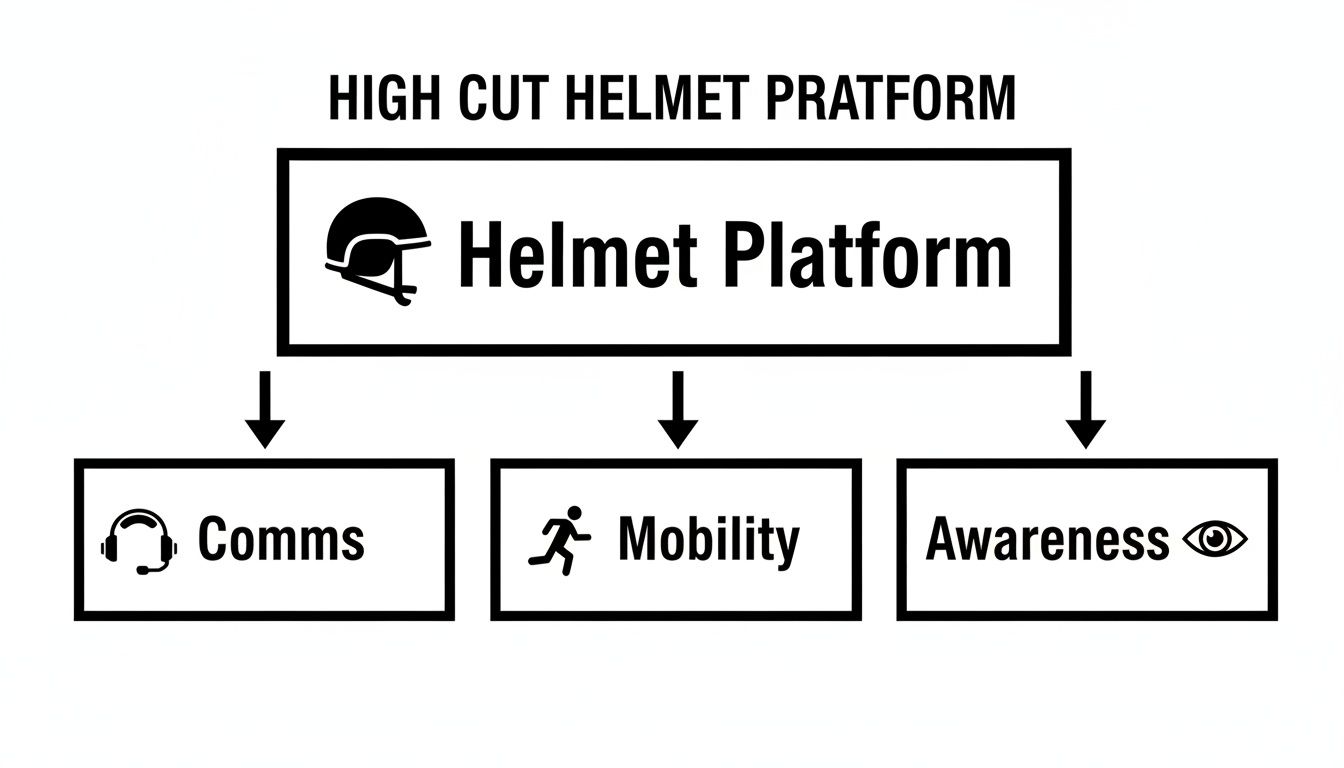
As you can see, the design is all about integrating systems that make you more effective, not just stopping projectiles.
Mid Cut Helmets: The Compromise
Just like its name suggests, the mid cut helmet tries to find a happy medium between the other two styles. It offers more coverage than a high cut but sits higher than a full cut, creating a "middle ground" option.
While a mid cut allows for better compatibility with some low-profile headsets compared to a full cut, it can still cause problems with the larger, more common comms systems out there. It's a trade-off, giving up some of the high cut's easy modularity for a little extra coverage over the ears.
High Cut Helmets: The Modern Standard
The high cut helmet is, without a doubt, the king of modularity and gear integration. By cutting the shell aggressively high above the ears, designers created a huge amount of real estate for any over-the-ear comms or hearing protection you can think of. This completely gets rid of the pressure points and ensures a perfect seal, which is absolutely critical for situational awareness and clear comms in loud environments.
The core idea behind the high cut helmet is that better awareness and communication are a form of active protection. A shooter who can hear, talk, and move freely is far better equipped to avoid threats in the first place.
While a high cut offers less raw surface area coverage, the parts of the helmet that are there can have the exact same ballistic rating (like NIJ IIIA) as a full cut. For most modern operators, the incredible benefit of seamless gear integration far outweighs the slight reduction in side coverage.
To help you visualize these differences, here's a quick breakdown of how the three helmet cuts stack up against each other.
Tactical Helmet Cut Comparison
This table compares the key features of high, mid, and full cut helmets, highlighting their strengths and weaknesses in areas like headset compatibility and overall coverage.
| Feature | High Cut Helmet | Mid Cut Helmet | Full Cut Helmet |
|---|---|---|---|
| Headset Compatibility | Excellent | Moderate | Poor to None |
| Side Protection | Minimal | Moderate | Maximum |
| Weight | Lightest | Medium | Heaviest |
| Modularity/Rails | Maximum | Good | Limited |
| Situational Awareness | Highest | Good | Reduced |
| Primary Advantage | Gear Integration | Balanced Design | Max Coverage |
As you can see, the choice isn't about which helmet is "best," but which is best for your specific needs and the equipment you plan to run. If seamless integration of comms and other accessories is a priority, the high cut is the clear winner.
And remember, getting the cut right is only part of the equation. Ensuring a stable and comfortable fit is just as important. If you want to dive deeper into the nuts and bolts of a good fit, you might want to learn more about how to choose a chin strap for an ACH helmet.
Here is the rewritten section, crafted to sound human-written and natural:
Understanding Ballistic and Bump Protection Levels
The shell of a high cut helmet is your primary line of defense, but not all shells are built for the same fight. The material it’s made from really splits helmets into two camps: ballistic and non-ballistic (bump). Getting this difference straight is the single most important step in picking the right helmet.
Think of it like this: you wouldn't wear a rain jacket into a burning building. Both a rain jacket and a firefighter's coat offer protection, but only one is designed to stop a life-or-death threat. A ballistic helmet is your armor, engineered to stop bullets and shrapnel. A bump helmet is there to protect your head from impacts—think falls, bumping your head in a tight vehicle, or navigating rough terrain.
Ballistic Helmets: The Science of Stopping Threats
Ballistic helmets are your shield when things get serious. Their power comes from advanced composite materials that are incredibly strong yet light enough to wear for hours. In today's market, two materials dominate the scene for high cut helmets: Aramid fibers and Ultra-High-Molecular-Weight Polyethylene (UHMWPE).
Aramid (like Kevlar): This is a class of synthetic fibers known for being tough and heat-resistant. When woven into a dense fabric and pressed with resin, it creates a shell that essentially "catches" a projectile, spreading its energy out across the helmet's surface. It’s a time-tested material but tends to be a bit heavier than the alternative.
UHMWPE (like Dyneema or Spectra): This is a type of thermoplastic that boasts an incredible strength-to-weight ratio. It works by absorbing and redirecting impact energy through its long, tightly aligned molecular chains. Helmets made from UHMWPE are typically lighter and can offer superior performance, but that cutting-edge tech usually comes with a higher price tag.
Ultimately, choosing between Aramid and UHMWPE boils down to a classic trade-off: weight versus cost. Both materials, however, are used to build helmets that meet specific, life-saving protection standards.
Translating NIJ Protection Levels
So how do you know a helmet can actually do its job? That’s where the National Institute of Justice (NIJ) comes in. They set the standards for ballistic performance. The most common rating you'll find on a ballistic helmet is NIJ Level IIIA.
But what does NIJ IIIA really mean? In the real world, it means the helmet is built to stop common handgun rounds, all the way up to a .44 Magnum. It's also tested against fragmentation from explosions—which, on a modern battlefield, can be an even more common threat than direct gunfire.
This rating gives you a reliable benchmark. Any trustworthy manufacturer will back up their NIJ claims with test data, giving you peace of mind that your gear is certified to handle specific, well-defined threats.
Bump Helmets: Protection Without the Ballistics
A bump helmet has zero ballistic rating. None. So why on earth would you choose one? Simple: it’s for any job where the danger is blunt force impact, not bullets. These helmets are incredibly lightweight and are perfect for:
- Training exercises where live fire isn't a factor
- Search and rescue missions
- Climbing or rappelling
- Mounting night vision for hunting or navigation in the dark
Made from high-strength polymers like polycarbonate or carbon fiber, bump helmets won't stop a bullet, but they do an outstanding job of protecting your head (and your expensive NVGs) from bumps, falls, and scrapes. They offer a stable platform for your gear when you don't need the extra weight of ballistic armor, making them a smart choice for a huge range of activities. The key is to honestly assess your environment and match the helmet to the threats you'll actually face.
Integrating Comms and Night Vision Like a Pro
A modern high-cut helmet isn't just about stopping bullets or bumps; it's the command center for your most critical tactical gear. This is where the design truly shines, transforming what used to be a passive piece of protection into an active system that makes you more effective. Getting your communications and night vision to play nice together isn't just a perk—it's the whole point.
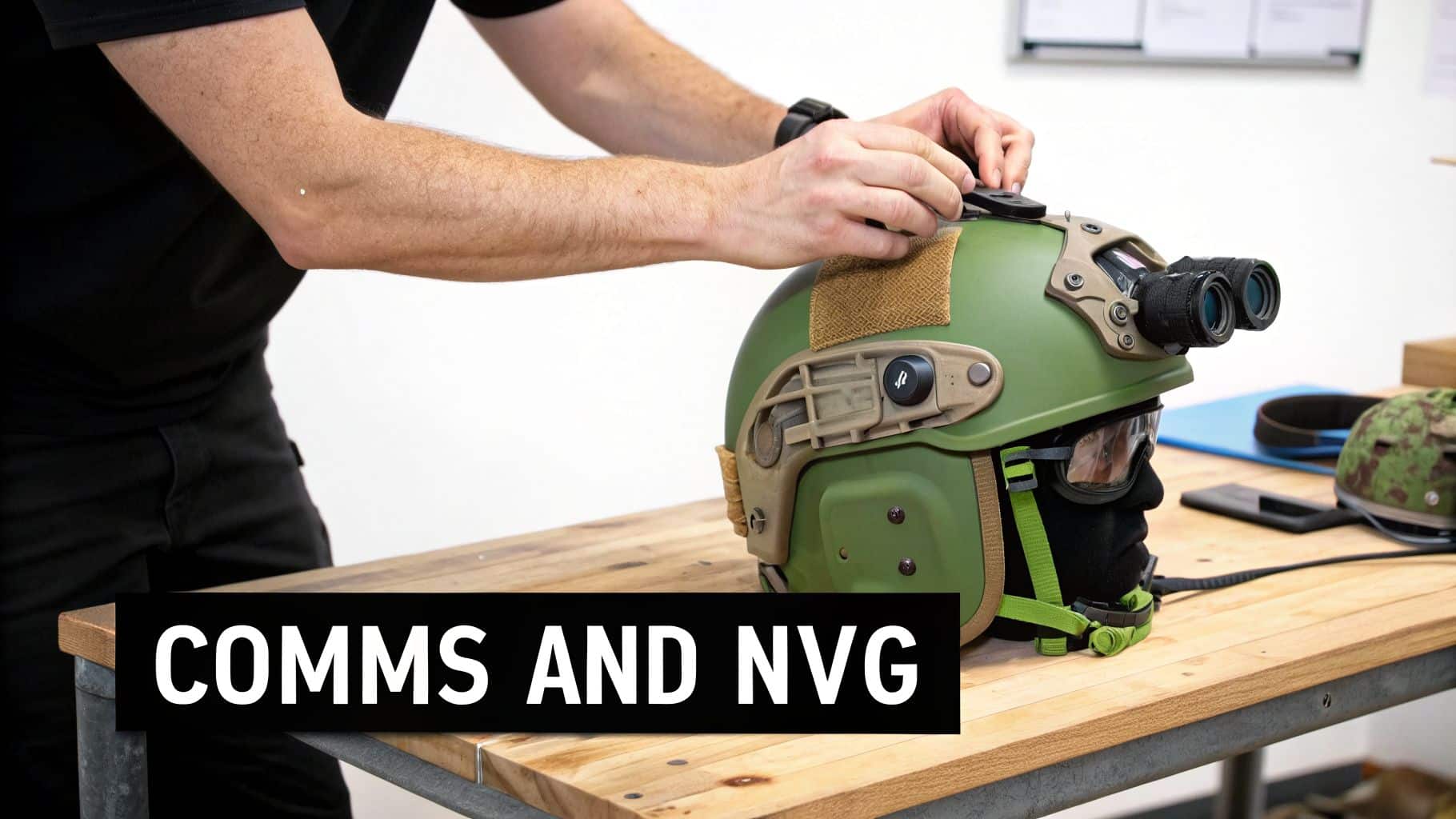
Think of the helmet as the chassis of a race car. The bare shell offers protection, but it's the engine, suspension, and electronics you bolt onto it that make it win races. Every component has to work in perfect harmony to give you an edge in both lethality and survivability.
Your Helmet's Accessory Highways
At the core of all this integration are two simple but vital features: the NVG shroud on the front and the accessory rails on the sides. These aren't just tacked on; they are the foundation of a modular helmet system.
The NVG shroud is the non-negotiable docking station for your night vision device. It’s a standardized mounting point, typically designed for industry-standard mounts like the Wilcox G24, ensuring a rock-solid lockup for your very expensive optics. A wobbly mount is a mission-killer, causing image shake, eye strain, and disorientation when you're on the move.
Out on the sides, the ARC (Accessory Rail Connector) rails are your gear's "highways." This is where you get to customize your setup, mounting everything from tactical lights and IR strobes to cameras and cable management clips. This plug-and-play capability is what makes a high-cut helmet so incredibly adaptable.
Mounting Night Vision The Right Way
Setting up your night vision correctly takes a bit of care. If you just slap it on, you're signing up for an unbalanced helmet, potential equipment damage, and some serious neck pain down the road.
- Attach the Mount Arm: Your NVG mount arm (like the popular Wilcox G24) clicks right into the helmet's shroud. Listen and feel for that positive, audible click. You want zero play in that connection.
- Connect the NVG: Whether you're running a PVS-14 monocular or dual-tube goggles, they attach to the mount arm. The objective is to get the optic perfectly aligned with your eye(s), leaving no weird shadows or clipping in your field of view.
- Balance the System with Counterweights: This is the step everyone forgets, and it’s arguably the most important. Hanging a 1-2 pound device off the front of your head creates a ton of forward leverage. A counterweight pouch on the back of the helmet is essential to neutralize this weight, making the whole system feel balanced and light. This is the secret to avoiding neck fatigue on long nights.
A properly balanced helmet should feel like it's floating on your head, with the center of gravity sitting right over your spine. Without a counterweight, you'll be constantly fighting that forward pull from your NVGs, which is a fast track to exhaustion and losing focus when it matters most.
For a much deeper dive on getting this right, our guide on choosing a helmet night vision mount has some great pointers that will help you build a more stable and user-friendly setup.
The Perfect Seal for Crystal-Clear Comms
The entire reason the high-cut profile exists is to make room for over-the-ear communications headsets. That signature arch over the ears gives the ear cups of popular systems, like Peltors or Sordins, the space they need to sit correctly and—most importantly—form a perfect seal.
That perfect seal is doing two critical jobs at once:
- Protects Your Hearing: It delivers passive noise reduction, protecting you from the damaging concussion of gunfire or the drone of a vehicle.
- Ensures Clear Audio: It isolates your ears from distracting ambient noise, so you can hear every radio transmission with total clarity. In a chaotic situation, missing one piece of key intel can be disastrous.
When your helmet, night vision, and comms all work together seamlessly, you gain a massive operational advantage. You can move through the dark, see without being seen, and stay in constant, clear contact with your team. This level of integration is what defines a modern professional, and it all starts with the right platform—the high-cut helmet.
Who Uses High Cut Helmets and Why
It wasn't that long ago that high cut helmets were strictly for the elite. Now, you see them everywhere. This isn't just a trend; their practical, comms-first design has made them the default choice for a whole new range of users, from Tier 1 operators to serious night hunters.
The core reason is simple: the helmet has become a platform for technology, not just a piece of armor. The high cut is essential for integrating all that gear into one high-performance system.
Military Special Operations Forces
For military special operations forces, the high cut helmet is non-negotiable. Think of it less as a helmet and more as the central hub for everything they do. That distinctive high cut is what makes it possible to wear active hearing and communication headsets properly, which is absolutely vital when coordinating complex missions.
These teams load their helmets with a full suite of mission-critical tools that have to work together perfectly:
- Night Vision Goggles (NVGs): To own the night and operate in complete darkness.
- IFF (Identify Friend or Foe) Strobes: Essential for deconfliction and preventing friendly fire, especially with air support overhead.
- Tactical Lights: For navigating, signaling to teammates, and positively identifying threats up close.
- Video Cameras: To record intel for debriefs and after-action reviews.
Law Enforcement and Security Professionals
Right behind them are law enforcement SWAT (Special Weapons and Tactics) teams. When making a dynamic entry or serving a high-risk warrant, communication has to be instant and crystal clear. A high cut helmet lets an officer’s headset get a perfect seal, shutting out the chaos and noise of a breach while keeping them linked to the team.
Private security contractors also depend on the high cut’s adaptability. Their work is unpredictable; one day might be a full-comms VIP protection detail, the next a low-profile surveillance job requiring a stripped-down helmet. The high cut’s modularity lets them change their loadout on the fly to fit the mission.
The market reflects this demand. The global high-cut ballistic helmet market was valued at $2.5 billion in 2024 and is expected to rocket past $8.5 billion in the coming years. This growth is driven by a worldwide focus on modernizing gear for soldier and officer safety. You can dive deeper into these helmet market trends at Market Report Analytics.
The Rise of the Civilian User
What's really interesting is how the high cut has broken into the civilian world. Dedicated hunters and preparedness-minded citizens are quickly realizing the same advantages professionals have relied on for years.
The helmet's journey from a niche military tool to a versatile piece of civilian gear shows a major shift. Advanced capabilities that were once exclusive to elite units are now available to anyone needing to perform in tough conditions.
For a night hunter, a non-ballistic bump helmet is the perfect hands-free platform for mounting night vision and a camera. It lets them move safely through rough terrain in the dark while tracking game. For those focused on preparedness, it's the foundation of a system for navigating and communicating when the power is out.
This spread into new groups proves the high cut is no longer just for the battlefield—it's for anyone who demands more from their equipment.
Your High Cut Helmet Buyer's Guide
Picking out a high cut helmet is a serious decision. It's not just a piece of gear; it's a critical investment in your safety and performance. To get it right, you have to look past the cool factor and marketing hype and dig into the specs that actually matter. Let's walk through exactly what you need to check before you pull the trigger.
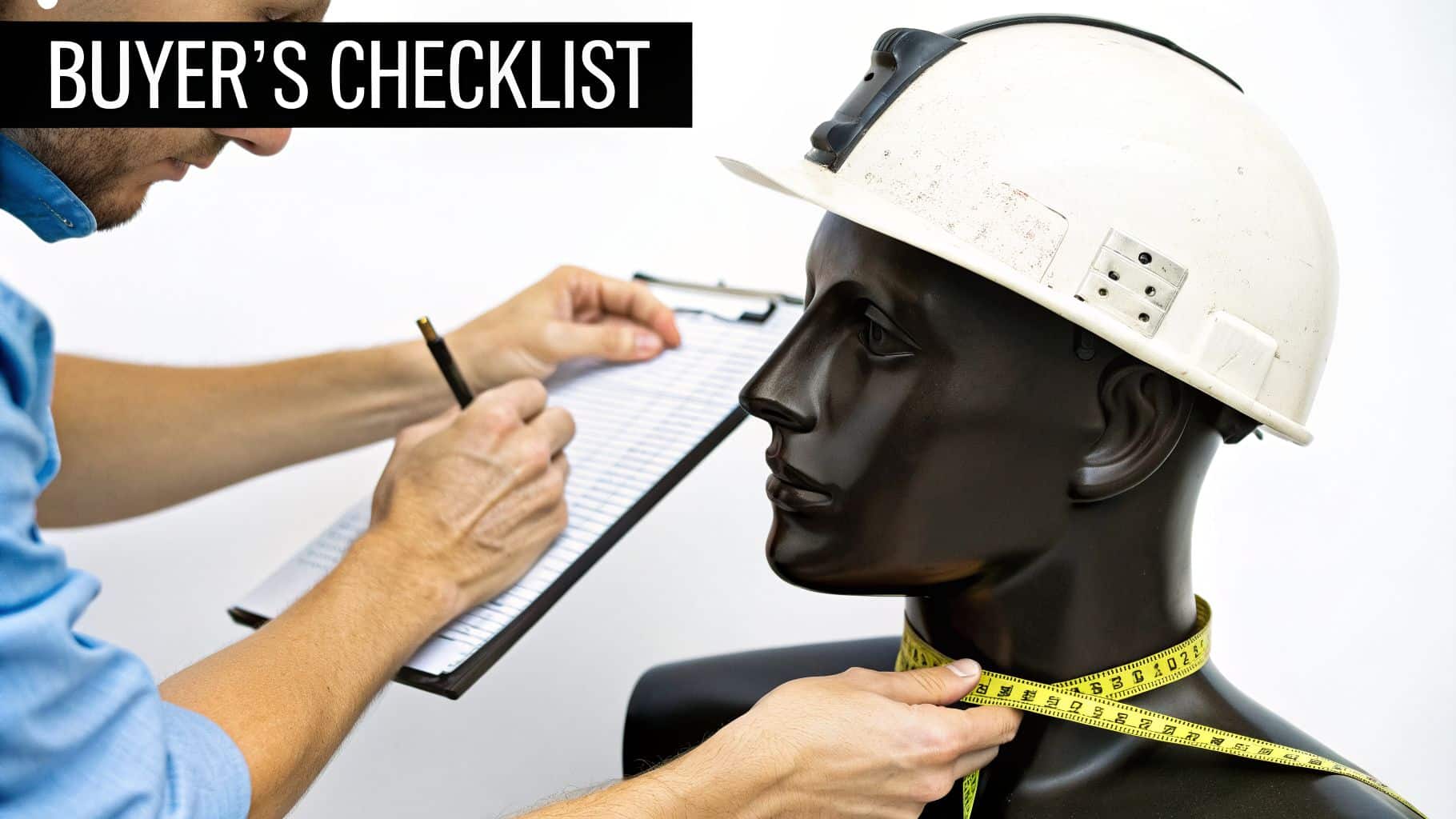
Before you even think about materials or mounts, get the fit right. A helmet that wobbles isn't just annoying—it's a liability. It can throw off your NVGs at a critical moment or create painful hot spots on your head during long-term wear. Grab a soft tailor's tape, measure the circumference of your head across your forehead and the widest point in the back, and check that number against the manufacturer’s sizing chart.
Your Pre-Purchase Checklist
With your size confirmed, it's time to get into the details. A good helmet is a complete system, and every part needs to align with your mission requirements. Use this checklist to make sure you're covered.
- Ballistic or Bump? First, know your needs. Is this for real-world threats, requiring a ballistic shell made of Aramid or UHMWPE? Or is it for training and impact protection, where a non-ballistic (bump) helmet made of polymer or carbon fiber is the right call?
- Protection Level (If Ballistic): If you need ballistic protection, don't just assume it's there. Confirm the helmet meets the NIJ IIIA standard. Any trustworthy brand will have independent lab reports ready to prove their claims.
- Total Weight: Pay very close attention to the overall weight. A lighter helmet makes a huge difference in reducing neck fatigue, especially after you load it up with comms, lights, and NODs. You'll see this trend across the market, with lightweight carbon fiber models gaining a lot of traction.
- Suspension & Padding: A 4-point harness with a dial retention system is the gold standard for stability. Look for this paired with customizable comfort pads that let you dial in a perfect, secure fit.
- Hardware & Mounts: Does the NVG shroud fit your specific mount, like a Wilcox G24? Are the ARC rails compatible with your headset adapters and other accessories? Double-check compatibility for every single item you plan to attach.
How to Spot Fakes and Ensure Quality
The tactical helmet market is a big business, valued at around $680 million, and it's only growing as more professionals demand lightweight, modular systems. You can read more about the helmet industry statistics and trends to see just how massive it is. Unfortunately, that popularity attracts a flood of fakes and dangerously substandard gear.
The single biggest mistake a buyer can make is purchasing from an unverified source to save a few dollars. A counterfeit helmet may look the part, but it offers no certified protection and will fail when you need it most.
Your best defense is to buy only from a reputable, authorized dealer. This is the only way to guarantee you're getting a genuine, certified helmet that will perform as promised. A good seller can also help confirm what works with your other gear, like the items covered in our guide to essential ballistic helmet accessories. By being methodical and following this checklist, you can invest with confidence, knowing your helmet is ready for duty.
High Cut Helmet Frequently Asked Questions
Diving into the world of tactical helmets can feel overwhelming, with a ton of new terms and gear to figure out. Let's clear up some of the most common questions we hear so you can choose your gear with confidence.
Are High Cut Helmets Less Safe Than Full Cut Helmets?
This is probably the number one question people ask, and it really comes down to a trade-off between different kinds of safety. A high cut helmet obviously has less material covering your head, leaving the area around your ears exposed. That’s a fact.
But here's the thing: the ballistic-rated part of the shell still carries the exact same NIJ IIIA protection as its full cut cousins. The real difference is in your mission priorities. A full cut offers maximum passive coverage, which is great for deflecting shrapnel. A high cut, on the other hand, prioritizes active safety—your ability to hear what's happening around you and communicate clearly with your team. For many operators, that heightened situational awareness is a far more critical survival tool than the small amount of coverage that's been removed.
Can I Mount Any Night Vision on Any Helmet?
For the most part, yes. Nearly all modern high cut helmets are built with a standardized NVG shroud on the front. Think of this shroud as a universal docking station. It’s designed to accept popular night vision mounts, like the Wilcox G24, which then hold your actual NVG device.
That said, "standardized" doesn't always mean "identical." There can be tiny tolerance differences between manufacturers. Before you spend your hard-earned money, it's always smart to double-check that your specific helmet, mount, and night vision goggle are all confirmed to work together. A wobbly, insecure fit is a huge liability in the field.
Fit is the single most important factor in a helmet. An unstable helmet is a major liability, causing NVG misalignment during movement and creating painful hotspots over time. Always measure your head carefully and take the time to adjust the suspension for a snug, stable fit.
This push for integrated systems is a huge reason the helmet market is evolving so quickly. In fact, North America is projected to account for 22.66% of the military helmet market in 2025, driven by modernization programs that demand helmets built to handle this kind of advanced tech. You can explore the full military helmet market analysis to see more of these industry trends.
At Superior Tactical LLC, we specialize in helping you build the perfect headborne system. Whether you need a ballistic helmet, a new PVS-14, or the right mount to connect it all, our team is here to provide straightforward guidance and gear you can trust. https://superiortac.com
