Choosing the Best Batteries for SureFire Flashlight Performance
When it comes to powering your SureFire, picking the right battery is everything. It's the difference between a reliable, high-performance tool and an expensive paperweight. Most SureFire lights were built around the venerable CR123A lithium primary battery, but many newer models now happily accept rechargeable 18650 cells. This decision isn't just about convenience; it directly affects your light's brightness, runtime, and ultimate readiness.
Why the Right Battery Matters for Your SureFire
Think of it like putting the right fuel in a high-performance engine. You wouldn't put regular unleaded in a Ferrari, right? The same logic applies here. Using the right battery ensures your light hits its advertised lumen count and runs for as long as it should, especially when you're pushing it hard. The wrong power source can cause weak or flickering output, and in a worst-case scenario, it can even fry the sensitive electronics inside.
SureFire built its legendary reputation on unwavering reliability, and that story starts with the 123A lithium battery. They were pioneers in using these compact, powerful cells in tactical flashlights, setting a standard for the entire industry. For anyone who couldn't afford their gear to fail in a critical moment, this was the only choice.
Key Factors in Battery Selection
So, how do you choose? It really boils down to how you plan to use your light.
- Performance and Brightness: Top-tier batteries hold a steady voltage, which means your light stays bright and doesn't dim prematurely as the battery drains.
- Runtime Requirements: Are you using your light every night on patrol, or is it for occasional high-intensity bursts? Heavy users will find rechargeables offer much better long-term value.
- Shelf Life and Readiness: For a light tucked away in an emergency kit or a go-bag, nothing beats the 10-year shelf life of primary lithium batteries. They're ready when you are, even years from now.
- Operational Environment: Extreme cold can kill a battery's performance. Lithium primary cells are the clear winner here, holding up far better in both freezing cold and intense heat.
Getting these trade-offs right is key. And remember, batteries are just one part of the equation. For those running a weapon-mounted light, a good remote switch makes a world of difference. For example, a quality pressure switch like the Unity Tactical TAPS can be just as crucial as the batteries inside for fast, intuitive activation.
To make things a bit simpler, here's a quick cheat sheet for the most common SureFire battery types and what they're best suited for.
Quick Guide to SureFire Battery Compatibility
| Battery Type | Primary Chemistry | Best For | Key Feature |
|---|---|---|---|
| CR123A | Lithium Primary | Duty, emergency kits, long-term storage | 10-year shelf life, extreme temp reliability |
| 18650 | Li-Ion Rechargeable | High-use, frequent training, everyday carry | Low long-term cost, high capacity |
| SF123A | Lithium Primary | All SureFire 123A lights | OEM-guaranteed performance and safety |
| SF18650B | Li-Ion Rechargeable | SureFire dual-fuel models | Integrated USB charging, built-in safety |
| AA/AAA | Alkaline/Lithium | Administrative, general-purpose lights | Ubiquitous availability, low cost |
This table should give you a solid starting point. Whether you need a light that's always ready for a crisis or one you can use and recharge daily without breaking the bank, there's a perfect battery option for your SureFire.
Understanding CR123A Primary Lithium Batteries
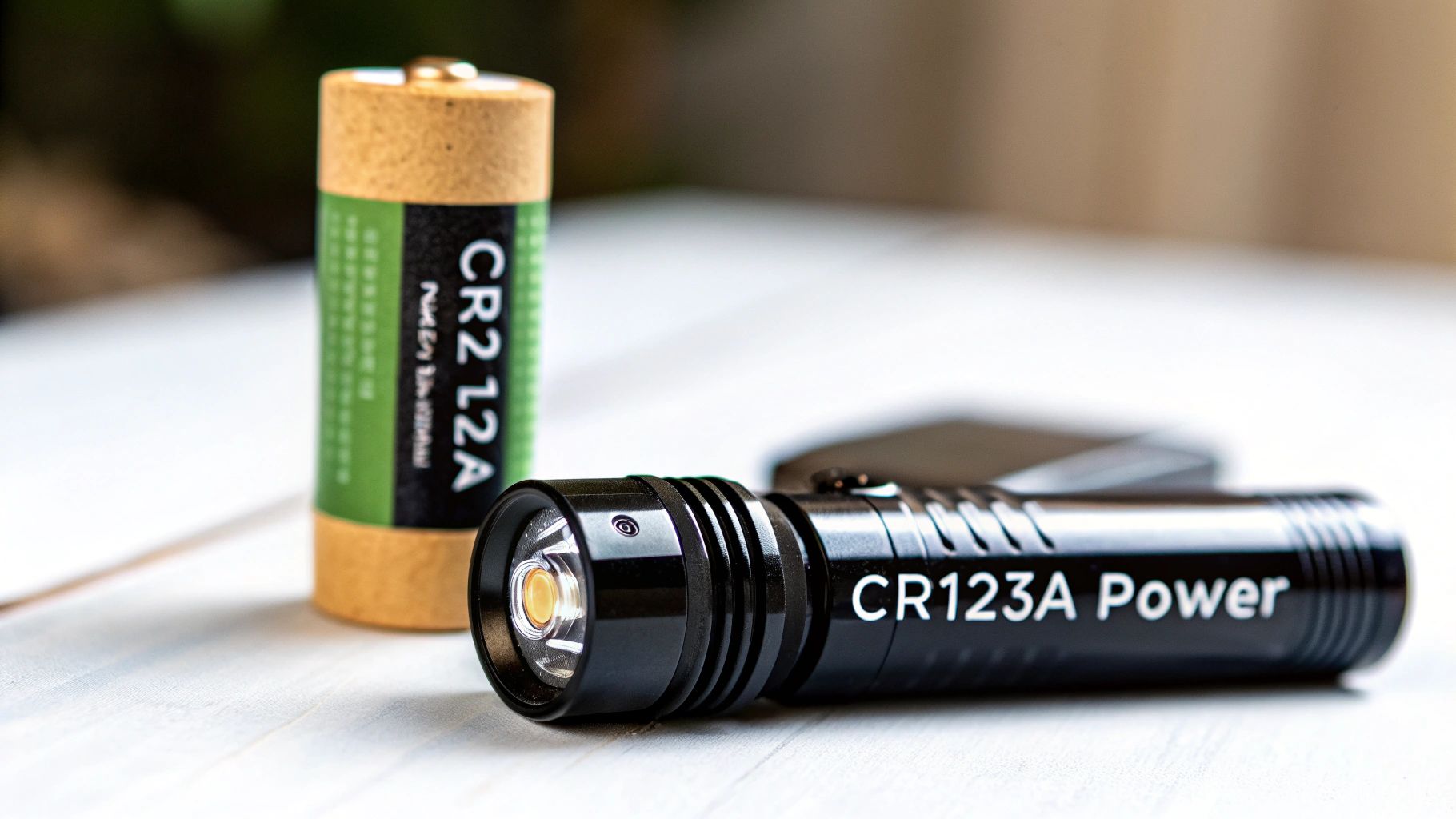
For years, the CR123A has been the heart and soul of the SureFire lineup, and for good reason. Think of it like high-octane racing fuel for a performance engine—it’s specifically engineered to deliver a powerful, consistent punch every single time you hit the switch. This little lithium cell set the standard for high-output tactical lights by packing a ton of power and endurance into a compact frame.
If you’re someone who absolutely cannot afford for your gear to fail, the CR123A is your battery. Its biggest strength is its incredible energy density, which allows SureFire to build those famously bright yet compact flashlights.
And here's a key difference from the AAs in your TV remote: common alkaline batteries just fade away slowly. CR123As, on the other hand, maintain a steady voltage for almost their entire life. This means your light stays screaming bright right up until the end, so you’re never caught with a frustratingly dim beam in a critical moment.
Built for Readiness and Tough Conditions
One of the best things about CR123As is their ridiculously long shelf life. You can toss them in a drawer, a go-bag, or your truck's glove box for up to 10 years, and they’ll still be ready to go. This makes them the undisputed king for any light that might sit for long stretches between uses.
Their internal chemistry also gives them a huge advantage in extreme temperatures. When other batteries give up the ghost in the freezing cold or blistering heat, a CR123A will keep on working.
When your gear is mission-critical, predictability is everything. The long shelf life and consistent power of a CR123A mean you don't have to guess. Your light will be ready the moment you need it, no matter how long it’s been sitting.
This is exactly why they’re the top choice for serious work. When failure is not an option, the proven dependability of a primary lithium cell is worth its weight in gold.
Key Advantages of CR123A Batteries
Going with CR123As gives you a few major benefits that are perfect for anyone who relies on their light professionally or for self-defense.
- Exceptional Shelf Life: With up to a decade in storage, they are the definition of "set it and forget it" for emergency preparedness.
- Superior Cold-Weather Performance: They work reliably in frigid conditions that would kill an alkaline battery.
- High Power Density: They can handle the high-drain demands of modern, super-bright LEDs without breaking a sweat.
- Stable Voltage Output: You get consistent, full-power brightness throughout the battery's life instead of a slow, gradual dimming.
At the end of the day, the CR123A is for the user who values readiness above all else. It’s a one-and-done power source built for a single purpose: to work flawlessly when you need it most. For police officers, soldiers, and prepared citizens, that proven track record makes it a non-negotiable piece of kit.
The Rise of Rechargeable 18650 Batteries
While CR123A cells built SureFire's reputation for bombproof reliability, the power game has changed. These days, the 18650 rechargeable battery is the new workhorse, powering many of SureFire's modern high-output lights. It's like upgrading from a specialized, single-use fuel canister to a powerful, reusable electric power pack.
This shift is a no-brainer for anyone who uses their light a lot. If you're a cop, a security guard, or just someone who spends a lot of time in the dark, the cost of burning through disposable CR123As adds up fast. A single 18650 can be charged and drained hundreds of times, saving you serious money in the long run and cutting down on waste.
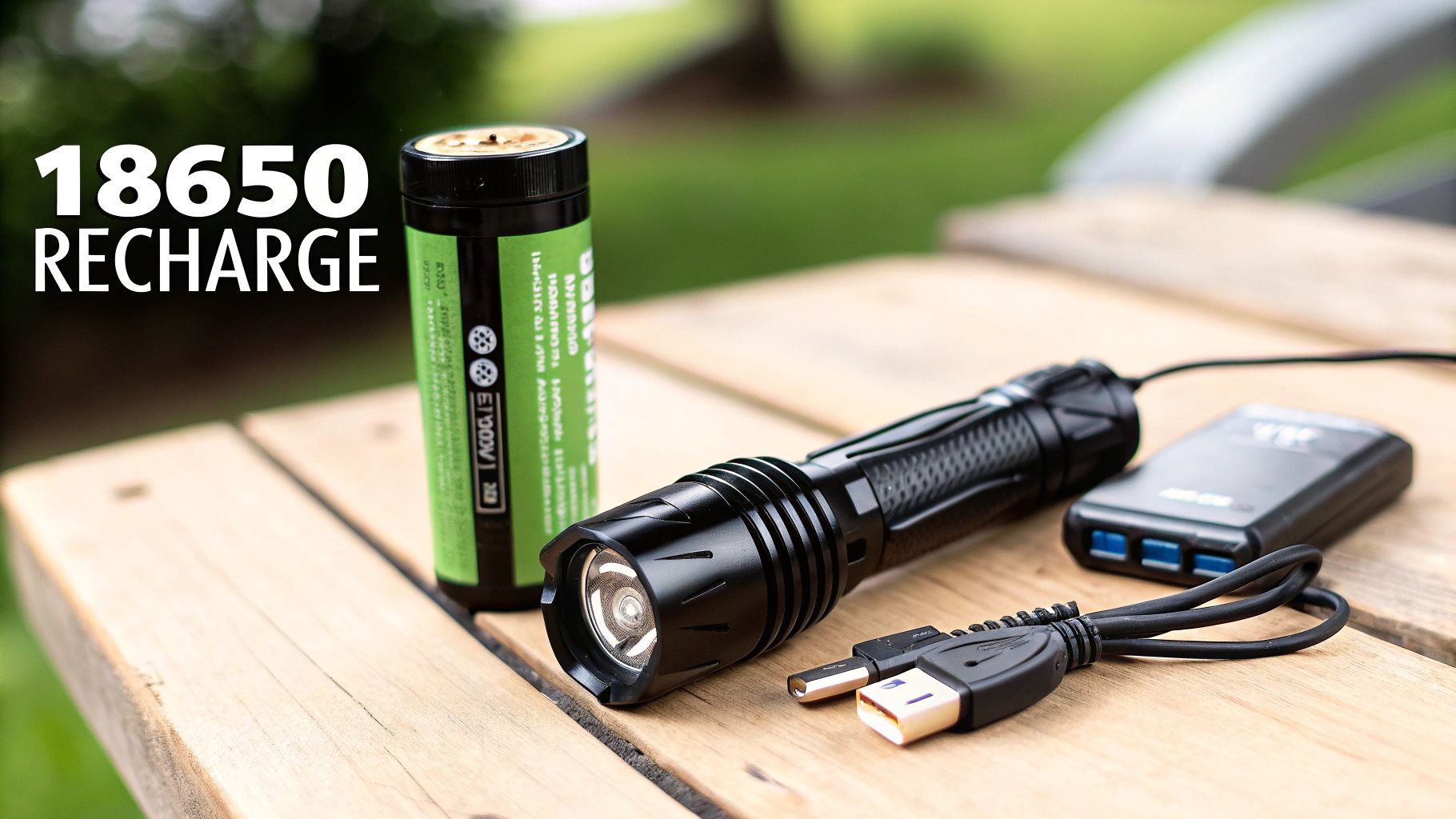
SureFire has leaned into this trend, even offering their own top-tier cells like the SF18650B. What's brilliant about this battery is the built-in micro-USB charging port right on the cell itself. You don't need a separate, clunky charging cradle—just plug it into a power bank, a port in your truck, or a wall adapter. It’s a huge convenience when you’re on the go.
Unlocking Dual-Fuel Flexibility
One of the smartest features to hit modern SureFire lights is dual-fuel capability. This design gives you the best of both worlds and a ton of operational flexibility. A dual-fuel light is designed to run primarily on a rechargeable 18650 for everyday use, but it can also take two CR123A batteries as a backup.
This system is your safety net. Let's say you're out on a long patrol and your 18650 dies with no power source in sight. With a dual-fuel light, you just swap in two fresh CR123As and you're right back in business. No downtime.
The dual-fuel system is the ultimate contingency plan. It lets you leverage the cost savings and convenience of rechargeables for your 9-to-5, while retaining the ironclad readiness of primary lithium cells for when things go sideways.
This adaptability is a game-changer for anyone whose mission doesn't come with a predictable schedule. You see this in top-tier models like the M640DFT-PRO Scout Light Pro Turbo, which pushes out 700 lumens on either a rechargeable SF18650B or a pair of CR123As. It shows how SureFire is meeting modern demands without forgetting its roots. For a deeper dive into market trends, you can explore resources like Data Insights Market.
Ultimately, choosing an 18650 is about balancing long-term value and daily convenience. For the serious user, it's an economic and practical powerhouse that keeps your gear ready to go without the constant churn of disposable cells.
Comparing Battery Types for Tactical Use
Choosing between primary and rechargeable batteries isn't just a simple pros-and-cons exercise; it's about matching your power source to your mission. When you're looking at a CR123A versus an 18650, you're really making a strategic trade-off between absolute, long-term readiness and day-to-day practicality. It's never about which battery is "better" in a vacuum, but which is better for the job at hand.
Think about a "go-bag" tucked away in a closet or an emergency light kit you keep in your truck. For that kind of application, the incredible 10-year shelf life and superior cold-weather performance of CR123A batteries make them the only real choice. They are the definition of set-it-and-forget-it reliability. You can be confident they'll deliver full power years from now, a non-negotiable trait for any serious preparedness plan.
On the other hand, if you're a cop on patrol or anyone who uses their light constantly, the economics of a rechargeable 18650 just make more sense. Sure, the upfront cost for the battery and a good charger is higher. But the ability to top it off hundreds of times quickly pays for itself, saving you the endless cycle of buying and tossing disposables.
Primary vs Rechargeable Batteries: A Tactical Comparison
To really see where each battery shines, it helps to put them head-to-head. This table breaks down the key differences, helping you make a choice based on your actual needs, not just someone's opinion.
| Feature | CR123A (Primary Lithium) | 18650 (Rechargeable Li-ion) |
|---|---|---|
| Upfront Cost | Lower per battery | Higher for battery and charger |
| Long-Term Cost | High (must be replaced) | Very Low (reusable 500+ times) |
| Typical Runtime | Good | Excellent (higher capacity) |
| Shelf Life | Up to 10 years | 1-2 years (self-discharges) |
| Cold Performance | Excellent | Good, but can suffer |
| Environmental Impact | Higher (single-use) | Lower (reusable) |
| Best For | Emergency Kits, Go-Bags, Backup | Daily Duty, Frequent Use, Training |
Looking at the comparison, it’s clear there’s no single right answer. It’s all about context.
Making the Right Tactical Choice
As the table shows, the ideal choice of batteries for SureFire flashlight models comes down to how you plan to use your light.
For mission-critical readiness where failure is not an option and the light may sit unused for months, the CR123A is the gold standard. For high-volume, daily use where cost and convenience are paramount, the 18650 is the clear winner.
Here’s a simple way to think about it: A CR123A is like a sealed MRE—guaranteed to be ready when you need it, no matter what. An 18650 is like a refillable canteen—perfect for daily use, but you have to keep it topped off. For anyone serious about low-light readiness, getting this distinction right is crucial. This same logic applies when selecting the best night vision flashlights for outdoor use, where battery reliability can be just as critical.
Ultimately, many pros don't choose one or the other; they adopt a hybrid approach. They'll run a dual-fuel SureFire on an 18650 for daily duty and training, but always keep a pair of fresh CR123As tucked away as a bomb-proof backup. That way, they get the best of both worlds and are ready for absolutely anything.
Safety First: Essential Battery Care and Maintenance
Your SureFire is a serious piece of gear, and the batteries that power it deserve the same level of respect. This isn't just about getting the most life out of your light; it's about keeping you safe and your equipment running when you need it most. The wrong battery or a moment of carelessness can lead to a dangerous failure.
Think of it like this: you wouldn't put cheap, questionable fuel in a high-performance engine. The batteries are the engine of your flashlight, and ignoring basic safety is a risk not worth taking, especially when a reliable light is critical.
Inspect Before You Install
Before you even think about putting a battery in your light, give it a quick once-over. This two-second check is the single best thing you can do to prevent a major headache down the road. You're looking for any obvious red flags that could signal a problem.
Here's what to keep an eye out for:
- Dents or Punctures: If the battery's metal body is dented or pierced in any way, its internal chemistry could be compromised.
- Corrosion or Leaks: Any white, crusty buildup or signs of moisture, particularly around the positive or negative ends, means the battery is a dud.
- Damaged Wrappers: This is a huge one for rechargeables like 18650s. A nick or tear in the plastic wrap can expose the negative terminal (the entire metal can), creating a massive short-circuit risk.
If you spot any of these issues, that battery's life is over. Don't use it, don't even think about it. Get rid of it properly according to your local guidelines. This is absolutely crucial when selecting the right batteries for SureFire flashlight models, as their high-performance circuitry can really stress a weak or damaged cell.
The Golden Rules of Safe Operation
Beyond a quick inspection, there are a few non-negotiable rules for running your light safely. These aren't just casual tips; they are the core principles that prevent a battery from venting with hot gas, catching fire, or worse.
Never, ever mix old and new batteries. Don't mix different brands, and definitely don't mix different chemistries (like a lithium primary with a rechargeable Li-Ion). This creates an electrical imbalance where the stronger battery tries to forcibly charge or over-drain the weaker one, which is a recipe for disaster. Always use a fresh, matched set.
On top of that, pay close attention to polarity. Every flashlight has markings showing which way the batteries go in. Putting them in backward can fry the sensitive electronics in a heartbeat. And finally, stick to the script: only use the battery types that SureFire explicitly recommends for your specific light. Trying to jam in an unapproved rechargeable cell to "upgrade" a light not designed for it is a great way to void your warranty and destroy your investment.
How to Choose the Right Battery for Your Mission
When it comes to picking the best batteries for your SureFire, it really boils down to what you're using the light for. Think of it less like a technical choice and more like picking the right tool for the job. Once you know your mission, the right power source becomes obvious.
To make it easy, let's look at three common scenarios. Find the one that sounds like you, and you'll know exactly which battery system will serve you best.
Mission Profile Breakdown
-
For the Preparedness Enthusiast: Your main concern is long-term, dead-serious reliability. This is the light in your go-bag or truck console that might not get touched for years, but it absolutely must work when you need it. For this, the CR123A primary battery is the only real answer. Its 10-year shelf life and rock-solid performance in extreme cold or heat make it unbeatable for storage.
-
For the Law Enforcement Professional: You’re using your light every single shift. Constant readiness and keeping costs down are your top priorities. Here, the rechargeable 18650 battery is the hands-down winner. You get fantastic runtime and you’re not burning through hundreds of dollars a year on disposable cells.
-
For the Hunter or Outdoorsman: You're somewhere in the middle. You need the high performance and low running cost of a rechargeable for most trips, but you also need a foolproof backup plan when you're deep in the backcountry with no access to a charger. A dual-fuel flashlight that runs on both an 18650 and CR123As gives you the perfect mix of everyday convenience and off-grid reliability.
No matter which battery you choose, proper handling is key. This simple flowchart walks you through the essential steps to keep your batteries safe and ready for action, from initial inspection to long-term storage.
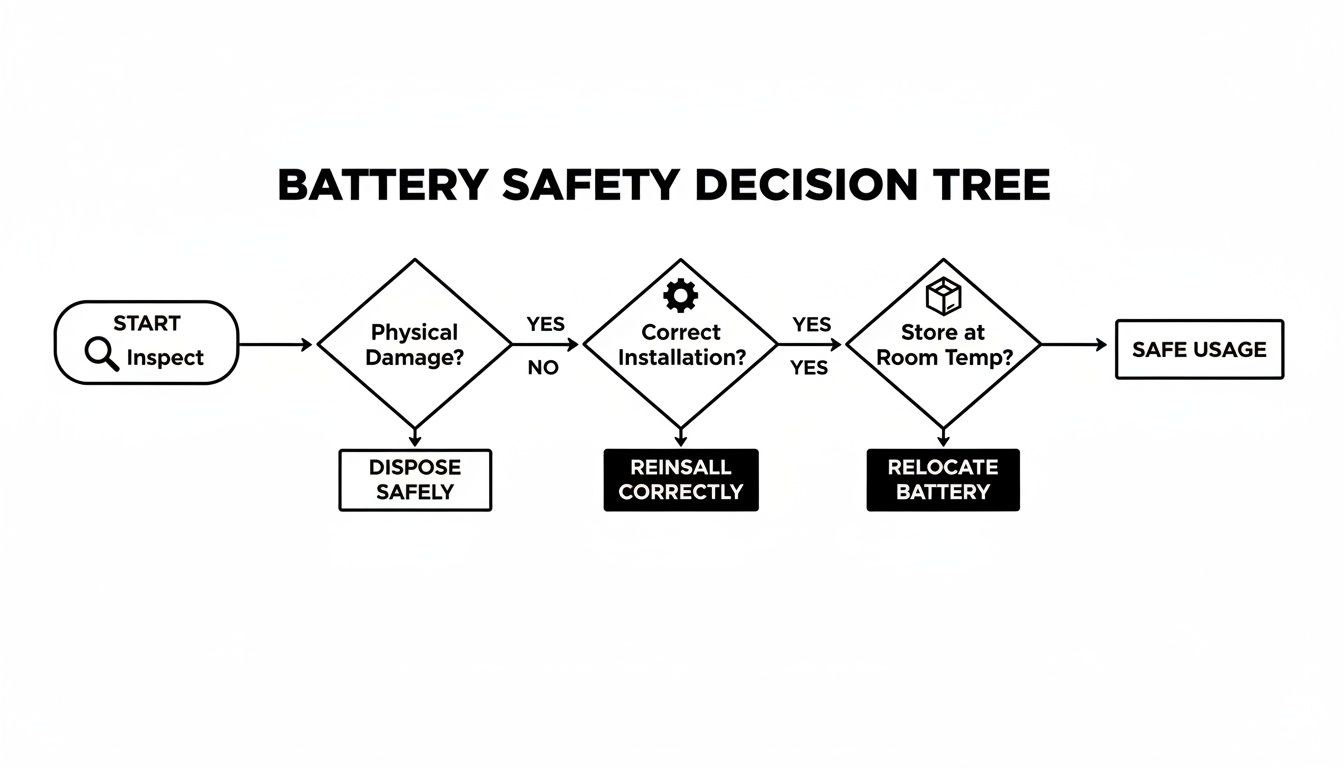
The takeaway here is simple: being proactive is everything. A quick inspection, proper installation, and smart storage are the bedrock of battery safety and performance.
The high demand from professionals and preppers who depend on this gear has pushed the industry forward. The global tactical flashlight market is expected to reach a massive $2,650.5 million by the end of 2025. In 2024 alone, North America is projected to make up about 40% of that market. This just goes to show how many people are investing in quality lighting.
By matching your battery choice to your specific needs, you're setting your SureFire up to perform exactly as it was designed. Of course, this all starts with making sure you have authentic gear in the first place; learn how to spot genuine tactical flashlights when buying online to ensure you’re getting the quality you pay for.
Frequently Asked Questions
When you're dealing with high-performance gear like SureFire flashlights, you're bound to have some questions about what keeps them running. Getting the right answers is key to making sure your light works when you need it most, without any surprises. Let's dig into some of the most common things people ask.
Can I Use Rechargeable RCR123A Batteries in My SureFire Light?
This is probably the number one question we hear, and the short answer is a hard no. SureFire is very clear about not using rechargeable RCR123A (often labeled as 16340) batteries in lights that were designed for standard, disposable CR123A cells.
It all comes down to voltage. A standard CR123A battery has a nominal voltage of 3.0V. A fully charged RCR123A, on the other hand, can come hot off the charger at 4.2V. That extra voltage is more than enough to fry the sensitive electronics and LED drivers in a light that isn't built for it. If you want to go rechargeable, your best and safest bet is to pick up a modern SureFire specifically designed to handle the popular 18650 cells.
What Is the Difference Between SureFire OEM and Aftermarket Batteries?
When you buy a battery with the SureFire name on it, you're getting a cell that's guaranteed to meet their strict specifications for performance and safety. They've vetted it for their lights. The aftermarket world is a bit of a wild west; while there are some excellent third-party brands out there, the market is also awash with cheap, poorly made, and even counterfeit cells that can fail you at the worst possible time.
For duty use, self-defense, or any situation where your light absolutely must work, sticking with SureFire-branded or other top-tier, proven batteries is the only smart move. It's about ensuring the reliability you paid for when you bought the flashlight in the first place.
How Does Cold Weather Affect SureFire Battery Performance?
Good news here: lithium batteries like the CR123A and 18650 are champions in the cold, especially when compared to old-school alkalines. That said, extreme cold will still sap their power. You'll notice a drop in effective capacity and voltage, which can mean a dimmer beam and shorter runtimes.
As a general rule, the disposable CR123A cells tend to have a slight advantage over many rechargeable types in truly frigid temperatures. If you know you'll be operating in freezing conditions, here's a pro tip: carry your spare batteries in an inside pocket close to your body. Keeping them warm before you swap them in can make a world of difference when the mercury plummets.
At Superior Tactical LLC, we know that your gear is only as good as its power source. We carry a full lineup of dependable tactical accessories to keep you ready for anything. Check out our collection of high-performance gear and stay prepared.
